Bâtiments documentés, textiles de musée et installations de Hiwa K ouvrent plusieurs histoires artistiques.

Bâtiments et commanditaires
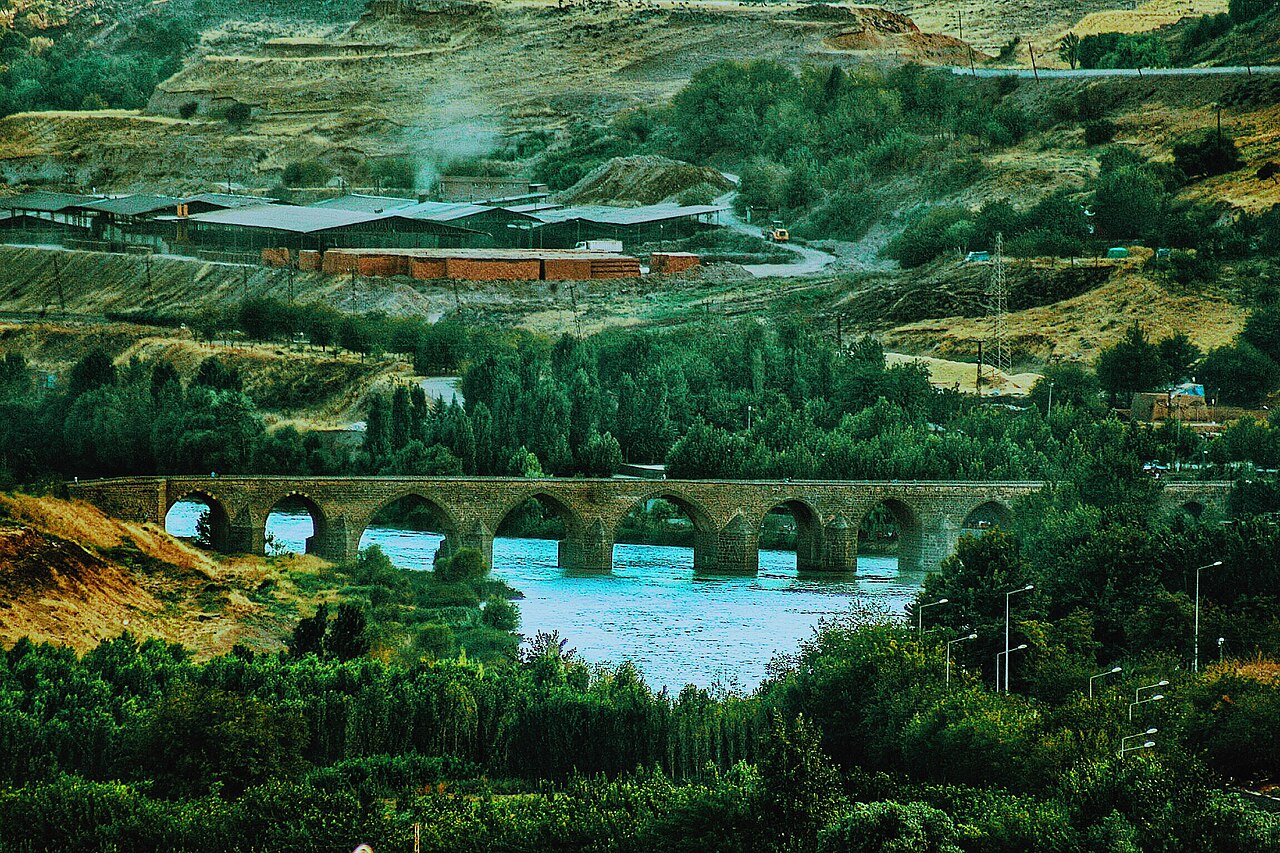
La citadelle d’Erbil associe un tell accumulé au fil des générations, des façades du XIXe siècle et une trame urbaine ottomane tardive. [1] La municipalité de Diyarbakır date le pont du Dicle de 1065 et nomme Yusuf, fils d’Ubayd, comme architecte. [2] Hillenbrand situe le pouvoir marwanide fondé sur des groupes kurdes dans une frontière plurielle. [3] Mécénat et usage demandent chacun leur enquête.
Tissage et personnes
Powerhouse attribue un kilim Senneh de 1850–1900 à un tisserand villageois kurde; trames courbes et fleurs herati le caractérisent. Le nom Senneh ne garantit pas une fabrication dans la ville même. [4] Hackney conserve le kilim tissé par Gül Akpinar à Kayseri vers 1983. Son récit évoque teinture, montage du métier et travail commercial; l’objet arriva ensuite en Grande-Bretagne. [5]
Installation et conservation
One-Room Apartment de Hiwa K reconstruit une maison du Kurdistan irakien dans l’exposition. [6] Son entretien Ruya traite du logement transformé et d’une cuisine collective par Skype avec sa mère. [7] WADI documentait en 2022 relevés, stabilisation et visites scolaires au Mahmud Agha Khan de Koya. [8] Les œuvres identifiables donnent accès au métier, au mécénat et au changement culturel.
Sources et lectures complémentaires
- UNESCO World Heritage Centre, Erbil Citadel, World Heritage inscription 2014; description of the tell, nineteenth-century façades and late Ottoman urban pattern.
- Diyarbakır Metropolitan Municipality, Bir eko-kırımın kronolojisi: On Gözlü Köprü, 8 December 2025; construction date and architect.
- Carole Hillenbrand, A Cosmopolitan Frontier State: The Marwānids of Diyār Bakr, 990–1085, and the Performance of Power, The Islamic–Byzantine Border in History, 2023, pp. 226–242; public chapter summary.
- Christina Sumner, Powerhouse, Senneh kilim from northwest Persia, object 2004/136/3, catalogue 2004; Kurdish village weaver, 1850–1900, technique and attribution.
- Hackney Museum, Kurdish Rug, object 2000.63; Gül Akpinar’s kilim, Kayseri, circa 1983, and the maker’s account.
- Latvian Centre for Contemporary Art, Hiwa K, Survival Kit 6, One-Room Apartment, 2011/2014; curatorial account by Aneta Szylak.
- Ruya Foundation, My father’s colour periods: Interview with conceptual artist Hiwa K, 14 July 2015; interview conducted August 2014.
- WADI, Safeguarding the Old Town of Koya, 29 May 2022; project documentation, emergency measures and community participation.