9 April marks Baghdad’s fall in 2003 in the Kurdistan Regional Government’s commemorative calendar. The Kurdish refugee crisis of 1991 belongs to a wider spring chronology, with distinct dates for relief and political decisions.
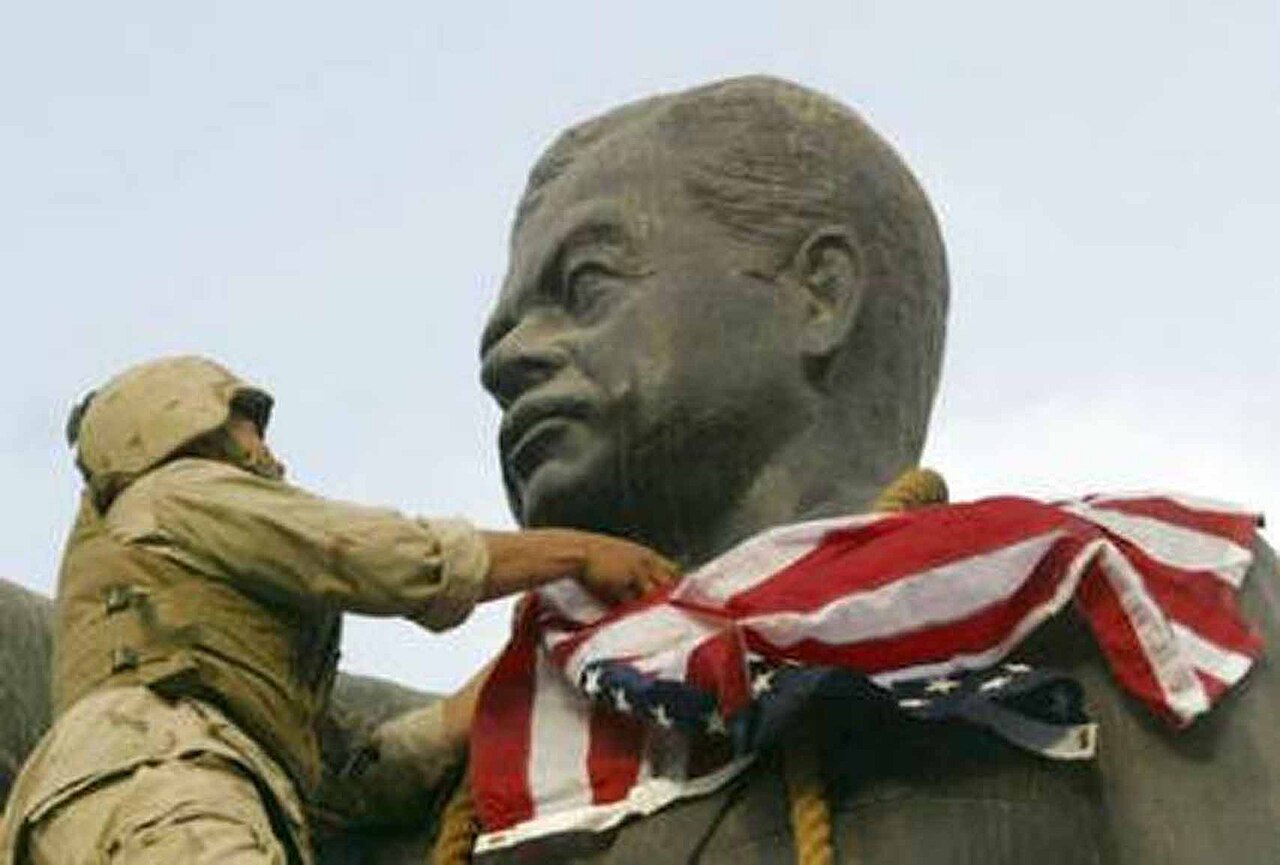
The event associated with 9 April 2003
Coalition forces entered central Baghdad on 9 April 2003 as Saddam Hussein’s government lost control of the capital. UNEP’s contemporary Iraq desk study lists that date and also records widespread looting. [3] The photographed episode in Firdos Square became a prominent image of the regime’s collapse. [6] The fall of a capital and the establishment of a stable political order are different historical developments; the date should not be presented as the end of every conflict or the immediate settlement of Kurdish demands.
Why the spring of 1991 matters
The earlier Kurdish uprising and the government’s counter-offensive had driven more than a million people towards the mountain borderlands of Iran, Iraq and Turkey, according to Canada’s operational history. Families faced severe shortages and dangerous conditions. [1] By early April an emergency relief response was taking shape. This provides essential background to Kurdish memories of that season, but the evidence here does not establish 9 April as the single peak of the exodus. Displacement and relief unfolded across weeks and places.
Keep the relief chronology clear
The Security Council adopted Resolution 688 on 5 April 1991. Canada dates the launch of Operation Provide Comfort to 6 April and the arrival of British and French cargo aircraft to the following day. It distinguishes humanitarian relief from the military security component. [1] Peter Malanczuk’s contemporary analysis explains that the resolution’s demands for an end to repression and humanitarian access did not themselves endorse the coalition’s later security zone. [2] The resolution, relief flights and protective deployments therefore need separate descriptions.
Constitutional recognition came later
The 2005 Iraqi Constitution supplies a different milestone. Article 117 recognizes the Kurdistan Region and its existing authorities as a federal region; Article 141 addresses legislation enacted in the region since 1992 and the continuing validity of regional decisions subject to the constitution. [4] The reference to existing authorities matters: regional institutions did not begin on 9 April 2003. Nor should this constitutional development be described as the first recognition of Kurdish rights anywhere without comparative historical evidence.
An anniversary and its political meaning
The KRG’s 2023 calendar calls 9 April Baghdad Liberation Day and explicitly links it to the fall of Saddam Hussein’s regime. [5] This is direct evidence of official commemoration. The label expresses a political interpretation of the anniversary; it cannot establish how every Kurdish family remembers either war. A sourced account can acknowledge the overthrow of a repressive government while retaining the humanitarian record of 1991, the violence surrounding the invasion and the later process of building institutions. [1] [3] [4]
Sources and further reading
- Canada Department of National Defence, Operation PROVIDE COMFORT (I), 2018: displacement, 6 April launch and separate relief/security components.
- Peter Malanczuk, The Kurdish Crisis and Allied Intervention in the Aftermath of the Second Gulf War, EJIL 2 (1991), pp. 114–132, especially 127–130.
- UN Environment Programme, Desk Study on the Environment in Iraq, 2003, p. 26: dated chronology of the invasion and Baghdad.
- Republic of Iraq, Constitution of 2005, Articles 117 and 141, National Investment Commission English text.
- Kurdistan Regional Government, Calendar 2023, April entry: official anniversary designation.
- US Marine Corps, Edward Chin at the Saddam Hussein statue, Baghdad, 2003, photograph USMC-20496, public domain.