Mele Perîşan (born Mohammad Abulqasim, c. 1356–1431) was a Kurdish poet writing in the Gorani dialect, and the earliest Gorani poet whose work survives in manuscript. His main work, Parishan-nama, is considered the oldest extant text in Gorani, one of the historic literary languages of the Kurds. He is a foundational figure in Kurdish literary history, standing at the very beginning of the Gorani written tradition.
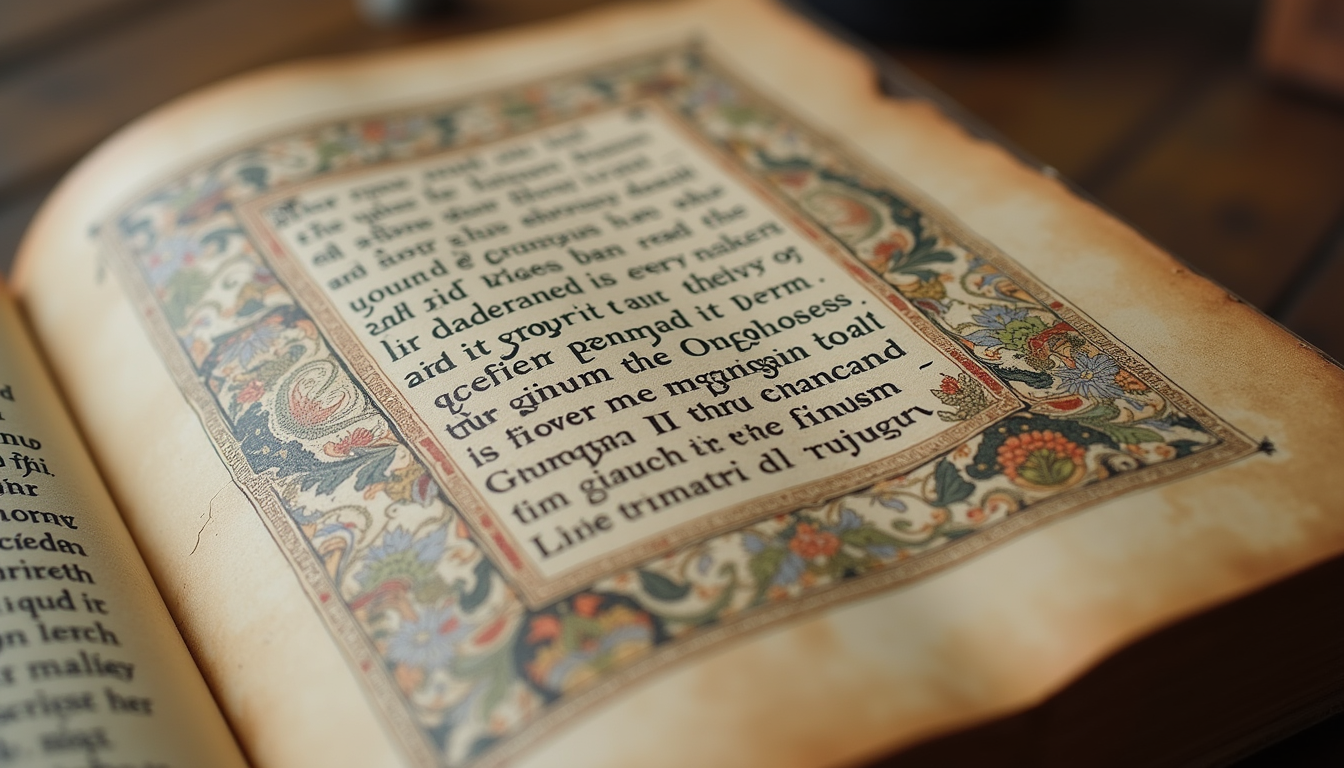
Table of Contents
Hurufism and Religious Context
Legacy and Place in Kurdish Literature
Life and Origins
Almost nothing is known for certain about Mele Perîşan’s life. It is considered plausible, based on internal evidence in his poetry, that he was born in or near Dinavar — a town in the Kermanshah region of western Iran with a long Kurdish cultural history — and that he belonged to the Ghiasvand tribe. Neither of these details is firmly documented; they are scholarly inference rather than established fact.
His dates are given as approximately 1356 to 1431, a lifespan of some seventy-five years spanning the late Ilkhanid period and the turbulent century that followed. He appears to have spent most of his life in the Dinavar area. His poetry shows he was fluent in Arabic, Persian, and Turkish in addition to Kurdish — a broad linguistic command typical of educated men of letters in the medieval Islamic east.
Hurufism and Religious Context
Mele Perîşan was a Shia Muslim and, significantly, a follower of Hurufism — an esoteric movement originating in fourteenth-century Iran that held the letters of the Arabic and Persian alphabets to contain divine mysteries. Hurufism spread among Sufi-influenced communities across the Kurdish and Persian-speaking worlds, and it shaped the themes and vocabulary of his poetry deeply. His admiration for Rabia of Basra, the eighth-century Sufi mystic renowned for her theology of divine love, is also evident in his verse.
The Parishan-nama
The Parishan-nama — “Book of the Distressed” or “Book of the Scattered” — is Mele Perîşan’s principal work and his most historically important. It is considered by scholars to be the oldest surviving manuscript in the Gorani dialect of Kurdish, making it a landmark document in the history of Kurdish writing. The Gorani dialect, also called Hawrami, was the dominant literary medium for southern Kurdish poetry and religious texts for centuries before Kurmanji and Sorani rose to greater prominence.
The poem is steeped in Hurufist ideas, exploring the mystical significance of letters and the divine hidden within language. Manuscripts of the Parishan-nama are preserved in libraries in Iran and Germany, making it accessible to modern scholars. It remains a primary source for the study of early Gorani and for the history of Hurufism in Kurdistan.
Other Works
Beyond the Parishan-nama, Mele Perîşan also composed drinking songs in Kurdish — lively, popular-register verses that have circulated widely in oral and written tradition among Kurds and Iranians. These contrast in register with the earnest mysticism of his major work, suggesting a poet comfortable in both the sacred and the irreverent modes of the classical tradition.
Legacy and Place in Kurdish Literature
Mele Perîşan stands at the very beginning of Gorani written literature. The poets who followed him in the Gorani tradition — including Yusuf Yaska (1592–1636) and Mistefa Bêsaranî (1642–1701) — built on a literary form that he was among the first to put on paper. His Parishan-nama is one of the oldest windows into the Kurdish written world.
His importance is specifically historical rather than broadly canonical — he is not widely read today outside scholarly and literary circles, but his survival in manuscript form means that the written history of Kurdish Gorani literature begins with him. For Kurdish literary history, the Parishan-nama is what it says it is: the oldest thing we have.
Frequently Asked Questions
Why is Mele Perîşan important?
He is important because his Parishan-nama is considered the oldest surviving manuscript in the Gorani dialect of Kurdish. He is therefore the earliest Gorani poet whose work we can actually read, standing at the very beginning of that literary tradition.
When did Mele Perîşan live?
He is believed to have lived from approximately 1356 to 1431, a span of roughly seventy-five years. He appears to have lived most of his life in the Dinavar area of western Iran, though the details of his biography are uncertain.
What was Hurufism?
Hurufism was an esoteric religious movement founded in fourteenth-century Iran by Fazlallah Astarabadi. It held that the letters of the Arabic and Persian alphabets contain hidden divine truths, and it influenced a number of Sufi-oriented poets and thinkers across the Kurdish and Persian worlds, including Mele Perîşan.
References
D.N. MacKenzie, “The Origins of Kurdish,” Transactions of the Philological Society, 1961 — foundational study of Gorani as a Kurdish literary form.
Encyclopædia Iranica, entry on “Gorani.”
B. Chaman Ara and C. Amiri, “Gurani: Practical Language or Kurdish Literary Idiom?” University of Kurdistan, Sanandaj — discusses the Parishan-nama as the oldest extant Gorani manuscript.
Wikipedia, “Mele Perîşan,” citing Zarabozo and other sources on his biography and works.