Zaro Aga became internationally famous for claims of extraordinary longevity. Contemporary newspapers, local history and an archival portrait help distinguish his documented public life from an unverified birth date.
From the Mutki area to work in Istanbul
Eyüpsultan Municipality’s local history places Zaro Aga’s origins in a village of Mutki in the Bitlis area and describes his move to Istanbul, work as a labourer and porter, and later municipal employment. Its wording makes the birth year 1777 conditional on the population document. It also attributes stories of work on the Ortaköy Mosque and Selimiye barracks to Zaro himself. [1] These are different kinds of information: a remembered working life, a later document and a claim about an earlier building project. They should not automatically become a securely dated eighteenth-century biography.
He was already in the international press before 1930
The Otago Witness of 4 January 1927 carried a cable-news item about Zaro under an oldest-man heading. It repeated accounts of employment, family and diet and compared him with another longevity claimant. [2] This dated publication establishes that his publicity did not begin only in 1930. It does not authenticate the ages, reported memories or dietary explanations within the story. A newspaper can reliably show that a claim was circulating while leaving the claim itself unresolved.
Celebrity had a commercial organisation
A 1931 report in the Christchurch Star described a court case involving people associated with Zaro’s tour. The prosecution discussed a New York agreement to divide profits from presenting him as the oldest man and subsequent work with a travelling circus. [3] The important evidence here concerns how publicity was organised. The report is an account of a prosecution’s case, not a verdict on every allegation, and Zaro was not the person accused of the killing discussed in it. International celebrity involved contracts and intermediaries, not just a spontaneous discovery of an unusual age.
The 1934 reporting preserves incompatible numbers
Vakit’s 30 June 1934 coverage announced his death with an age of 157 in the headline, while its account also recorded the figure 160 in connection with his own statement and the hospital observation paper. It discussed doctors, relatives and possible post-mortem examination. [4] The disagreement is part of the historical evidence. An age entered in a document near the end of a life is not, by itself, proof of a birth that allegedly occurred more than a century earlier. This page therefore treats the exceptional lifespan as a claim rather than a verified record.
What the archival photograph can show
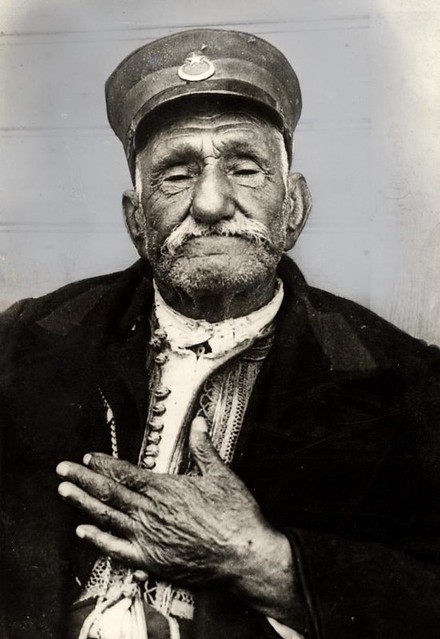
The portrait reproduced here belongs to the Nationaal Archief/Spaarnestad Photo/Het Leven collection. Its description gives a broad 1925–1940 range, an unspecified Turkish location and another reported age, 153. [5] The visible cap, moustache, clothing and hand position are evidence of how Zaro was photographed. They cannot distinguish a particular extreme age by appearance. The catalogue’s range should also remain a range: an upload date is not the date of the original exposure, and a descriptive age is not a checked birth registration.
A place in Kurdish and Istanbul cultural history
Avesta’s description of Rohat Alakom’s Zaro Aga book identifies him as a Kurd from Bitlis and connects his biography with Kurdish life in Istanbul. The publisher describes an album of nearly fifty photographs, cartoons, postcards, press cuttings and other materials. [6] Those forms help explain why his story survived beyond newspaper headlines. They preserve work, migration and public representation as well as fascination with age. His historical significance does not require us to accept every story of wars, marriages or famous encounters as established fact.
Sources and further reading
- Eyüpsultan Municipality, “Zaro Ağa”: local biographical entry; conditional birth-date wording, labour, portering and municipal work.
- Otago Witness, 4 January 1927, “News by Cable”, oldest-man item; National Library of New Zealand, Papers Past.
- Star (Christchurch), 21 November 1931, p. 19, “Dead Turk in Field”: reported prosecution account of the touring syndicate; Papers Past.
- Vakit, 30 June 1934, p. 10: contemporary death coverage, conflicting age figures and proposed examination; Gaste Arşivi.
- Nationaal Archief / Spaarnestad Photo / Het Leven, SFA022816449, portrait catalogue: date range and uncertain age description; no known copyright restrictions.
- Avesta, publisher’s description of Rohat Alakom’s Zaro Ağa (ISBN 9789944382946): Kurdish-Istanbul context and illustrated materials.