Kurdish cultural history crossed borders through newspapers, language teaching, translation and music. Five dated examples connect Cairo, Damascus, Beirut and European networks without assuming a single political programme.

1898: Cairo publishing and European continuation
Miqdad Midhat Bedirhan launched Kurdistan in Cairo on 22 April 1898. His brother Abdurrahman later continued publication in Europe and participated in Young Turk opposition networks, as Murat Issı’s study documents. [1] This was a concrete movement of printed Kurdish across borders, involving different editors and political connections. It illustrates why the location of a publication, its language and its readership should be investigated separately rather than treated as the same thing.
1932: Hawar and literary work in Damascus
Celadet Bedir Khan began publishing Hawar in 1932. Leezenberg discusses his Latin alphabet and the journal’s promotion of Ehmedê Xanî’s literary importance; Joyce Blau locates Hawar in Damascus. [2] [3] Publishing in exile involved more than reporting political events: it also meant selecting texts, developing written forms and shaping how readers encountered older literature. This is a history of how twentieth-century editors presented a seventeenth-century poet to changing audiences.
1943–1946: a Kurdish and French publication in Beirut
The Institut national d’histoire de l’art catalogues Roja Nû as a Beirut publication of 1943–1946, with Kamuran Bedir Khan as founder, director and editor, in Kurdish and French. [4] Its bilingual format makes it possible to investigate how Kurdish writing and French-language advocacy appeared within one publication. Checking individual issues would establish how the two languages were used and which subjects reached each readership.
1962–1965: Paris teaching and a Brussels dictionary
Joyce Blau recalls enrolling in Kamuran’s Kurdish classes in Paris in 1962 and working under his guidance from Roger Lescot’s manuscript. Her Kurdish–French–English vocabulary appeared in Brussels in 1965. [5] Her account connects teaching, manuscript work, translation and publication across cities. Blau’s recollection also describes the weekly work of preparing texts. This example makes cultural exchange visible through the labour of students and collaborators as well as an established teacher.
2021: Aynur’s international musical recognition
WOMEX’s 2021 Artist Award honoured Aynur’s work preserving and renewing Kurdish and Alevi musical culture. The organisation’s account names collaborations with Yo-Yo Ma, Kayhan Kalhor and other musicians. [6] The award’s rationale connects cultural preservation with innovation, as older repertoires acquire new settings and audiences. A singer’s repertoire, a bilingual journal and a language class reach audiences in different ways; studying those differences gives Kurdish history a more precise international context.
Sources and further reading
- Murat Issı, “Kürt Basını ve Kürdistan Gazetesi (1898–1902),” e-Şarkiyat 9 (2013), pp. 127–147, especially pp. 128–130.
- Michiel Leezenberg, “Ehmedê Xanî’s Mem û Zîn,” in Routledge Handbook on the Kurds (2019), pp. 79–89, especially p. 86. DOI: 10.4324/9781315627427-7.
- Joyce Blau, introduction to Mémoires de l’émir Kamuran Bedir-Khan, Études kurdes 1 (February 2000), pp. 71–72; Damascus publishing context.
- Institut national d’histoire de l’art, AGORHA, Roja Nû; bibliographic record, publication dates, editor, place and languages.
- Joyce Blau, Le gardien de la flamme, 1 March 2023; recollections of 1962 study and the 1965 Brussels vocabulary.
- WOMEX, 2021 Awards Recipients, Artist Award: Aynur; award rationale and musical collaborations.
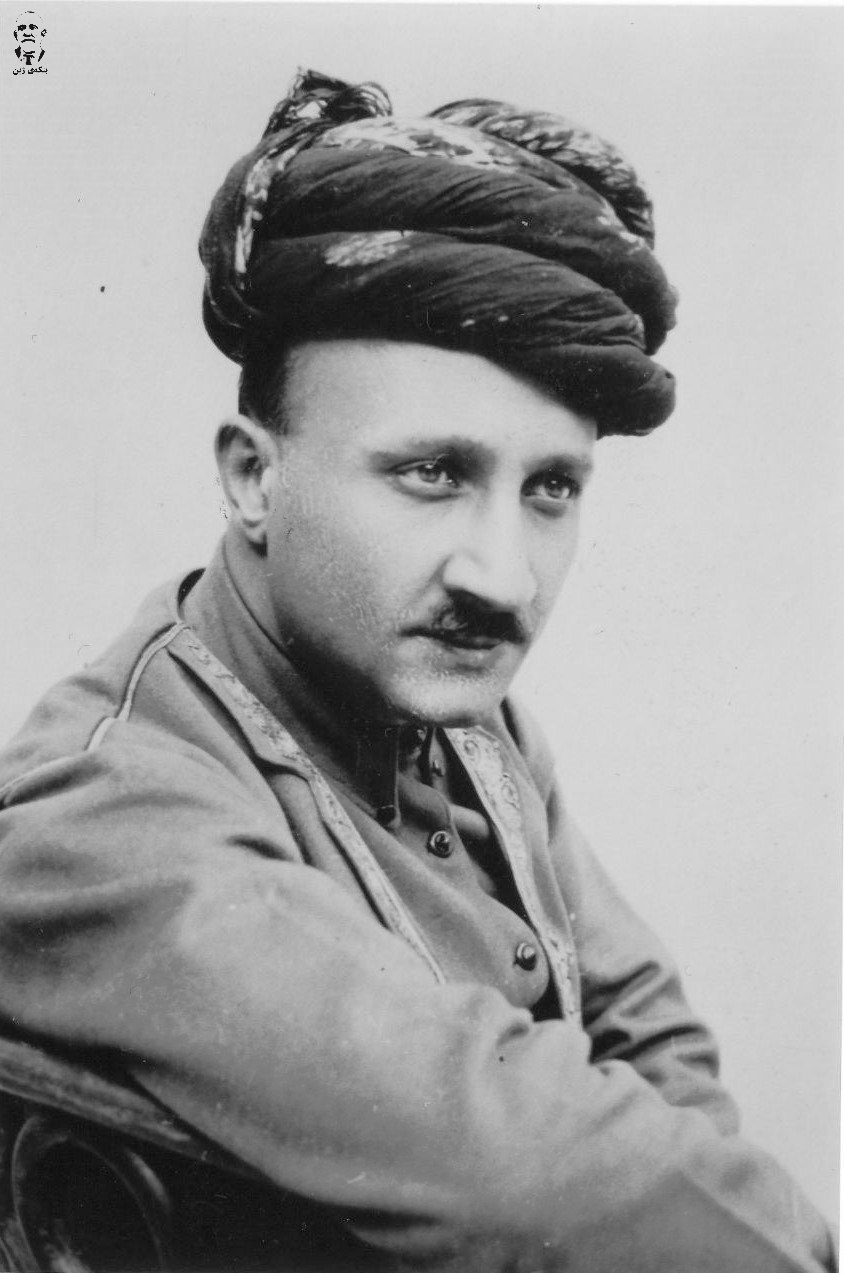
- Zheen Archive Center, Kamuran Bedir Khan portrait, date unknown, supplied through the Kurdish Wikimedians cooperation project; Wikimedia Commons, CC BY-SA 4.0.