A medieval account records Saʿd al-Din al-Humaidi governing Baalbek through an Ayyubid succession and negotiating its transfer in 1250. The episode illuminates loyalty, appointment and territorial bargaining.
Baalbek under al-Salih Ayyub
The thirteenth-century historian ʿIzz al-Din Ibn Shaddad describes the capture of Baalbek in 644 AH / 1246 CE by forces commanded by Husam al-Din ibn Abi Ali. Al-Salih Ismail’s household was inside the fortress. The town passed to al-Salih Ayyub; after his death in 1249, Turanshah confirmed Saʿd al-Din, his father’s deputy there. [1]
The negotiated transfer of 1250
Following Turanshah’s death, al-Nasir Yusuf’s representative asked Saʿd al-Din to surrender Baalbek. Ibn Shaddad records his initial refusal because of an oath to Turanshah’s son, al-Awhad. An agreement followed: villages in the Jazira, described as yielding 100,000 dirhams annually, were assigned in compensation. Saʿd al-Din then handed over Baalbek in 648 AH / 1250 CE. [1] The episode connects a governor’s allegiance with a negotiated territorial settlement.
The wider Humaydiyya setting
Boris James’s study of Kurds in the Ayyubid period examines the Humaydiyya as a Kurdish group associated with northern Mesopotamia and the region of ʿAqr, northeast of Mosul. He traces their appearances in geographical and historical writing and their presence among Ayyubid military groups. He also stresses how unevenly individual members are recorded. [2] That research provides a wider setting for investigating names such as al-Humaydi. Establishing this governor’s precise family connections would require specific biographical evidence. The chronicle passages cited here concentrate on office and allegiance.
Understanding medieval Baalbek
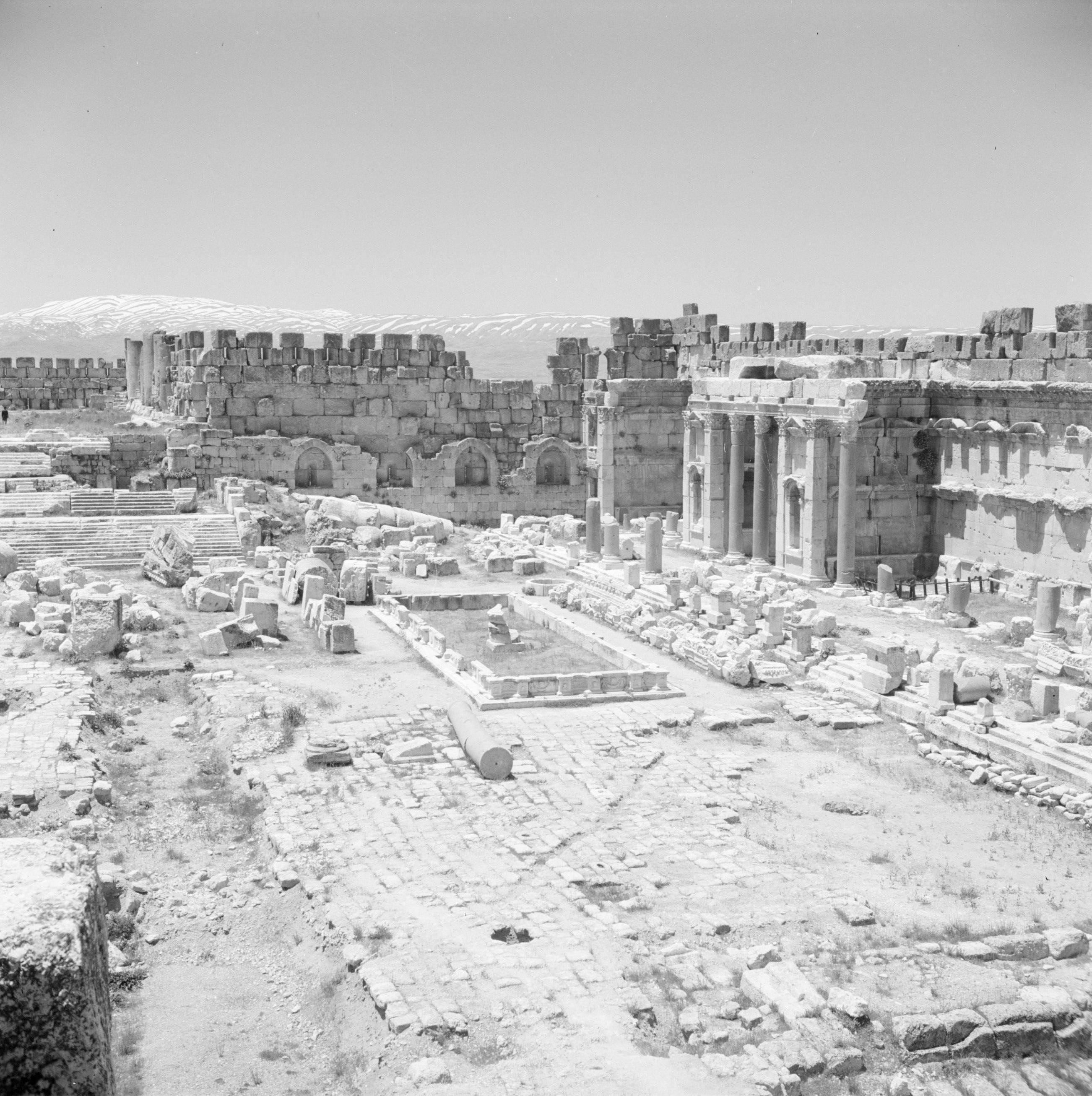
The Lebanese antiquities service and German Archaeological Institute describe Baalbek’s transformation into a strategic stronghold under the Zengids and Ayyubids. The Roman sanctuaries had already acquired fortifications, which were modified during the medieval period. At Bustan Nassif, outside the southern gates, research identified a neighbourhood with houses, a mosque, bath and caravanserai over older structures. [3] This archaeology helps readers picture the inhabited town around the fortress. Attributing an individual monument to al-Humaidi would require evidence such as an inscription or a documentary record naming him. His documented political role stands within that larger urban history.
Sources and further reading
- ʿIzz al-Din Ibn Shaddad, al-Aʿlaq al-khatira: Baalbek succession and negotiated transfer; Arabic electronic transcription.
- Boris James, Saladin et les Kurdes: Perception d’un groupe au temps des Croisades, Études kurdes, special issue II (2006), pp. 33–36: Humaydiyya context.
- DGA Lebanon / German Archaeological Institute, Baalbek: Bustan Nassif, text by Margarete van Ess based on Heike Lehmann’s research; medieval town and archaeology.
- Willem van de Poll, Baalbek ruins and citadel, 1950, Nationaal Archief, image 255-6476; CC0.