Sayyid Husayn Ahlati (died 1397) was a Persianate Kurdish Muslim occultist, lettrist, physician, and alchemist who became one of the central figures in a late fourteenth-century renaissance of occult learning in the Islamic world. Based at the court of the Mamluk sultan Barquq in Cairo, he trained a generation of students who went on to shape intellectual life across the Mamluk and early Ottoman worlds.
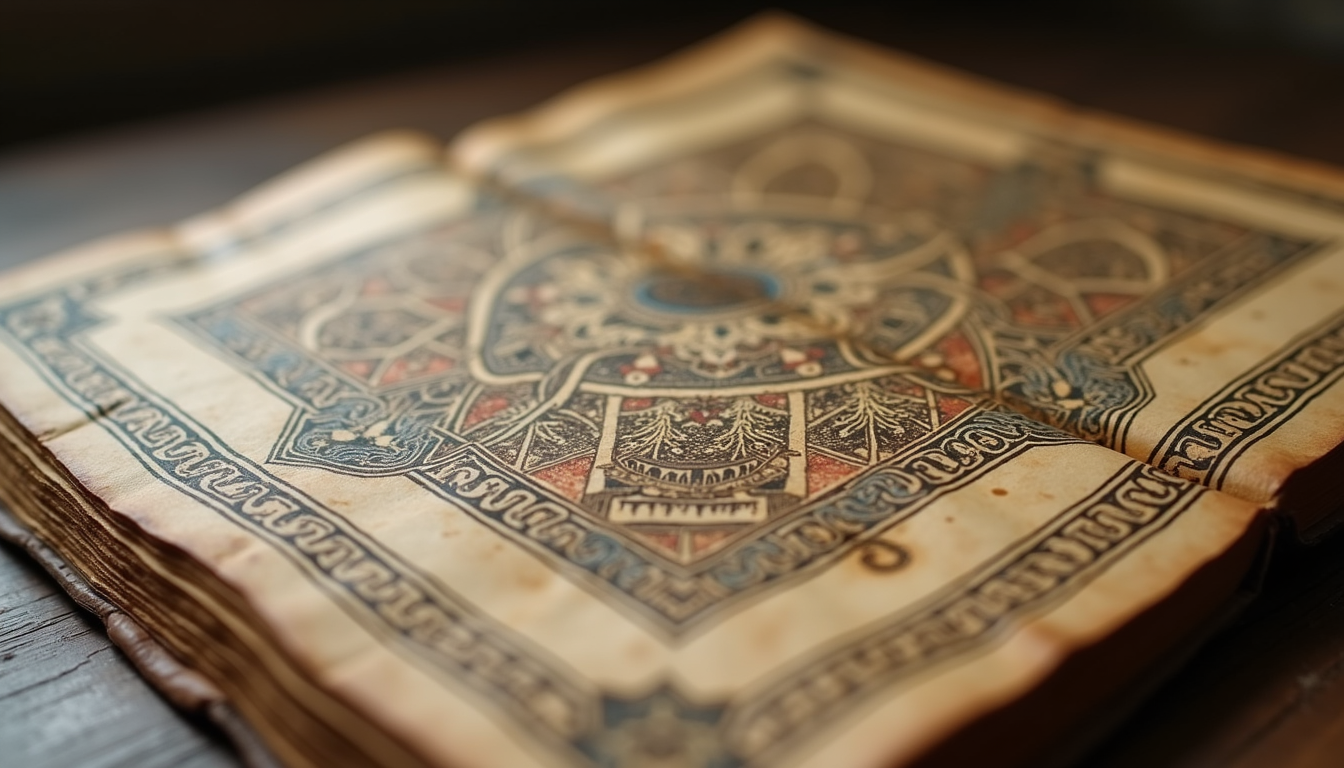
Table of Contents
Background and Kurdish Identity
Arrival in Cairo and the Court of Barquq
The Risala-yi Surkhāb and Occult Works
Intellectual Network and Students
Background and Kurdish Identity
Ahlati is identified in sources as a Persianate Kurdish Muslim — a Kurdish scholar embedded in Persian-language scholarly culture, which was the common medium for learned men of his region and period. His name derives from Ahlat (also spelled Akhlat), a city in what is today eastern Turkey on the western shore of Lake Van, which had long been part of the Kurdish cultural world. Some sources give Tabriz as an alternative place of origin. The details of his early life are not recorded.
Arrival in Cairo and the Court of Barquq
Ahlati migrated to Mamluk Cairo because it had become one of the most important centres in the Islamic world for the occult sciences — the study of geomancy, lettrism, alchemy, and related esoteric disciplines. There he came to the attention of Sultan Barquq (reigned 1382–1399), the founder of the Burji Mamluk line, who appointed him as his personal physician and alchemist. This royal patronage gave Ahlati the protection and resources to pursue his work and attract students.
The Risala-yi Surkhāb and Occult Works
Ahlati’s principal surviving work is the Risāla-yi Surẖāb, a manual of geomancy — the art of divination through patterns and figures. The work links geomantic practice to the broader framework of Islamic lettrism (the esoteric interpretation of Arabic letters, known as ʻilm al-ḥurūf), reflecting the synthesis of traditions that characterised the occult revival of his era. He also wrote a comprehensive esoteric book for Sultan Barquq himself, though this appears not to have survived in full.
His approach drew on earlier authorities including Ibn ʻArabī and the Brethren of Purity (Ikhwān al-Ṣafāʼ), integrating astronomy, medicine, divination, and talismanic practice into a single framework.
Intellectual Network and Students
Ahlati’s most lasting impact was through the students he trained in Cairo. They include Ibn Turk, Hasan Abarqūhī, Sharaf al-Din Ali Yazdi (the later historian of Timur’s campaigns), Shams al-Din al-Fanari (who became an important Ottoman scholar), and the most consequential of all: Shaykh Badr al-Din al-Simawī, who went on to lead a major millenarian uprising against the Ottoman state before being executed in 1416.
This network of students — spanning from Cairo to Anatolia and the early Ottoman world — is the clearest evidence of the intellectual reach Ahlati achieved through his base at Barquq’s court.
Criticism from Ibn Khaldun
The great historian and social thinker Ibn Khaldun (1332–1406), who was himself in Cairo during Barquq’s reign, was among the most prominent critics of the occult revival. Ibn Khaldun’s Muqaddima contains a detailed and sceptical analysis of geomancy, lettrism, and alchemy — the very fields in which Ahlati specialised — and his critique was understood by contemporaries as a challenge to the circle Ahlati represented. Despite this opposition, Barquq’s support insulated Ahlati from its practical consequences.
An earlier post on this site incorrectly stated that Ibn al-Qayyim also criticised Ahlati. This is not possible: Ibn al-Qayyim al-Jawziyya died in 1350 — more than thirty years before Barquq’s reign began. While Ibn al-Qayyim wrote extensively against occult practices in general, he could not have known Ahlati or responded to his work.
Legacy
Ahlati died in 1397, the same year as his patron Barquq. His legacy lies primarily in the network of scholars he trained and in the intellectual synthesis he helped create at Barquq’s court. Through his student Badr al-Din al-Simawī, his ideas fed into some of the most dramatic episodes of early Ottoman religious and political history. Through Shams al-Din al-Fanari and Sharaf al-Din Ali Yazdi, his influence reached into Ottoman scholarship and the historiography of Timurid Central Asia.
Frequently Asked Questions
What is Sayyid Husayn Ahlati known for?
He is known as a Persianate Kurdish Muslim occultist and physician who served Sultan Barquq of the Mamluk Sultanate in Cairo and played a central role in a late fourteenth-century revival of occult learning. He is the author of the geomantic manual Risāla-yi Surẖāb and the teacher of several scholars who shaped later Ottoman intellectual life.
Did Ibn al-Qayyim criticise Ahlati?
No. Ibn al-Qayyim al-Jawziyya died in 1350, more than three decades before Ahlati’s career at Barquq’s court. The critic of Ahlati’s circle was Ibn Khaldun (1332–1406), who was a contemporary and wrote his sceptical analysis of occult sciences — including geomancy and lettrism — partly in response to the revival Ahlati represented.
When did Ahlati die?
Sayyid Husayn Ahlati died in 1397, the same year as his patron Sultan Barquq.
References
Noah Gardiner, “The Occultist Encyclopedism of ʻAbd al-Rahman al-Bistami,” Mamluk Studies Review, vol. 20, 2017 — a key scholarly study of the Mamluk occult network in which Ahlati was central.
Ibn Khaldun, al-Muqaddima (c. 1377) — contains the contemporary critique of geomancy, lettrism, and alchemy practised at Barquq’s court.
Encyclopædia Iranica, entry on “Akhlāṭī.”
Sayyid Husayn Ahlati, Risāla-yi Surẖāb — primary geomantic work.