An April 19 diplomatic message belongs to 1974. Yazidi New Year follows a changing calendar date, the 1991 relief operation began earlier in April, and Kurdish Journalism Day marks April 22. These separate histories connect the month with religion, diplomacy, displacement and publishing.

Correction recorded on 1 November 2026
The earlier account gave the Kissinger backchannel message as 19 April 1972. The archival note dates it to 19 April 1974. [4] The official 2026 calendar lists Yazidi New Year on 15 April, not 19 April. [1] This article retains its original publication date of 19 April 2026 while correcting those claims.
| Date | Event |
|---|---|
| 15 April 2026 | Yazidi New Year in the official calendar |
| 19 April 1974 | Backchannel message recorded in FRUS note 4 |
| 6 April 1991 | Launch of Operation Provide Comfort |
| 22 April 1898 | First issue of Kurdistan newspaper |
Yazidi New Year is not fixed to April 19
The Kurdistan Regional Government’s calendar places Yazidi New Year on Wednesday, 15 April 2026; 19 April was a Sunday. [1] SBS Kurdish’s report published on 15 April explains the first Wednesday of April in the old Eastern calendar and describes a celebration in Wagga Wagga with musician Khairi Shengali. [2] The calendar used for a festival and its corresponding civil date must be distinguished. An April 19 article can discuss a nearby observance without turning its own publication day into the festival’s permanent anniversary.
Çarşema Serê Salê: a community’s religious meaning
Yazda’s statement of 16 April 2019 announced the following day’s New Year as Çarşema Serê Salê. It explains the observance as commemorating the completion of creation, the beginning of life and nature, and renewed hope. The statement also remembers survivors and displaced people after the genocide and asks for protection and conditions for return. [3] This account joins religious renewal to the community’s particular experience. Its 2019 humanitarian figures should not be presented as present-day totals, and the observance should retain its Yazidi religious specificity rather than being treated as a festival shared in the same way by all Kurds.
The archival April 19 message was sent in 1974
FRUS document 246 is Kissinger’s memorandum to Nixon of 11 April 1974. Its fourth editorial note records Nixon’s approval and the dispatch to Tehran of backchannel message WH40988 on 19 April. The memorandum looks back to cooperation with Iran after Nixon’s 1972 visit, which explains the presence of that earlier year in the same record. It proposes limited support and distinguishes its aims from underwriting a separatist government. [4] The date of the programme’s origin, the memorandum and the message are separate. Redacted aid amounts cannot be reconstructed from this published text.
The programme’s end in 1975
A further primary document, Colby’s memorandum to Kissinger of 4 June 1975, confirms termination of the assistance programme. Colby explains that aid had been channelled through Iran and that the Shah ended financial and military assistance following the Algiers agreement of 6 March. He links this to the collapse of the resistance and leaders’ flight to Iran. [5] This is the intelligence director’s account of a particular programme. Read alongside the 1974 memorandum, it shows the dependence of covert assistance on an intermediary state’s priorities, rather than diplomatic recognition of Kurdish independence.
April 1991: displacement and relief
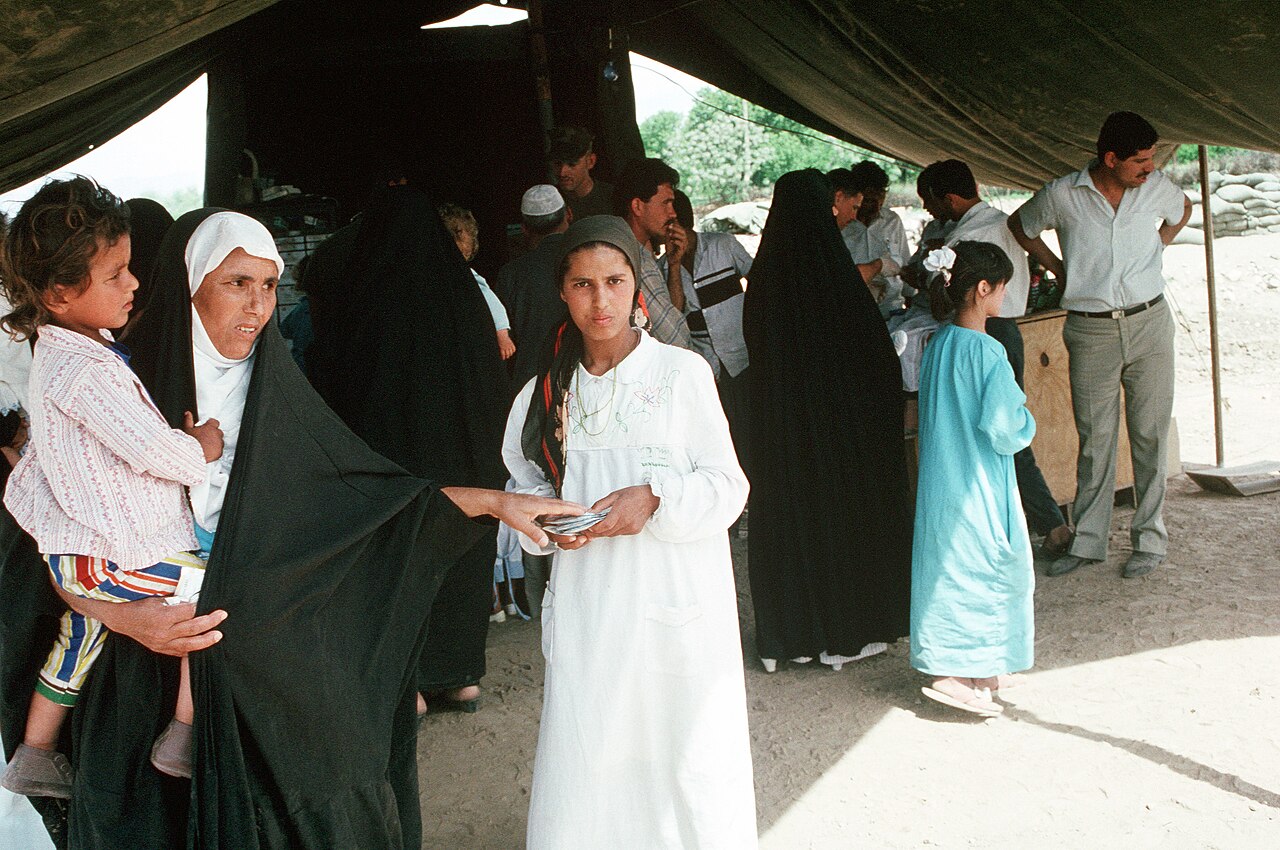
Canada’s military history dates the launch of Operation Provide Comfort to 6 April 1991. It describes more than a million people fleeing the Iraqi military response to the uprising and distinguishes relief delivery from the operation’s security component, which included a no-fly zone north of the 36th parallel. [6] April 19 fell within that response; it was not its starting date. The 27 April clinic photograph gives a later, precisely dated view of relief work. Regional institution-building also had its own chronology: the Kurdistan Parliament dates the election leading to the assembly and government to 19 May 1992. [7]
April 22: a dated beginning for Kurdish journalism
The official 2026 calendar marks Kurdish Journalism Day on 22 April. [1] Murat Issi’s study dates the first Kurdistan newspaper to 22 April 1898 in Cairo, founded by Miqdad Midhat Bedirhan and continued by his brother Abdurrahman in Europe. [8] The 2026 anniversary was therefore the 128th. This documents the newspaper and its anniversary; it does not establish the earlier article’s unsourced claim that a particular media union began events on April 19. The month contains several meaningful dates, each with its own record, participants and historical setting.
Sources and further reading
- Kurdistan Regional Government, Calendar 2026, April calendar and entries for Yazidi New Year and Kurdish Journalism Day.
- Mayada Kordy Khalil, Yazidi New Year celebrated worldwide, including in Wagga Wagga, SBS Kurdish, 15 April 2026, published programme description.
- Yazda, Statement on the Occasion of the Yazidi New Year, Çarşema Serê Salê, 16 April 2019.
- FRUS, 1969–1976, volume XXVII, document 246, Kissinger to Nixon, 11 April 1974, especially editorial note 4 on the 19 April message.
- FRUS, 1969–1976, volume XXVII, document 289, Colby to Kissinger, Termination of the Kurdish Assistance Program, 4 June 1975.
- Canadian Department of National Defence, Operation Provide Comfort (I), launch on 6 April 1991, relief and security components.
- Kurdistan Parliament, History of Parliament, 19 May 1992 election and the establishment of the assembly and regional government.
- Murat Issi, Kürt Basını ve Kürdistan Gazetesi (1898–1902), Şarkiyat 9 (April 2013), pp. 127–147, especially 127–129.
- JOC Marjie Shaw, Kurdish refugee clinic near Zakho, 27 April 1991, NARA 6469819 / DN-ST-91-10683, public-domain U.S. military photograph.