British policy linked Iraqi state-building with Kurdish administration, military costs and an unresolved northern frontier. Parliamentary statements from 1921–1926 and Sheikh Mahmud’s return show how the settlement changed after Cairo.
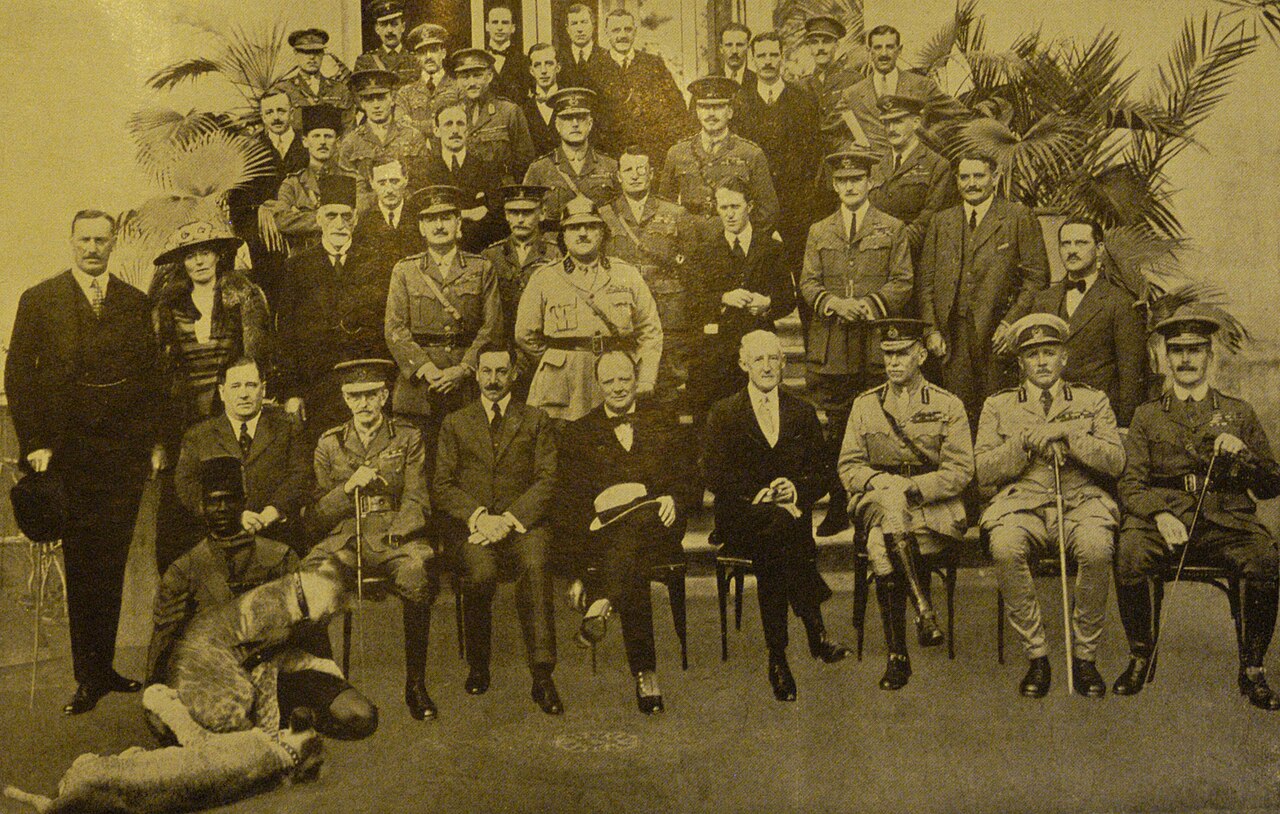

Cairo and the expense of British rule
As Colonial Secretary, Churchill reported to the Commons on 14 June 1921. His programme combined an Arab government in Iraq with a smaller British and Indian garrison, local levies and a greater role for aircraft. He presented political reorganisation as a means of reducing expenditure and explicitly declined to guarantee success. [1] The plan retained British influence while transferring more responsibilities to local institutions.
What separate Kurdish administration meant
Churchill described Kurdish chiefs dealing directly with High Commissioner Percy Cox while also hoping to bring southern Kurdistan and Iraq closer together. [1] A Lords statement on 23 June confirmed that Kurdistan would not immediately come under the Mesopotamian government and proposed six British advisers there: three at Kirkuk and three at Sulaimani. [2] This was a concrete arrangement under an imperial official. The promise of local administration should therefore be distinguished from recognition of a sovereign Kurdish state.
A contemporary criticism of unfulfilled intentions
On 24 July 1922, Lord Sydenham argued that the original intention of Kurdish self-government had not been carried out. He connected the uncertain position with northern security and the lack of peace with Turkey. [3] This was a critic’s intervention in a debate, not a unanimous parliamentary finding. It nevertheless demonstrates that the relationship between Kurdish self-government, the Iraqi government and Britain remained contested after the Cairo Conference.
Sheikh Mahmud’s return and Kurdish political action
The local history did not consist only of British speeches. Richard Wilding describes Mahmud Barzanji’s return in 1922 under an agreement to prevent Turkish entry into Sulaimani and avoid interference in Kirkuk and Erbil. Mahmud arrived on 30 September; a cabinet was announced in October and he took the title of king in November. [4] Those actions advanced a political claim beyond a restricted British appointment. They should not be flattened into either complete compliance with London or recognised rule over every Kurdish district.
The frontier remained open after Cairo
In the Commons on 17 June 1924, Arthur Ponsonby explained the Lausanne procedure: Britain and Turkey were to agree the Turkey–Iraq frontier within nine months, with failure referred to the League Council. After an initial mistake, he corrected the starting point to the treaty’s signature, not ratification. [5] The exchange shows why the sequence of negotiations matters. Cairo’s administrative plans had not themselves fixed the final northern boundary.
The League decision and the 1926 treaty
On 17 December 1925, the Prime Minister read the League Council’s frontier decision, linked to a continued British relationship with Iraq and a request for measures securing Kurdish local-administration guarantees. [6] On 21 June 1926, Foreign Secretary Austen Chamberlain reported that the Turkish and Iraqi parliaments had authorised ratification of the frontier treaty; British ratification was expected within days. [7] The second statement describes progress, not proof that every ratification had already occurred. These stages involved governments and institutions beyond Churchill’s 1921 proposals.
| Date | Documented stage |
|---|---|
| June 1921 | Separate Kurdish administration under the High Commissioner proposed. |
| November 1922 | Mahmud takes the title of king; a local political claim. |
| December 1925 | League frontier decision and request for Kurdish administrative guarantees. |
| June 1926 | Turkish and Iraqi parliamentary authorisation; British ratification expected. |
Reading policy alongside its limits
The evidence distinguishes a military and financial plan, a provisional administrative promise, a Kurdish claim to rule and an international frontier settlement. Ministers defended policies and parliamentary critics disputed them; neither voice alone measures how the arrangements worked for the governed population. The documents make Churchill’s contribution specific while leaving space for local records and Kurdish perspectives. A decision about a frontier and a guarantee about administration also answer different questions.
Sources and further reading
- Hansard, Commons, Middle Eastern Services, 14 June 1921, vol. 143, cols. 265–334; Churchill’s programme and southern Kurdistan passage.
- Hansard, Lords, British Mandates, 23 June 1921, vol. 45, cols. 759–789; direct High Commissioner relations and advisers.
- Hansard, Lords, Position in Mesopotamia, 24 July 1922, vol. 51, cols. 697–703; Lord Sydenham’s criticism.
- Richard Wilding, The Kingdom of Iraq and Sheikh Mahmud Barzanji’s Kingdom of Kurdistan, Kurdistan Chronicle, 30 December 2023; return and kingship in 1922.
- Hansard, Commons, Iraq (Turkish Frontier Conference), 17 June 1924, vol. 174, cols. 1947–1948; Ponsonby’s reply and correction.
- Hansard, Commons, Prime Minister’s Statement, 17 December 1925, vol. 189, cols. 1624–1628; League decision and Kurdish guarantees.
- Hansard, Commons, Mosul Boundary Treaty (Ratification), 21 June 1926, vol. 197, cols. 10–11; parliamentary authorisation and expected British ratification.
- Unknown photographer, Cairo Conference, 1921; published in The Letters of Gertrude Bell II, Ernest Benn, 1927, p. 590; Wikimedia Commons public-domain image record.