top of page

Jafar Qoli Khan Donboli: The Last Khan of Khoy – A Tale of Ambition, Alliances, and Exile (d. 1814)

An AI generated image of Jafar Qoli Khan Donboli (d. 1814) and what he looked like according to AI.

In the turbulent tapestry of 18th and early 19th-century Iranian history, where empires clashed and local dynasties vied for autonomy amid the rise of the Qajar dynasty, few figures embody the precarious dance of power as vividly as Jafar Qoli Khan Donboli. Born into the influential Donboli tribe of Kurdish origins, Jafar Qoli Khan rose to prominence as the last effective ruler of the Khoy Khanate in northwestern Iran, only to face defeat, exile, and a dramatic shift in allegiances that saw him governing the distant Shaki Khanate under Russian patronage.


His life, spanning the late Safavid aftermath through the Zand and Qajar eras, reflects the broader geopolitical struggles involving Iran, the Ottoman Empire, and an expanding Russian presence in the Caucasus. Dying on September 3, 1814, from malaria in Shaki, Jafar Qoli left a legacy of resilience and adaptation, with descendants who would influence Azerbaijani politics in the 20th century. This blog post delves into his biography, drawing on historical accounts to explore his family roots, military exploits, diplomatic maneuvers, and enduring impact – a story that unfolds against the backdrop of shifting borders and imperial ambitions.


The Donboli Legacy: Kurdish Roots and Rise to Prominence


The Donboli family, to which Jafar Qoli Khan belonged, traced its origins to Kurdish tribes in southeastern Anatolia, migrating eastward to northwestern Iran during the medieval period. By the 13th century, under the Ayyubid dynasty, they had established themselves as local rulers, with figures like Emir Ibrahim Donboli (d. 1320) maintaining alliances with the Ilkhanate Mongols.


The tribe's name, "Donboli," derives from their ancestral lands, and they initially practiced Yezidism before converting to Islam, blending tribal loyalties with Persianate administrative traditions. Over centuries, the Donbolis governed key frontier regions like Khoy and Salmas, serving as buffers against Ottoman incursions during the Safavid era (1501–1736). Their hereditary rule solidified under the Safavids, who appointed them as governors to defend against threats from the west.


Jafar Qoli Khan was born in Khoy, the heart of the Donboli domains, as the second son of Sahbaz Khan Donboli. The exact year of his birth remains uncertain, but it likely fell in the mid-18th century, amid the chaos following the fall of the Safavids. His family was no stranger to intrigue: his nephew, Hosayn Qoli Khan Donboli, would become a pivotal figure in his early career. The Donbolis' power peaked in the late 18th century under Ahmad Khan Donboli (r. 1763–1786), Jafar Qoli's uncle, who ruled Khoy and Tabriz with considerable autonomy during the Zand dynasty's weakness. Ahmad Khan's assassination in 1786 by rivals marked a turning point, plunging the family into vendettas and power struggles.


Young Jafar Qoli, already demonstrating military prowess, played a key role in avenging Ahmad Khan's death. Alongside Hosayn Qoli, he executed the murderers, restoring family honor and securing Hosayn Qoli's ascension to the Khoy throne. This period honed Jafar Qoli's skills as a commander; in 1788, he led forces in a battle against Mohammad Qoli Khan Afshar of Urmia near Aq Ziarat, aiming to rescue a captive relative. The conflict ended inconclusively, but it highlighted the inter-khanate rivalries that defined Azerbaijani politics. Jafar Qoli's ambitions soon clashed with Hosayn Qoli's, setting the stage for internal family rifts amid the rise of Agha Mohammad Khan Qajar.


The Donbolis numbered around 12,000 families at their zenith, commanding significant military and economic resources. Their domains included fertile lands along the Ottoman-Iranian border, making them vital players in regional diplomacy. Jafar Qoli's upbringing in this environment instilled a fierce sense of tribal loyalty and a pragmatic approach to alliances – traits that would define his later career.


Navigating the Qajar Ascendancy: Obedience and Rebellion


As the Qajar dynasty emerged under Agha Mohammad Khan (r. 1789–1797), the Donbolis initially aligned with the new power. In 1791, Hosayn Qoli Khan pledged loyalty, receiving governorship over vast territories including Khoy, Tabriz, Ardabil, and parts of Azerbaijan. Jafar Qoli, serving under his nephew, participated in Qajar campaigns, such as the 1791 siege of Shusha against Ibrahim Khalil Khan of Karabakh. However, suspicions arose over Hosayn Qoli's marriage to Ibrahim Khalil's daughter, leading Agha Mohammad to briefly replace him with Jafar Qoli as governor of Khoy from 1793 to 1797.


This interlude marked Jafar Qoli's first taste of independent rule. He governed effectively, imposing tributes and maintaining order, but Hosayn Qoli regained favor by 1797. Agha Mohammad's assassination that year unleashed chaos, with local khans like Sadiq Khan Shaqaqi revolting across Azerbaijan. Jafar Qoli, sensing opportunity, rebelled against Hosayn Qoli, besieging Khoy with Yazidi and Shaqaqi allies. Hosayn Qoli's sudden death in spring 1798 – of unknown causes – allowed Jafar Qoli to assume the Khoy Khanate, making peace with rivals like Sadiq Khan by attacking and plundering Sarab.


As Khan of Khoy from 1798 to 1799, Jafar Qoli's reign was brief but defiant. He refused to recognize Fath Ali Shah Qajar (r. 1797–1834), the new shah, viewing Qajar centralization as a threat to local autonomy. In 1799, he joined a coalition of Azerbaijani khans in armed revolt, aiming to preserve the Donboli dynasty's independence. Qajar forces under Abbas Mirza defeated him near Salmas on September 17, 1799, leading to the khanate's abolition and annexation into Qajar Iran. Jafar Qoli fled, first to the Erivan Khanate, then deeper into exile.


This rebellion was rooted in the Donbolis' long history of semi-independence. The Qajars sought to integrate peripheral khanates, imposing direct rule and taxation, which clashed with tribal traditions. Jafar Qoli's motivations were twofold: personal ambition and dynastic preservation, as he maneuvered to outflank rivals within and beyond his family.


Exile and the Ottoman Gambit: Seeking Western Allies


Defeated and dispossessed, Jafar Qoli turned westward to the Ottoman Empire, a traditional rival of Iran. Around 1800, he sought refuge in border regions like Bayazid and Maku, leveraging tribal networks. To solidify ties, he married his daughter to the Pasha of Bayazid and established relations with other Ottoman pashas. From these bases, he launched incursions into Iranian territories, creating unrest to pressure the Qajars.


His "Ottomanism" phase aimed to involve the Sublime Porte in Iranian affairs, hoping for military support to reclaim Khoy. However, Qajar diplomacy prevailed: Fath Ali Shah's envoys convinced Istanbul of the risks, leading to an Ottoman decree – named after Jafar Qoli – prohibiting aid to him around 1804–1805. Expelled from Ottoman lands, his followers faced hardship, prompting a desperate pivot.


This period highlights the fluid geopolitics of the era. The Ottomans, weakened by internal reforms and European pressures, were reluctant to provoke Iran, especially amid the Napoleonic Wars' ripple effects. Jafar Qoli's failure here underscored the limitations of tribal diplomacy against emerging nation-states.


The Russian Pivot: From Refugee to Imperial Agent


Lacking options, Jafar Qoli appealed to the Russian Empire, which was expanding southward into the Caucasus. In 1804, he joined Russian forces during the Siege of Erivan, providing intelligence and fighting alongside them. Accepting Russian citizenship in July 1804, he became a valuable asset due to his local knowledge and influence.

Tsar Alexander I recognized his potential, resettling his followers in Shaki and appointing him Khan on December 10, 1806.


Promoted to lieutenant general, Jafar Qoli received honors including the Order of St. Anna (1st degree), a diamond-encrusted saber, and a gold medal. During the Russo-Persian War (1804–1813), he served loyally, suppressing pro-Iranian insurgencies in Shaki and neighboring khanates.


His "Russianism" was pragmatic: Russia offered security and status unattainable elsewhere. He quelled uprisings by figures like Selim Khan of Shaki and local rebels, collected taxes (including from Christian communities), built fortifications, and mediated disputes with khans like Mustafa of Shirvan. In 1808, he aided in capturing Nakhchivan, defending against Dagestani tribes.


This alliance facilitated Russian consolidation in the Caucasus, weakening Qajar control. Jafar Qoli's actions provoked ethnic and religious tensions in Shaki's diverse population (Turkic, Armenian, Muslim), but they secured his position until his death.


Governance in Shaki: Challenges and Administration


As Khan of Shaki (1806–1814), Jafar Qoli ruled a strategically vital region, formerly under Iranian suzerainty. He enforced Russian policies, reporting on regional affairs and suppressing dissent. His administration involved tax collection, which sparked controversies, and military defenses against external threats.


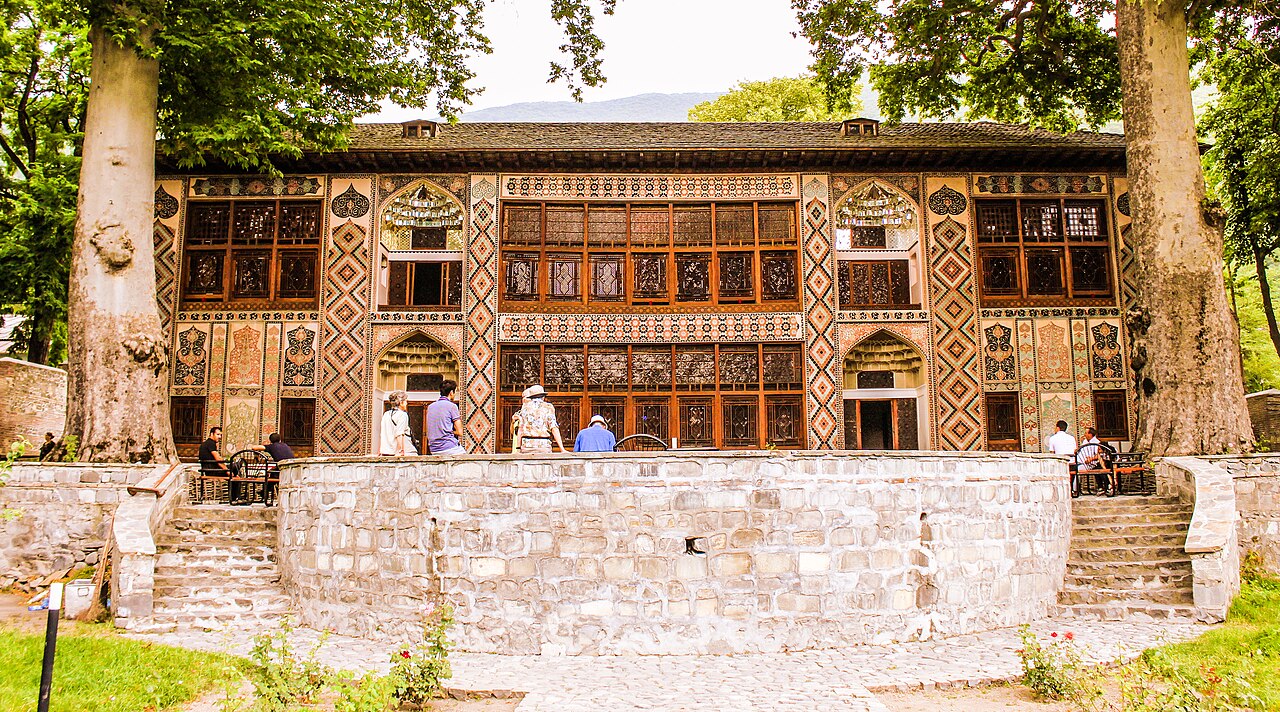
Personal life enriched his rule: He had at least three wives – Sharafnisa begüm (possibly Ottoman-linked), Saltanat begüm (sister of Mohammad Khan of Erivan), and Gowhar agha Javanshir (daughter of Ibrahim Khalil Khan of Karabakh). His children married into prominent families, such as son Ahmad Khan to daughters of Javad Khan of Ganja and Muhammad Husayn Khan Mushtaq. Descendants adopted the surname Khoyski, producing statesmen like Fatali Khan Khoyski, Prime Minister of the Azerbaijan Democratic Republic (1918–1920).


Challenges included local unrest: Pro-Iranian elements rebelled, requiring harsh suppressions. Jafar Qoli's decade-long rule aided Russian expansion, culminating in the Treaty of Gulistan (1813), which ceded Shaki to Russia.


Death and Enduring Legacy


Jafar Qoli Khan Donboli died on September 3, 1814, from malaria in Shaki, at an estimated age of 50–60. His son Ismail Khan succeeded him briefly until 1819, when Russia abolished the khanate. Buried in Shaki, his death marked the end of an era for the Donbolis as independent rulers.


His legacy is multifaceted: As a rebel against Qajar centralization, he symbolized local resistance; as a Russian ally, he facilitated imperial shifts in the Caucasus. Descendants like the Khoyskis played roles in Azerbaijani independence, while his maneuvers highlighted the vulnerability of tribal dynasties. In modern historiography, Jafar Qoli represents the complex interplay of ethnicity, diplomacy, and power in a region still contested today.


Jafar Qoli's life reminds us that history's "traitors" or "opportunists" often navigated impossible choices. From Khoy's throne to Shaki's exile, his story weaves through empires, leaving threads that endure in Kurdish, Iranian, and Azerbaijani narratives.


Origins and Antiquity - The Forerunners of the Kurds
£19.99£10.00
Buy Now
Kurdish History During the Islamic Era
£19.99£10.00
Buy Now
Kurdish History During The Ayyubid Era
£19.99£10.00
Buy Now
Kurdish History Under The Ottoman Empire
£19.99£10.00
Buy Now


References


Below is a compiled list of key historical sources and references related to Jafar Qoli Khan Donboli (d. 1814), drawing from reliable biographical, academic, and archival materials. These cover his life, rule over Khoy and Shaki, alliances with the Ottomans and Russians, family background, and legacy. Sources are listed in a numbered format with titles, authors (where available), publication details, and URLs for accessibility.

  1. Jafar Qoli Khan Donboli - Wikipedia entry on his biography, family (son of Sahbaz Khan Donboli), rule as last khan of Khoy (1798-1799) and khan of Shaki (1806-1814), and death from malaria in 1814.

  2. The Politics of Otomanism to Russianism in the Relations of Jafar Qoli Khan Donboli with the Qajar Government - Journal of Historical Researches article analyzing his shifting alliances from Ottomanism to Russianism, role in rebellions against Qajars, and governance in Shaki.

  3. Donbolī - Encyclopædia Iranica entry detailing the Donboli tribe's Kurdish origins, migration to Iran, conversion to Islam, and roles under Safavids, Zands, and Qajars, including Jafar Qoli Khan's career.

    • Authors: Dawud, Ali Al-e; Oberling, Pierre

    • Published: 1995

    • In: Yarshater, Ehsan (ed.). Encyclopædia Iranica. Vol. VII/5: Divorce IV–Drugs. London and New York: Routledge & Kegan Paul. pp. 492–495. ISBN 978-1-56859-023-3

    • URL: https://www.iranicaonline.org/articles/donboli-1

  4. Khoy (Ḵoy) - Encyclopædia Iranica online entry on the history of Khoy, including the Donboli khanate and Jafar Qoli Khan's rule and rebellion.

  5. Hosaynqoli Khan Donboli - Encyclopedia of the Islamic World entry (in Persian) on Hosayn Qoli Khan, with references to Jafar Qoli Khan's family relations and conflicts.

  6. The Politics of Otomanism to Russianism in the Relations of ... - SID PDF article on Jafar Qoli Khan's diplomatic shifts and interactions with Qajars, Ottomans, and Russians.

  7. The Politics of Otomanism to Russianism in the Relations of Jafar Qoli Khan Donboli with the Qajar Government - PDF from Journal of Historical Researches, including detailed bibliography on Donboli family and Qajar-era politics.

  8. Hosayn Qoli Donboli - Wikipedia entry on his brother Hosayn Qoli, with sources on Donboli tribe and family dynamics involving Jafar Qoli.

  9. The Role and Position of Kalbalikhan Kangarloo Nakhjavani in the First Round of Iranian-Russian Wars in the Caucasus - ResearchGate publication referencing Jafar Qoli Khan's alliances during Russo-Persian conflicts.

  10. Donboli - Wikipedia - Scribd PDF of Wikipedia content on the Donboli tribe's history, including medieval origins and 18th-19th century rulers like Jafar Qoli Khan.

    URL: https://www.scribd.com/document/547896320/Donboli-Wikipedia


Comments


Join our mailing list

Thanks for submitting!

  • Facebook Black Round
  • Twitter Black Round

© 2026 - Kurdish-History.com

bottom of page