A source-based introduction to Kurdish history: what language and archaeology reveal, how dynasties and literature are documented, and how twentieth-century treaties, repression and regional institutions changed political life.
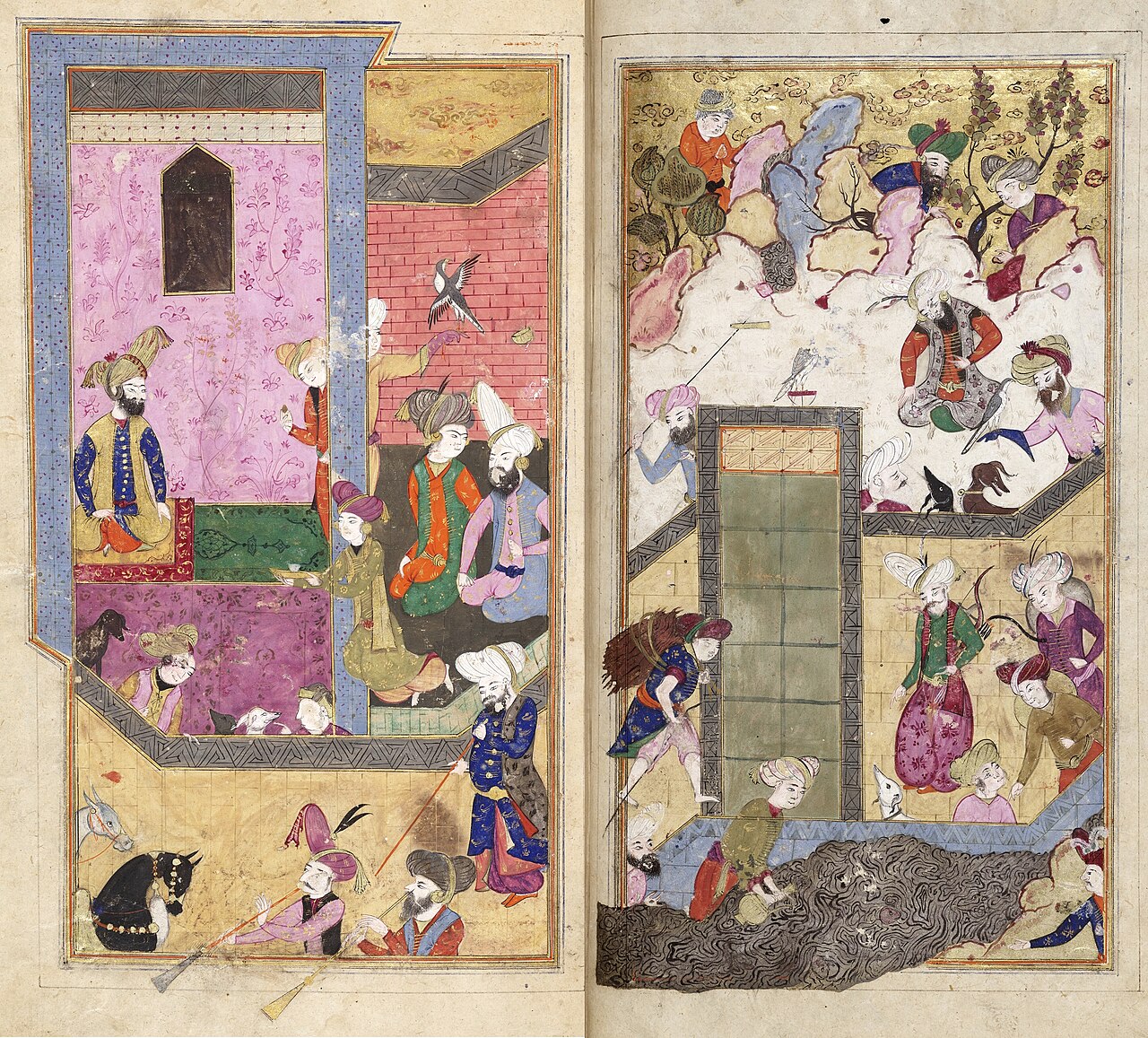
.jpg)
Origins: language, people and archaeological sites
Kurdish belongs to the Iranian branch of the Indo-European language family. “Iranian” here is a linguistic classification, not a requirement of citizenship in the modern state of Iran. Kurdish and Persian have distinct histories; Kurdish is not simply Persian spoken with a regional accent. Proposed links between modern Kurds and ancient peoples need separate examination. MacKenzie’s study of Kurdish origins challenges identifications based on similar-sounding names, including the Carduchi and Guti. A plausible regional connection does not by itself establish an unbroken ethnic genealogy. [1] [2]
Why an ancient settlement is not an ethnic birth certificate
Archaeology supplies a history of places and material life. At Erbil, UNESCO describes a mound accumulated through repeated construction and rebuilding, with records of ancient Arbela and an urban form strongly shaped by the Ottoman period. Those layers illuminate a city’s long history. They cannot independently identify every ancient inhabitant as a member of a present-day people. Claims of direct Median ancestry therefore need more than the antiquity of settlement in the Zagros or northern Mesopotamia. The history of the region and the formation of Kurdish identities overlap, but are different historical questions. [1] [3]
Dynasties and the Sharafnama
Sharaf Khan Bidlisi’s Sharafnama provides a major early modern account of Kurdish rulers and ruling houses. The illustrated 1597 manuscript held by the Bodleian is one surviving witness; scholarship also distinguishes revised versions from 1598 and 1599. The work was written in Persian. Its chapters organise dynastic and regional histories rather than describe a single continuous Kurdish nation-state. Such a text preserves names, political relationships and an author’s perspective; its genealogies and descriptions still require comparison with inscriptions, chronicles and other evidence. The image above is part of this manuscript tradition. [4] [5] [13]
Literature as historical evidence
Kurdish cultural history includes oral transmission and several written literary traditions. Kreyenbroek discusses classical Kurmanji poetry, Gorani writing associated with the Ardalan court, and the later development of literary Sorani. Ehmedê Xanî’s Mem û Zîn is a long narrative poem; his Nûbihara Biçûkan is a rhyming Arabic–Kurdish vocabulary for students. These works show literary ambition and educational activity, rather than merely supplying a list of famous names. Different literary languages and patrons also complicate the idea of one uniform cultural history. [6]
Sèvres and Lausanne: different texts, different provisions
The Treaty of Sèvres, signed on 10 August 1920, proposed local autonomy in a defined predominantly Kurdish area in Article 62. Article 64 described a conditional route to independence involving a majority request and a recommendation from the League of Nations. It did not automatically establish a state for all Kurdish-inhabited territories. The British government subsequently confirmed that the treaty never entered into force. Lausanne, signed on 24 July 1923, contained no equivalent Kurdish autonomy scheme. However, saying it recognised no rights at all is also inaccurate: Article 39 included language-use protections for Turkish nationals, alongside provisions specifically concerning non-Muslim minorities. Treaty wording and later enforcement are separate questions. [7] [8] [9]
Different political histories across borders
The short-lived republic at Mahabad in 1946 is one example of Kurdish self-government in Iran. Archie Roosevelt visited during its existence and published a contemporary account in 1947; Yale’s catalogue identifies his fieldwork and the article’s coverage of Kurdish, Soviet, Azerbaijani and Iranian relations. Syria presents a different case. Human Rights Watch’s 1996 investigation, based on fieldwork in 1995, documented statelessness following the exceptional Hasakeh census of 1962. It records how members of a family could receive different classifications. The report describes conditions at that time, not the legal status of every Syrian Kurd today. Neither episode should be flattened into a single identical experience across four states. [10] [11]
Anfal and the evidence for state violence
In Iraq, the 1988 Anfal campaigns involved mass detention, disappearance, killings, chemical attacks and village destruction. Human Rights Watch’s 1993 investigation combined survivor interviews with captured Iraqi documents and other evidence. Its chapter sequence reconstructs the operations and detention system rather than relying on a general description of suffering. For an overview, the central point is that this history rests on identifiable records and witness accounts. A reader can examine the report’s methodology and distinguish individual testimony, official orders and subsequent historical conclusions. [12]
Regional institutions before and after 2003
The Kurdistan Regional Government did not first appear after the 2003 invasion of Iraq. The 1991 uprising preceded regional elections on 19 May 1992 and the creation of regional institutions. The Parliament’s anniversary record and the Region’s official history document this chronology. Iraq’s 2005 Constitution then recognised the Kurdistan Region and its existing authorities as a federal region in Article 117; Article 4 established Arabic and Kurdish as official languages. Constitutional recognition of existing authorities is different from creating the government for the first time. These institutional dates give a firmer foundation than describing all political change as an uninterrupted march toward one outcome. [14] [15] [16]
Sources and further reading
- D. N. MacKenzie, “The Origins of Kurdish”, Transactions of the Philological Society 60(1) (1961), pp. 68–86; historical-linguistic argument, including criticism of name-based ancestry claims.
- Joyce Blau, “Kurdish Language ii. History of Kurdish Studies”, Encyclopaedia Iranica; history of linguistic research and the distinction between Kurdish and Persian.
- UNESCO World Heritage Centre, Erbil Citadel; archaeological mound, ancient Arbela and Ottoman urban form.
- Bodleian Libraries, MS. Elliott 332, Sharafnama; digitised primary manuscript.
- Sacha Alsancakli, “Historiography and Language in 17th-Century Ottoman Kurdistan: a Study of Two Turkish Translations of the Sharafnāma”, Kurdish Studies Archive; manuscript versions and translation history.
- Philip G. Kreyenbroek, “Kurdish Written Literature”, Encyclopaedia Iranica; named works, literary languages and the limits of early biographical evidence.
- Treaty of Sèvres (10 August 1920), British Treaty Series No. 11, Articles 62–64; primary treaty text.
- UK Parliament, Hansard, “Treaty of Sevres” (18 February 1983); ministerial confirmation that the treaty never entered into force.
- Treaty of Lausanne (24 July 1923), especially Articles 37–45 and Article 39; primary text transcribed by Brigham Young University’s World War I Document Archive.
- Archie Roosevelt Jr., “The Kurdish Republic of Mahabad”, Middle East Journal 1 (1947), pp. 247–269; Yale eHRAF publication record and abstract identify the author’s 1946–47 fieldwork. Full article access may require a subscription.
- Virginia N. Sherry, Syria: The Silenced Kurds, Human Rights Watch (October 1996); investigation based on fieldwork in Syria in 1995.
- Human Rights Watch, Genocide in Iraq: The Anfal Campaign Against the Kurds (July 1993); primary interviews, documents, methodology and operational chronology.
- Council scene in the 1597 Sharafnama, Bodleian Library MS. Elliott 332; Wikimedia Commons public-domain reproduction.
- Presidency of the Kurdistan Parliament, twenty-seventh election anniversary statement (19 May 2019); records the election of 19 May 1992.
- Presidency of the Kurdistan Region, official regional history; 1991 uprising and establishment of parliament and government after the 1992 elections.
- Iraq Constitution (2005), Articles 4 and 117; primary constitutional text in English translation, hosted by Constitute.