Kalhor’s own account of Silent City, documented recording partnerships and ensemble awards explain a career built around improvisation, memory and the kamancheh.
A musician working across traditions
Kayhan Kalhor is an Iranian musician and composer from a Kurdish family, as he explains in his own account of creating Silent City. [1] His artistic work includes Persian classical performance and study of regional traditions, particularly those of Kurdistan and Khorasan. His official biography names Dastan and Masters of Persian Music among the ensembles he co-founded, while Silkroad also identifies Ghazal: Persian & Indian Improvisations. [2] [3] These ensembles place him in distinct settings, including Persian chamber performance, Indian–Persian dialogue and larger international collaborations. His work connects solo performance, composition and sustained exchange with other musicians.
The instrument and its movement
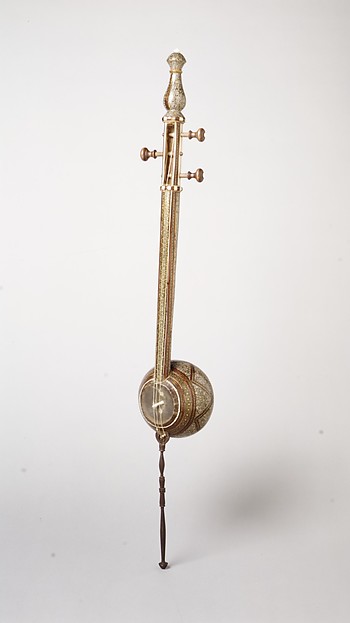
The kamancheh is a bowed spike fiddle held upright. In his interview, Kalhor explains that the player rotates the instrument when moving between strings. [1] The nineteenth-century example pictured above has a round resonator and long neck, with a metal spike below. The Met identifies its decoration as khatam-kari, a mosaic of small pieces of wood, bone and brass. [4] This historic instrument provides context for the family of instruments he plays; it is not a photograph of his personal kamancheh. Understanding the upright support and movement helps explain the physical relationship between player, bow and resonating body.
Silent City and the memory of Halabja
Kalhor describes Silent City as a response to the 1988 chemical attack on Halabja. He developed it with musicians of the Silk Road Project, asking them to participate in a work that would preserve memory. His account explains how directed improvisation, instrumental dialogue and a later notated section form an arc from stillness and disorder towards renewed life. Players have freedom within shared cues and destinations. [1] His official discography credits the 2008 album to Kalhor and Brooklyn Rider. [5] That identifies the recording partnership precisely, while his explanation supplies a direct connection between Kurdish historical memory and the making of the music.
The Wind: listening to a collaboration
The Wind pairs Kalhor’s kamancheh with Erdal Erzincan’s bağlama, with Ulaş Özdemir also credited on divan bağlama. ECM records the sessions in Istanbul in November 2004 and the release on 26 September 2006. The album is divided into twelve linked parts. In the label’s account, Kalhor describes inviting Erzincan to develop extended instrumental improvisation rather than the usual succession of songs. [6] The project is therefore a documented working process, with named musicians and a recorded session, rather than simply a general claim of bridging cultures.
Awards and ensemble credits
The Recording Academy lists Sing Me Home by Yo-Yo Ma and the Silk Road Ensemble as the winner of Best World Music Album at the 2017 Grammy Awards. [7] Kalhor’s participation belongs to that ensemble achievement. WOMEX separately awarded him its 2019 Artist Award, citing his playing, innovation and collaborations. Its own announcement names partners including Shujaat Khan, Toumani Diabaté, Kronos Quartet and Brooklyn Rider. [8] These records distinguish a shared album award from an individual career honour.
A note on biographical detail
Published first-party biographies disagree about birthplace: Kalhor’s website says Tehran, while Silkroad says Kermanshah. [2] [3] This profile preserves that discrepancy rather than presenting one city as settled. His own description of his Kurdish family, his regional studies and the Halabja commemoration are direct evidence for the cultural connections discussed here. [1] [2]
Sources and further reading
- Kayhan Kalhor interviewed by June Cohen, Spark and Fire: Silent City, transcript, especially chapters 3–8; first-person account of instrument, family and composition.
- Kayhan Kalhor, official biography; regional studies, ensembles and the website’s birthplace statement.
- Silkroad, Kayhan Kalhor artist biography; ensemble affiliations, composition and its birthplace statement.
- The Metropolitan Museum of Art, Kamanche, Tehran circa 1880, 1998.72; materials, playing position and public-domain photograph.
- Kayhan Kalhor, Silent City, official album record; Kalhor and Brooklyn Rider, 2008.
- ECM Records, The Wind, ECM 1981; recording and release dates, performer credits and Kalhor’s account of the collaboration.
- Recording Academy, 59th Grammy Awards, Best World Music Album: Sing Me Home, Yo-Yo Ma and the Silk Road Ensemble, 2017.
- WOMEX, 2019 Artist Award recipient Kayhan Kalhor; award announcement and named collaborators.