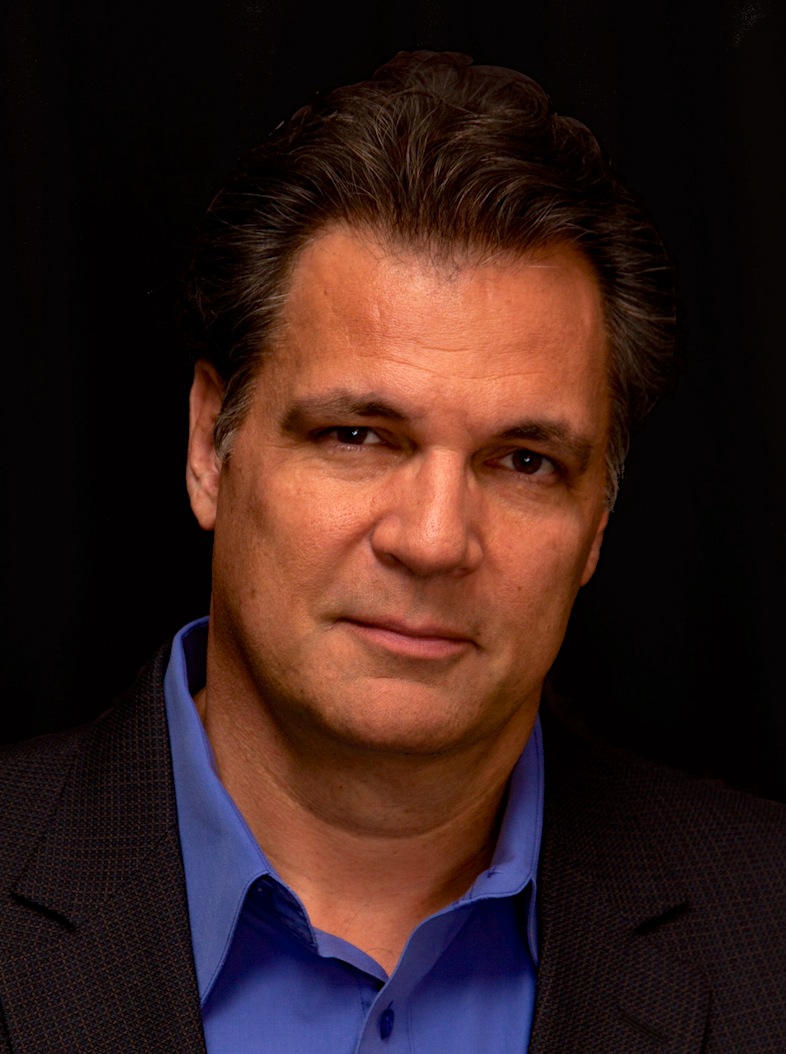
Stephen Mansfield: The American Author Who Told the World “The Miracle of the Kurds”
- Rezan Babakir

- 1 day ago
- 9 min read

Stephen Mansfield: The American Author Who Told the World “The Miracle of the Kurds”
Who Is Stephen Mansfield?
Stephen Mansfield (born 1958) is an American New York Times bestselling author, speaker, and leadership coach who became one of the most widely read Western chroniclers of the modern Kurdish story. His 2014 book, The Miracle of the Kurds, is an accessible introduction to Iraqi Kurdistan written for a general American audience, and it was named “Book of the Year” by Rudaw, the leading Kurdish news service.
He is also known among Kurds for his 2016 TEDxNashville talk, “The Kurds: The World’s Most Famous Unknown People,” and for continuing to speak in support of the Kurdish cause. Mansfield is not Kurdish and not an academic historian; his role has been that of a sympathetic outsider who used a bestselling platform to bring the Kurdish story to Western readers.
Key Takeaways
Stephen Mansfield is an American author and speaker who used a bestselling-author platform to introduce Kurdistan to Western readers.
His book The Miracle of the Kurds (2014) frames the rebuilding of Iraqi Kurdistan after Saddam Hussein’s genocide as one of the great recovery stories of modern times.
The book was named “Book of the Year” by Rudaw in 2015, and Mansfield has been interviewed repeatedly by Kurdish media.
He first encountered the Kurds through Christian humanitarian work in northern Iraq in the aftermath of the 1991 Gulf War.
His work is praised for raising the Kurdish profile among Americans, though some critics argue it is more celebratory than analytically rigorous.
Quick Facts
Full Name | Stephen Mansfield |
Also Known As | No widely used alternative forms |
Born | 1958, Georgia, United States |
Place of Birth | Georgia, USA (raised largely in Europe) |
Background | American; son of a U.S. Army officer |
Occupation / Role | Author, public speaker, leadership coach |
Era | Late 20th – 21st century |
Known For | The Miracle of the Kurds (2014); advocacy for the Kurdish cause |
Key Works | The Miracle of the Kurds; The Faith of George W. Bush; Killing Jesus; The Search for God and Guinness |
Associated With | Rudaw; Iraqi Kurdistan; The Mansfield Group; Chartwell Literary Group |
Historical Importance | One of the most widely read Western popularisers of the modern Kurdish story |
Table of Contents
Early Life and Background
Stephen Mansfield was born in 1958 in Georgia, in the United States. Because his father served as an officer in the U.S. Army, he spent much of his childhood in Europe. By his own accounts he had an active, restless youth filled with sports and travel, and was recruited to play college football before a Christian conversion redirected him toward study at a Christian college.
He earned a bachelor’s degree in history and philosophy (some sources describe it as history and theology), then spent a decade in Texas, where he pastored a church, completed two master’s degrees, hosted a radio programme, and began building a reputation as a speaker known for both substance and humour. In 1991 he moved to Nashville, Tennessee, to join the leadership of a large megachurch, where he became the senior leader for roughly eleven years and later earned a doctorate.
It is worth stating plainly: Mansfield is an American writer, not a Kurd. His connection to Kurdish history is that of an outside observer and advocate. Understanding his background — evangelical Christian, faith-and-leadership author, and humanitarian traveller — helps explain both the strengths and the limits of how he tells the Kurdish story.
Historical Context: How an American Met the Kurds
Mansfield first encountered the Kurds in the early 1990s, when he travelled to northern Iraq in connection with Christian charities helping the community after the Gulf War. The Kurdistan he saw then was, in his own description, a dangerous and war-ravaged place — a region scarred by the 1988 Anfal genocide and the chemical attack on Halabja, traumatised by the failed 1991 uprising and mass displacement, and soon torn by an internal Kurdish civil war between rival factions in the mid-1990s.
The political backdrop was the creation of a protected, largely self-governing Kurdish zone in northern Iraq after 1991, shielded by a Western no-fly zone. Over the following two decades, and especially after the 2003 fall of Saddam Hussein, the Kurdistan Region of Iraq experienced a dramatic economic boom centred on Erbil (Hewler) and Sulaymaniyah.
When Mansfield returned years later, he found a transformed landscape — a modern airport, new hotels and office towers, shopping centres, and rebuilt neighbourhoods where war and sanctions had once defined daily life. That contrast between devastation and recovery became the central image of his book. The Miracle of the Kurds appeared in 2014, just as Kurdish forces were becoming central to the ground war against the Islamic State (ISIS), which gave the book added timeliness in the American conversation.
Major Contributions to the Kurdish Story
Mansfield’s contribution to Kurdish history is not as a soldier, politician, or scholar, but as a communicator — someone who carried the Kurdish story to a mainstream Western audience at a moment when the Kurds badly needed sympathetic attention.
The Miracle of the Kurds (2014)
The Miracle of the Kurds: A Remarkable Story of Hope Reborn in Northern Iraq is Mansfield’s best-known Kurdish work. Its thesis is captured in the title: that a people repeatedly betrayed and nearly destroyed — once described as “the people without a friend” — rebuilt one of the most prosperous and hopeful societies in the modern Middle East. The book traces Kurdish identity back to the ancient Medes and presents the post-1991 recovery of Iraqi Kurdistan as a remarkable act of resilience.
Stylistically, the book is written for a general reader rather than a specialist. Mansfield favours an autobiographical, story-driven approach, telling the larger history through individual lives. He has said he believes history is best understood through people, which is why the narrative is built around figures such as President Masoud Barzani and a Kurdish woman named Bayan, among others.
The 2016 TEDx Talk
In 2016 Mansfield delivered a TEDxNashville talk titled “The Kurds: The World’s Most Famous Unknown People.” In it he framed the Kurds as roughly 35 million strong — the largest people group on earth without a state of their own — and as the primary “boots on the ground” against ISIS at that time. Notably, he chose to tell the entire Kurdish story through the lives of three Kurdish women, an approach that drew attention to Kurdish women’s prominent role in the fight against ISIS.
Advocacy and the Kurdish Media
Mansfield has been interviewed several times by Rudaw, which named The Miracle of the Kurds its “Book of the Year” in 2015, and he has continued to speak in the United States and abroad in support of the Kurdish cause. In interviews he has described his goal as helping Western audiences “distinguish” the Kurds — to see them as a distinct people with their own attitudes toward women, the West, and pluralism, rather than folding them into broad and often hostile Western assumptions about the wider region.
A Wider Writing Career
Mansfield’s Kurdish work sits within a much larger career. He is the author of more than thirty books, including The Faith of George W. Bush — a bestseller that served as a source for Oliver Stone’s film W. — as well as The Faith of Barack Obama, The Search for God and Guinness, Lincoln’s Battle with God, and Killing Jesus, plus biographies of Winston Churchill, Booker T. Washington, George Whitefield, and Pope Benedict XVI. He founded two firms, The Mansfield Group and Chartwell Literary Group. His central subjects are faith, leadership, and history, and the Kurdish book grew naturally out of that combination of interests and his humanitarian travels.
Timeline and Key Events
1958 — Stephen Mansfield is born in Georgia, USA; raised largely in Europe.
c. 1991 — Moves to Nashville; begins humanitarian work among Iraqi Kurds in the aftermath of the Gulf War.
2003 — The Faith of George W. Bush becomes a New York Times bestseller.
2014 — The Miracle of the Kurds is published as Kurdish forces confront ISIS.
2015 — Rudaw names The Miracle of the Kurds its “Book of the Year.”
2016 — Delivers the TEDxNashville talk “The Kurds: The World’s Most Famous Unknown People.”
Debates, Controversies, and Misconceptions
Because Mansfield is an admiring outsider rather than a neutral historian, his Kurdish work has drawn both praise and criticism. Presenting these fairly is important.
Celebratory versus analytical. Some reviewers argue that The Miracle of the Kurds reads at times more like a celebration of Iraqi Kurdistan than a rigorous analysis. Critics note that it gives limited attention to harder political realities — corruption, the long rivalry between the Kurdistan Democratic Party (KDP) and the Patriotic Union of Kurdistan (PUK), intra-Kurdish conflict, and the structural limits of the so-called “miracle.” Readers looking for critical political history are usually pointed toward academic works instead.
A faith-shaped lens. Mansfield writes openly as an evangelical Christian, and his first contact with the Kurds came through Christian relief work. Some observers note that this shapes his framing — for example, his emphasis on Kurdish openness to the West and to religious minorities. This is not hidden in his work, but it is part of understanding his perspective.
A snapshot in time. The book focuses on Iraqi Kurdistan (Bashur) and the economic boom of the late 2000s and early 2010s. It says far less about Kurds in Turkey, Syria, and Iran, and it predates the difficulties that followed — the fallout from the 2017 independence referendum, the loss of Kirkuk, and subsequent economic strain. The “miracle” it describes is best read as a portrait of a particular moment, not a permanent verdict.
Not a primary source. Finally, it is a misconception to treat Mansfield as a scholarly authority on Kurdish history. His value lies in popular communication and advocacy; for academic depth, readers should turn to dedicated historians of the Kurds.
Legacy and Significance
For many Kurds — especially within the Kurdistan Region and the diaspora — Stephen Mansfield is valued as a sympathetic Western voice who told their story to Americans at a time when they felt friendless. Rudaw’s decision to name his book “Book of the Year” reflects that gratitude, as does the warmth with which Kurdish media have received him.
His significance lies not in original scholarship or political power but in reach. Through a bestselling book and a widely shared TEDx talk, he helped make the Kurdish cause legible and sympathetic to a mainstream English-speaking readership, and he consistently highlighted Kurdish resilience and the role of Kurdish women. In the long history of the Kurds’ search for recognition, Mansfield belongs to a smaller story — that of the outside friends and advocates who have helped carry the Kurdish name into the wider world.
Related People, Places, and Topics
Masoud Barzani — President of the Kurdistan Region, a central figure in Mansfield’s narrative
Rudaw — the Kurdish news service that named his book Book of the Year
Erbil (Hewler) — capital of the Kurdistan Region and symbol of its rebuilding
Iraqi Kurdistan (Bashur) — the focus of The Miracle of the Kurds
The Anfal genocide and Halabja — the atrocities that frame the book’s “before”
The Peshmerga — Kurdish forces central to the fight against ISIS
Kurdistan Regional Government (KRG) — the governing authority of the boom years
David McDowall, A Modern History of the Kurds — a scholarly counterpart for deeper history
Frequently Asked Questions
Who is Stephen Mansfield?
Stephen Mansfield is an American New York Times bestselling author, speaker, and leadership coach, born in 1958. Among Kurds he is best known for his 2014 book The Miracle of the Kurds and his advocacy for the Kurdish cause.
What is Stephen Mansfield best known for in relation to the Kurds?
He is best known for The Miracle of the Kurds (2014), an accessible account of Iraqi Kurdistan’s recovery after Saddam Hussein’s genocide, and for his 2016 TEDxNashville talk, “The Kurds: The World’s Most Famous Unknown People.” His book was named Book of the Year by Rudaw.
Is Stephen Mansfield Kurdish?
No. Mansfield is an American writer of no Kurdish ancestry. His relationship to Kurdish history is as a sympathetic outsider, advocate, and chronicler, not as a member of the community.
Why did Stephen Mansfield write about the Kurds?
His interest grew out of Christian humanitarian work in northern Iraq after the 1991 Gulf War. He has said he wanted to help Western audiences “distinguish” the Kurds as a distinct people and to tell the story of their recovery from genocide.
Is The Miracle of the Kurds a reliable history?
It is a readable popular introduction rather than an academic history. It is admired for raising the Kurdish profile, but some critics find it more celebratory than analytical and note that it gives limited space to corruption, factional rivalry, and later setbacks. For scholarly depth, dedicated histories of the Kurds are more appropriate.
Why is Stephen Mansfield important to Kurds?
Because he reached a large Western audience with a sympathetic account of the Kurdish story at a pivotal moment, and was honoured by Kurdish media for doing so. His importance lies in advocacy and visibility rather than scholarship or politics.
References and Further Reading
Stephen Mansfield, The Miracle of the Kurds: A Remarkable Story of Hope Reborn in Northern Iraq, Worthy Publishing, 2014.
David McDowall, A Modern History of the Kurds, I.B. Tauris (for deeper scholarly history of the Kurdish people).
Comments