Kurdish life in Syria includes a history of political organisation, citizenship exclusion and cultural restrictions. Dated investigations help distinguish that history from unsupported online claims about entire communities.
Communities and political organisation
Human Rights Watch’s 2009 report locates Kurdish communities in the Jazira, around Ain al-Arab and Afrin, and in Aleppo and Damascus. It records the formation of the Kurdish Democratic Party of Syria in 1957 around cultural recognition, land reform and democracy. The coalition did not demand independence; repression and subsequent fragmentation shaped its history. [1] A population’s language, a party’s programme and a person’s citizenship are different subjects. Claims about one cannot automatically establish the others.
What the 1962 census did
Human Rights Watch’s 1996 investigation documents an exceptional census in Hasakeh in 1962 that stripped approximately 120,000 Kurds of Syrian citizenship. People had to establish residence since at least 1945, and the report describes arbitrary outcomes within families. Syrian-born people without another nationality became stateless. The report distinguishes registered ajanib, classified as foreigners, from unregistered maktumeen. It documents consequences for property, recognised marriages, travel and children’s schooling. [2] Administrative classification as a foreigner did not prove that an individual had immigrated.
Arabisation and cultural restrictions
The 2009 investigation describes the Arab belt programme and its implementation as state farming settlements in the 1970s. Kurdish landowners lost land, and Arab families displaced by the Tabqa dam were resettled in the area. The report also documents restrictions on Kurdish publications, names and cultural celebrations. [1] These were specific state policies with identifiable consequences. They do not justify assigning responsibility to every Arab resident or treating neighbouring communities as a single political actor.
The 2011 decree and its limits
Syrians for Truth and Justice’s October 2022 report explains that Decree 49 of 2011 applied to registered ajanib in Hasakeh. Maktumeen were excluded from that collective route, although some later changed their registration category and obtained citizenship. Drawing on documentation and information obtained from civil-status officials, STJ reported continuing statelessness in 2022. [3] This is a dated account of the decree’s scope and implementation. Its figures should not be presented as a new census of Syria’s population in 2026.
Yazidi language and self-identification
NIOD’s account describes Yazidis as a Kurdish-speaking ethnoreligious community, with a distinct religious tradition and settlement areas across the Turkey–Syria–Iraq border region. It also explains differences in self-identification: many Yazidis identify with a Kurdish nation, while others, particularly from Sinjar, insist on a separate Yazidi identity. [4] Language alone does not settle every question of belonging. Respecting people’s own identification avoids replacing their experiences with a political slogan.
Armed organisations and accountability
Amnesty International’s April 2024 investigation distinguishes the Syrian Democratic Forces, affiliated security forces and the civilian autonomous administration. Its research included three visits and interviews with detainees, officials and others. It documented arbitrary detention, torture and deaths in the detention system associated with Islamic State’s defeat. The authorities responded that conflict conditions, inadequate international assistance and failures to repatriate foreign nationals constrained them. [5] Fighting Islamic State does not remove an authority’s responsibility for abuses; allegations also require identification of the institution and conduct involved. These are findings and responses from 2024, not a description of current territorial control.
An example of checking an online claim
A January 2019 VOA Polygraph fact-check examined Maram Susli’s claim that a Venezuela news blogger concealed being based in Canada. VOA rated the claim misleading: the author’s Toronto connection and research background were publicly disclosed. [6] That finding concerns one identifiable Venezuela-related post. It does not verify the Kurdish-related quotations previously attributed to Susli on this page. An original post, its date, context and an accurate translation are needed before reproducing an alleged statement.
Correction to the earlier article
The earlier version used personal insults, attributed quotations without original-post links, and presented sweeping claims about ancestry and collective guilt. Those unsupported attributions and assertions have been removed. The references below support the specific historical events, institutional findings and dated fact-check discussed here. Disagreement should be assessed through evidence for a particular claim, with uncertainty stated where that evidence is missing.
Sources and further reading
- Human Rights Watch, Group Denial, 26 November 2009, background and methodology.
- Human Rights Watch, The Silenced Kurds, October 1996, summary of its investigation.
- Bassam Alahmad, Statelessness in Syria: An Enduring Dilemma, STJ, 11 October 2022.
- NIOD, Ten years of ongoing genocide against the Yazidis, identity and historical background sections.
- Amnesty International, Syria: mass death, torture and other detention violations, investigation and responses, 17 April 2024.
- VOA Polygraph, Pro-Assad Blogger “Discovers” Venezuelan News Blog’s Author Lives in Canada, 30 January 2019.
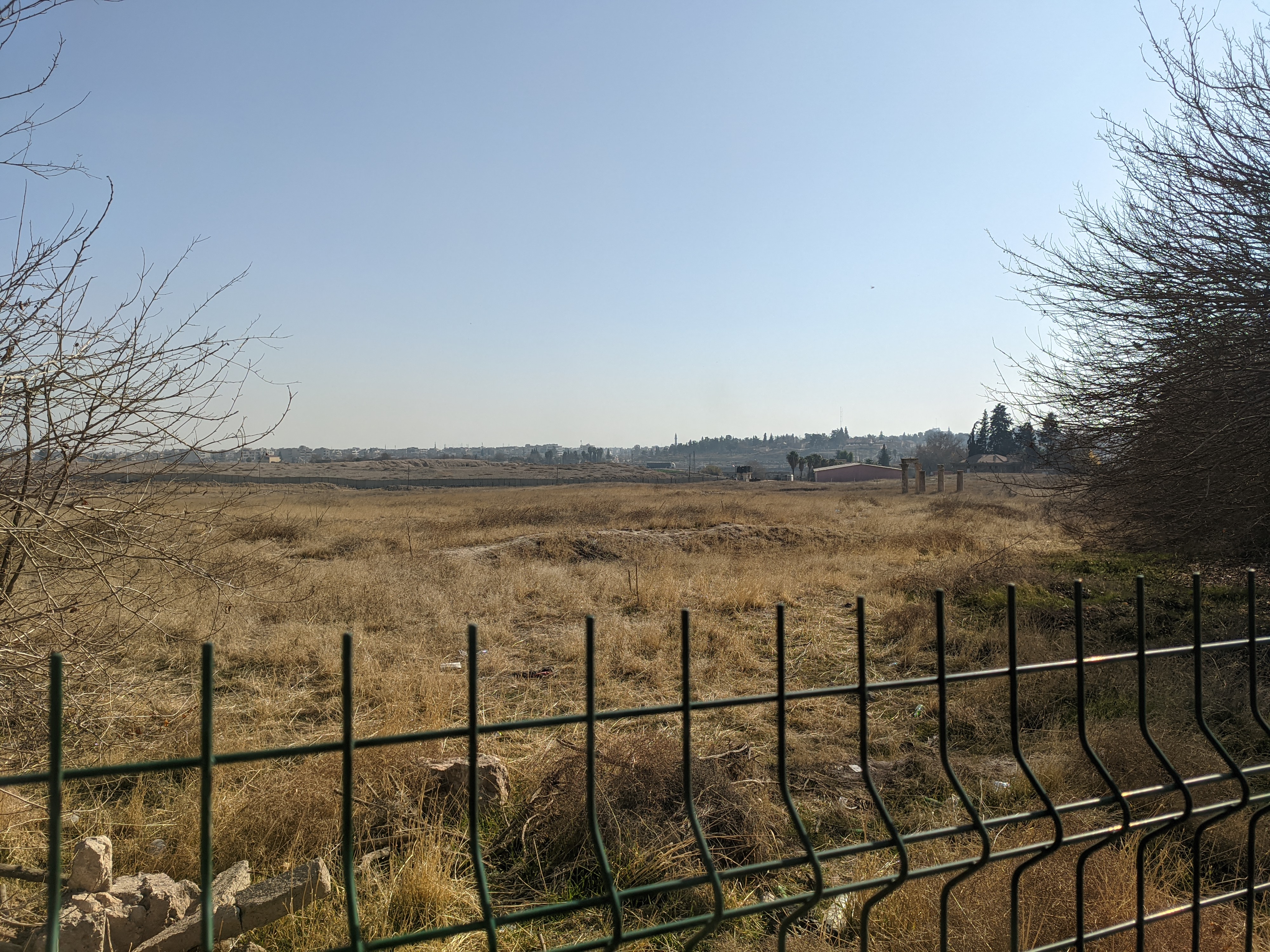
- Oystercard, Qamishli–Nusaybin border zone, 22 January 2023, CC BY-SA 4.0.