Zrêbar, also recorded as Zarivar and Zirewar, is a freshwater wetland beside Marivan in Iran’s Kurdistan Province. Its springs, reed beds, local livelihoods and ancient sediments make it a significant landscape in the Kurdish Zagros.
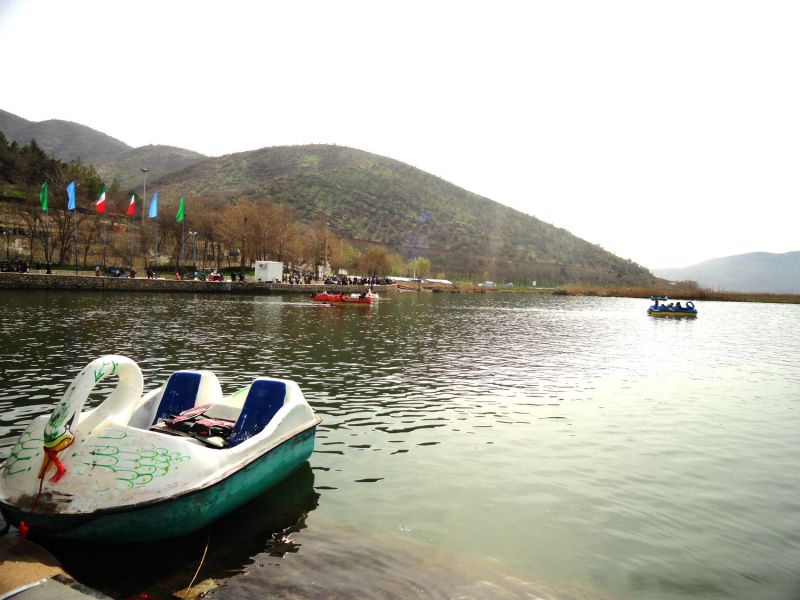

A spring-fed lake and a wider wetland
The Ramsar Information Sheet identifies Marivan as the nearest town and describes oak-covered Zagros mountains around the wetland. It records springs rising from the lake bed as a principal water source. The same document gives the formal designation date as 17 July 2016, site number 2369 and an official area of 2,185.58 hectares. The sheet itself was published on 31 January 2019. [1] The designated area includes wetland habitats and should not be treated as a measurement of open water alone.
Reed beds are habitats
The Convention on Wetlands’ February 2019 announcement explains the role of the relatively extensive reed beds as places for breeding, resting and overwintering, particularly for northern migratory birds. It reports 74 bird species identified in the wetland and names the lesser white-fronted goose and red-breasted goose among species of conservation concern. [2] This gives a concrete ecological basis for the lake’s importance. Reeds form part of the habitat mosaic; their presence alone is not evidence that the lake is being damaged. The landscape includes both open water and the sheltered edges used by wildlife.
Fishing, recreation and local households
The information sheet, compiled using material from 2012–2017, connects the wetland with Marivan and nine villages. It reports fishing supporting more than forty local families and ecotourism services supporting over a hundred. [1] Those are figures from a dated record, rather than a current employment survey. The account shows why decisions about the lake affect livelihoods as well as scenery. The photograph offers a separate dated view of recreational use: pedal boats, the promenade and surrounding hills in 2016.
What plant remains reveal about the distant past
Krystyna Wasylikowa’s 2005 study used plant macrofossils to reconstruct aquatic and marsh vegetation over roughly 40,000 years. Seeds and other remains recorded repeated low-water and increased-salinity episodes, with particularly pronounced lowering during the Younger Dryas. Her interpretation linked many changes to dry climatic conditions while also considering deposition on the alluvial fans that retain the lake. [3] The research shows that the lake’s environment has changed over long periods. Its sediment history provides evidence for those changes beyond what a present-day photograph can reveal.
An accessible record of scientific dating
Sytze Bottema’s age-determination dataset for the ZERIBAR sediment core is archived by the European Pollen Database through PANGAEA. Published in 2010, its metadata describes sediment depths, radiocarbon ages, laboratory identifiers and dating uncertainties. [4] Those uncertainties are part of the evidence used to build a chronology. The publication year refers to the archived dataset, not the age of the sediment or the formation of the lake. Together, the wetland record and palaeoecological research connect present livelihoods and habitats with a much longer environmental history.
Sources and further reading
- Reyhane Parhizgar, Zhaleh Amini and Kaveh Mohammadpoor, Iran Department of Environment, Ramsar Information Sheet: Zarivar, site 2369, published 31 January 2019; designation date 17 July 2016, habitats, location and dated livelihood figures.
- Convention on Wetlands, Islamic Republic of Iran Designates Zarivar as a Ramsar Site, 1 February 2019; announcement, reed-bed functions and recorded wildlife.
- Krystyna Wasylikowa, Palaeoecology of Lake Zeribar, Iran, in the Pleniglacial, Lateglacial and Holocene, Reconstructed from Plant Macrofossils, The Holocene 15/5 (2005), 720–735, DOI 10.1191/0959683605hl846rp; public research abstract.
- Sytze Bottema (2010), Age Determination of Sediment Core ZERIBAR, Lake Zeribar, Iran, European Pollen Database, PANGAEA, DOI 10.1594/PANGAEA.740879; dataset metadata and chronology parameters.