Museum collections, memorial installations and architectural proposals answer different questions. Examples from Slemani and Erbil show how archaeological research, remembrance and contemporary art contribute to preserving history, while keeping an exhibited object distinct from a reconstruction or a planned building.
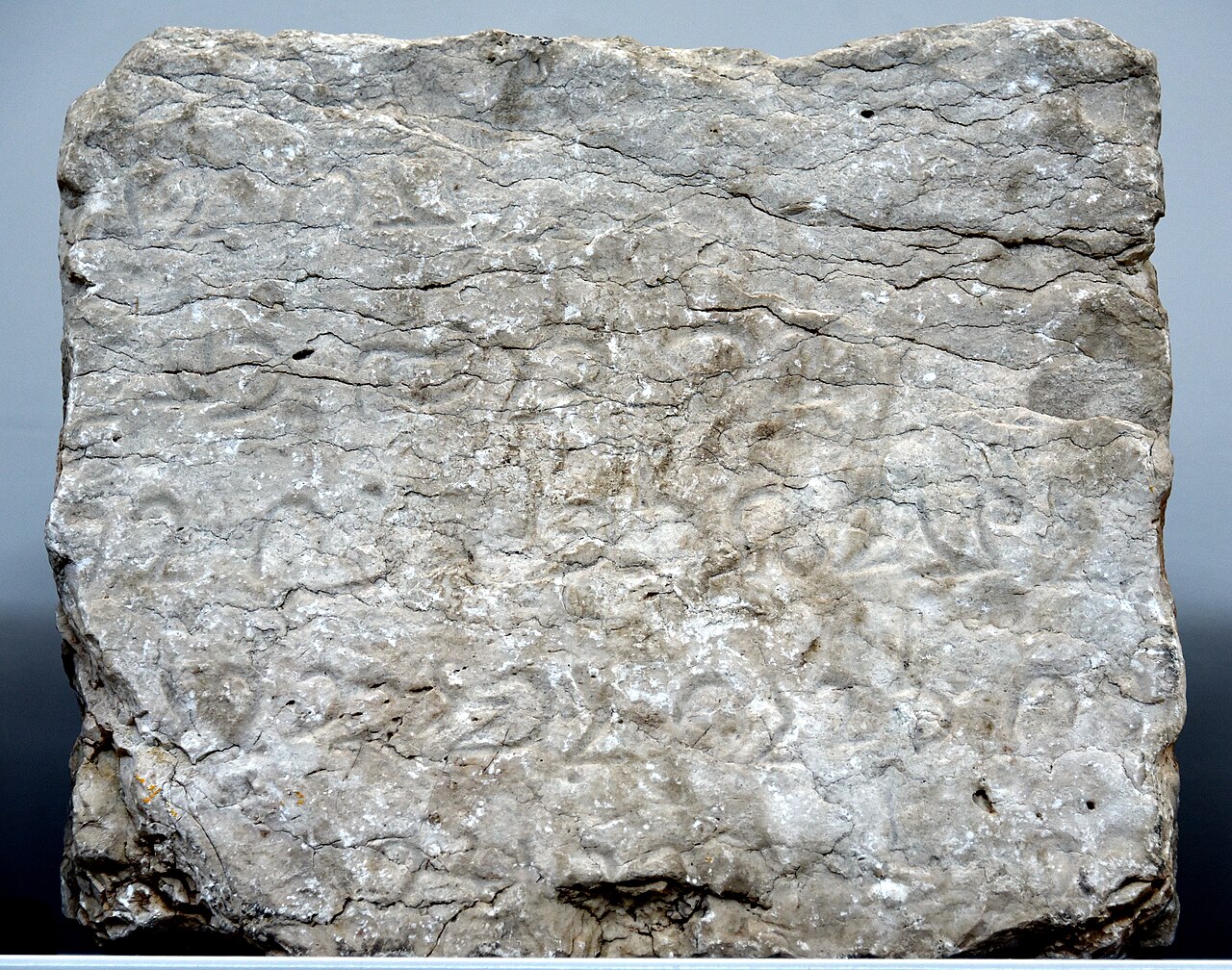

Slemani Museum connects objects with research
The Central Zagros Archaeological Project dates Slemani Museum’s foundation to 1961 and its Prehistory Gallery to February 2021. It names cave sites including Hazar Merd, Palegawra and Zarzi, alongside early farming settlements Jarmo and Bestansur. [1] These collections address changing environments, food, settlement and community life. The project also describes scientific laboratories and a school education programme. Archaeological material found in the Kurdistan region belongs to many historical periods; its location should not turn every ancient object into proof of a single modern ethnic identity.
Paikuli shows why conservation is historical work
MAIKI explains that inscribed Paikuli blocks and royal sculptures were moved to Slemani Museum in the 1990s because of looting risks. The bilingual inscription is in Middle Persian and Parthian. Cataloguing, epigraphic study and restoration supported the Paikuli Gallery opened on 11 June 2019; a separate King Narseh Gallery opened on 24 October 2021. [2] Documentation and digital models help researchers test connections between fragments. A reconstructed arrangement presents an interpretation of surviving pieces, not an untouched monument brought indoors.
Amna Suraka interprets violence through a place
In his first-person account published in January 2018, Omar Altabakha describes a former security prison in Sulaymaniyah converted into a museum in 2003. He explains that the mirror hall’s fragments commemorate Anfal victims and its lights represent destroyed villages. [3] That distinction matters: the installation gives material form to remembrance, while its symbolic units are not an independently measured casualty dataset. A former prison, an explanatory panel and a designed memorial each offer a different kind of encounter with history.
A memorial museum can also host contemporary art
Sakar Sleman’s own exhibition record lists her installation Two Generations at Amna Suraka in 2014. Her artist statement connects her practice with memory, womanhood, displacement and trauma. [4] This is a specific documented relationship between a working artist and a museum venue. It does not establish that the installation remains permanently on display. Artist records, exhibition dates and medium are useful starting points for tracing contemporary work without inventing an institution or assuming every gallery has a permanent collection.
Keep a proposed museum separate from an opened one
Studio Libeskind’s Kurdistan Museum project page identifies Erbil and gives the status as “In design”, as checked on 1 November 2026. It describes intended galleries, educational resources, a digital archive and community space near the citadel. [5] These are the designer’s plans. The project page does not establish an opening date or a current visitor exhibition, and architectural renderings should not be captioned as photographs of a completed museum. Other similarly named cultural projects need their own evidence and chronology.
Ask what is original, interpreted or planned
When reading an exhibition, note the object’s material, maker or issuing authority, place, date and catalogue number where available. Ask which parts are ancient, which have been restored and which are modern explanatory additions. For an artwork, record artist, title, medium and exhibition date. For an architectural project, check the stated stage and the date of the source. These practical questions help compare collections, memorials and proposals without treating them as interchangeable evidence.
Sources and further reading
- Central Zagros Archaeological Project, Slemani Museum Prehistory Gallery; foundation, February 2021 gallery, named sites, laboratories and education.
- MAIKI, The Slemani Museum’s Paikuli Collection; documentation, conservation and the separate gallery openings of 11 June 2019 and 24 October 2021.
- Omar Altabakha, Amna Suraka: An Unexpected Place of Healing, New Tactics in Human Rights, 4 January 2018; first-person account and memorial interpretation.
- Sakar Sleman, official artist statement and exhibition record; Two Generations at Amna Suraka, 2014.
- Studio Libeskind, Kurdistan Museum project description, Erbil; status listed as In design, checked 1 November 2026.
- Osama Shukir Muhammed Amin, Paikuli Middle Persian block B7 at Sulaymaniyah Museum, 17 June 2019; Wikimedia Commons, CC BY-SA 4.0.