Sahneh, east of Kermanshah on the road toward Hamadan, is associated with a distinctive tanbur tradition. Field research, recording notes and the Darband rock tomb offer specific ways to explore its cultural landscape.

A town on the Kermanshah–Hamadan route
Iran’s official tourism account locates Sahneh about 50 kilometres from Kermanshah on the road toward Hamadan. It places the Darband rock tomb north of the town, on Shoqali Mountain beside the Darband River. [1] Town, river valley and carved monument therefore form a more useful starting point than a vague description of an isolated musical settlement. The names Sahneh, Sahne and Sehne appear in different publications; they refer here to this town in Kermanshah Province, not to Sanandaj.
The Darband tomb and its popular names
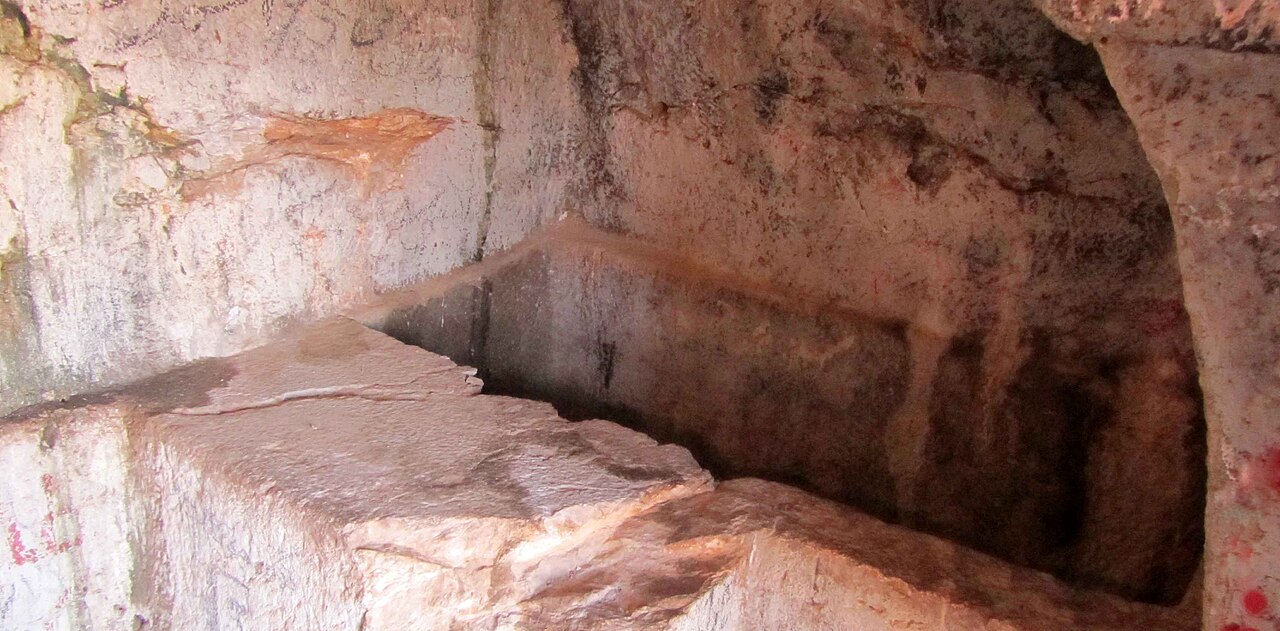
The tourism record lists local names connecting the rock tomb with Kay Kavus, Farhad and Shirin. It describes a rock-cut monument high above the river. [1] Those associations belong to the site’s popular naming and storytelling; they do not identify the buried individuals through an inscription or excavated record. The photograph shows an interior with carved platforms and recessed spaces. Reading the monument alongside its local names allows both the material place and its remembered stories to remain visible, without turning a legendary attribution into a proven biography.
What fieldwork says about the tanbur in a cem
Ethnomusicologist Jean During’s study draws on attendance at Ahl-e Haqq gatherings between 1972 and 1992, particularly among Shah Hayasi and Ateş Begi communities in Sahne, Kermanshah and Tehran. He describes the cem as combining sung devotional texts with the tanbur, blessing and sharing food, and spiritual instruction. A kelamhan leads the singing; some modes bear the names of holy figures and are rarely performed for secular audiences. [2] During also stresses differences among communities and the historical distance between his observations and publication. His evidence describes particular assemblies rather than the religion or daily life of every Sahneh resident.
A recorded tradition with regional distinctions
Kereshmeh Records’ notes for Khazan identify Gooran and Sahne as two major centres of the Kermanshah tanbur tradition. The album credits Ali-Akbar Moradi on tanbur and Pejman Hadadi on tombak, daf and nagada. Its notes distinguish devotional kalam, gathering-oriented majlesi and majazi repertories. [3] This gives readers a named recording and a vocabulary for hearing different musical settings. Together with During’s account, it shows why Sahneh’s musical history involves performers, repertoire and forms of gathering, rather than a single unchanged sound. Recording credits also provide a concrete route into the tradition beyond general claims about ancient origins.
Sources and further reading
- Visit Iran, “Darband Rock Tomb”; Sahneh’s route, monument location and local names.
- Jean During, “The Cem Rituals and Spiritual Ceremonies of Ehl-i Haqs,” Türk Kültürü ve Hacı Bektaş Veli Araştırma Dergisi 107 (2023), pp. 1–12; abstract and pp. 2–4.
- Kereshmeh Records, Khazan, KCD-113; performer credits and notes on tanbur music of Kermanshah.