Sherwana Castle, also written Qala Shirwana, is a nineteenth-century Jaf residence on a much older mound at Kalar. Its story connects household authority, changing public uses and the difficult work of conserving a building repeatedly altered and damaged.
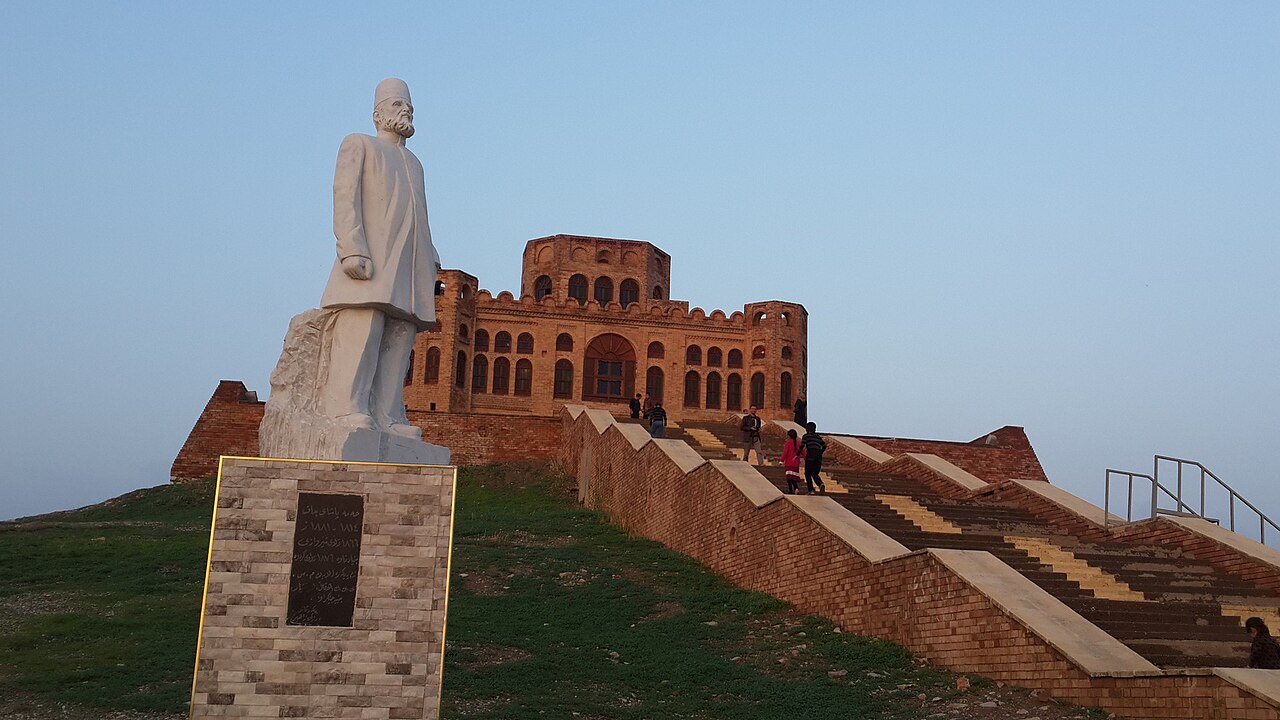

A residence above the Sirwan plain
Overlooking the Sirwan/Diyala, the castle crowns an older settlement mound at Kalar. Glasgow’s project records oral histories attributing construction in 1866–1874 to Muhammad Pasha Khasro beg-i-Jaff. Jaf groups wintered nearby before migrating to higher pastures. [1]
Rooms, towers and decorative craft
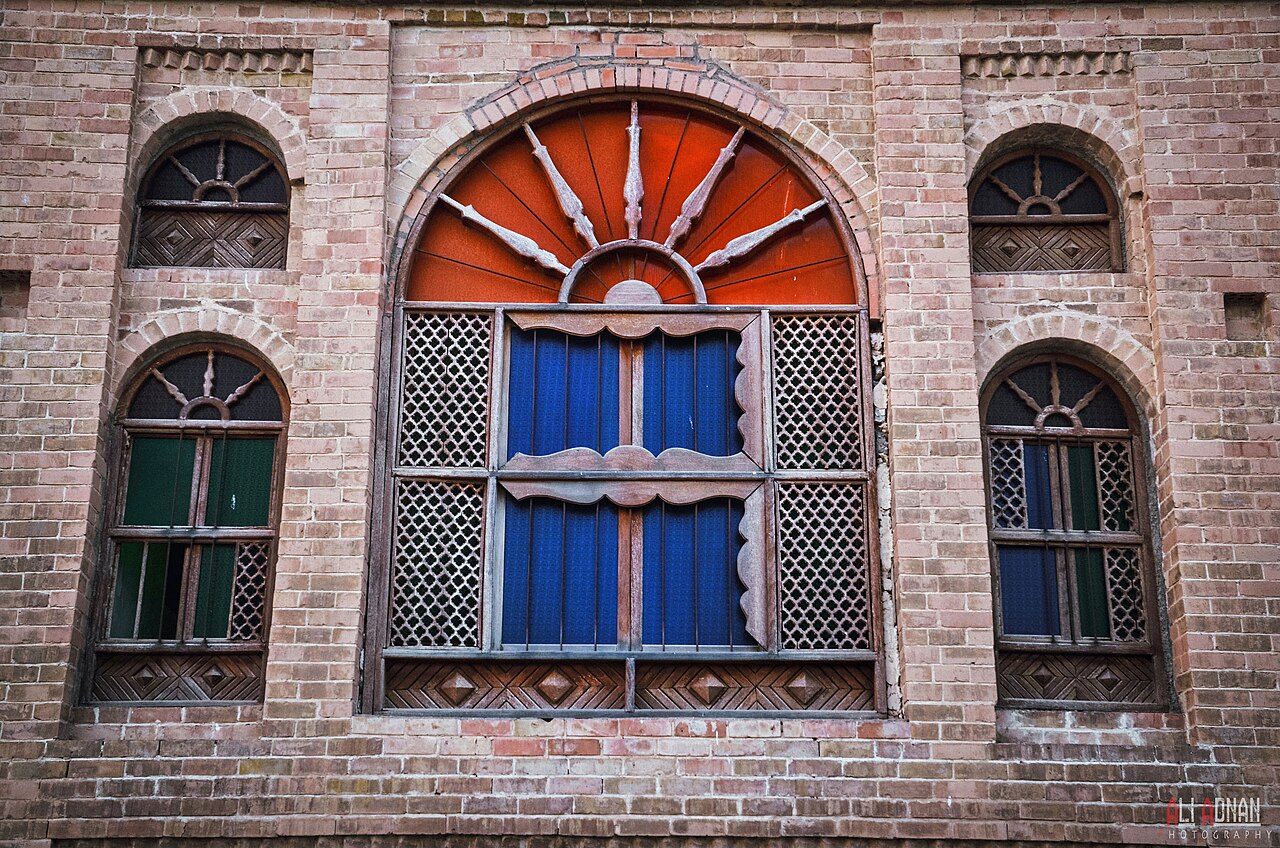
Nizar Najim Othman’s architectural study interprets Sherwana as a residence and administrative centre. Its composition includes a basement, two main floors, four corner towers and an upper octagonal room known as Klaw Farangy. Baked brick, gypsum, lime and timber form its material vocabulary. Geometric, floral and animal motifs enrich the decoration. [2] The photograph of the windows shows how brick arches, wooden frames and coloured panels work together at the scale of an individual opening. These details reward attention alongside the silhouette visible from the park.

Public use and changing fabric
Othman records the Iraqi government renting the building from the Jaf in 1927 for district administration. Later interventions included work around 1990 and 1997. His comparison of photographs and plans identifies altered arches, changed openings, additional partitions and roof additions that transformed the earlier design. The case illustrates how continued use can preserve a landmark while also changing the evidence carried by its fabric. [2]
The 2017 earthquake and rescue project
On 12 November 2017, an earthquake displaced walls and terraces, cracked towers and collapsed the roof cupola. The 2018 rescue programme joined Claudia Glatz with Garmian’s antiquities staff, Prince Claus Fund financing and Salma Samar Damluji’s architectural advice. It planned rubble clearance, structural stabilisation and reconstruction. [1]
Museum, public space and everyday care
The project account also records a Folkloric Museum of Garmian collection of roughly 400 objects and historical photographs, and Newroz gatherings at the castle. [1] Daily care remained a practical concern in later reporting. In a 28 March 2023 interview with 964, Garmian antiquities director Salih Muhammad said police guards had been reassigned and a gardener was the only employee watching the site. He described repeated requests for replacement guards and official replies citing limited resources. This is a dated account of staffing pressures, rather than a statement of present arrangements. [3] Conservation here involves the structure, its collections and the people responsible for keeping the place in use.
Sources and further reading
- University of Glasgow, Qala Shirwana Cultural Heritage Project: history, earthquake damage and 2018 rescue programme.
- Nizar Najim Othman, The Transformations of Conservation and Cultural Values in Developing Countries: The Case Study of Sherwana Castle, Sulaimani Journal for Engineering Sciences 11(1), 2024, pp. 45–55. DOI: 10.17656/sjes.10187.
- 964, interview with Garmian antiquities director Salih Muhammad about castle security, 28 March 2023.