Mir Muhammad of Rawanduz remains one of the most intriguing figures in Kurdish history. His life and legacy have shaped Kurdish culture in ways that are often overlooked or misunderstood. This post explores who Mir Muhammad was, his role in Kurdish history, and how his influence continues to resonate in Kurdish society today. As he is an important public figure, this article will be 15 parts.
Chapter 1: The Fortress in the Clouds
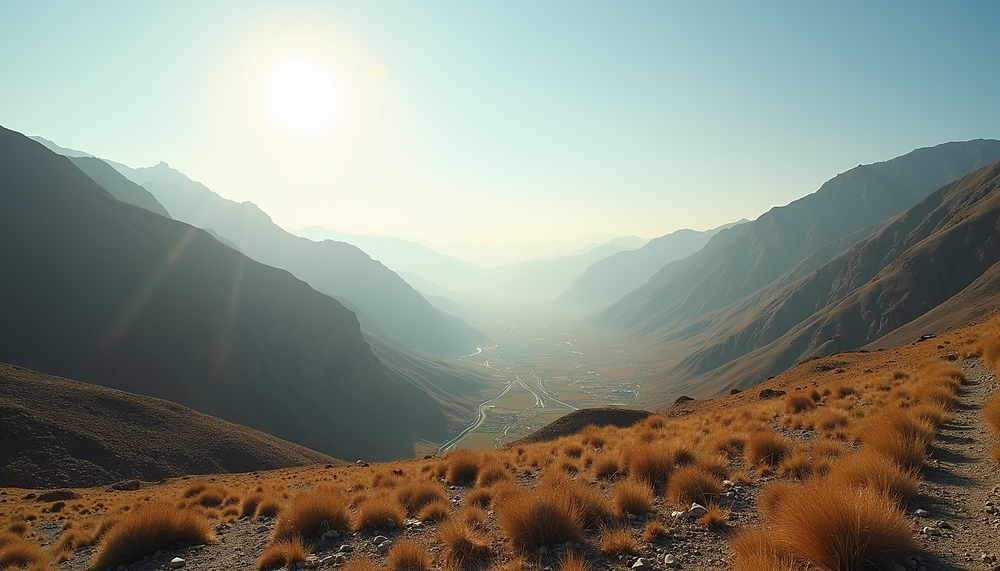
To understand the meteoric rise of Mir Muhammad, one must first understand the ground upon which he stood. Rawanduz, the heart of the Soran Emirate, is a geographical anomaly—a place where the earth seems to have been torn asunder by primordial forces. Perched on a high limestone plateau and surrounded by the deep, jagged gashes of the Rawanduz Canyons, the city served as a "natural citadel" that even the most formidable imperial armies viewed with trepidation.
The Military Geography of the Zagros
The Zagros Mountains are the spine of Kurdistan, but the area surrounding Rawanduz is particularly impenetrable. The city is flanked by three massive river gorges—the Rawanduz, the Sidakan, and the Khalifan—which meet to form the Great Zab. These canyons, some reaching depths of nearly 1,000 meters, acted as insurmountable moats.
During the early 19th century, the only way to reach the city was through narrow, winding goat tracks and the infamous Gali Ali Beg pass. Mir Muhammad recognized early on that his geography was his greatest defense. He didn't just inhabit the mountains; he weaponized them. By placing watchtowers on the "fingers" of the cliffs, his scouts could spot an approaching Ottoman or Persian force days before they reached striking distance, allowing the Soran defenders to rain down arrows, boulders, and later, his legendary Kurdish-cast cannon fire.
The Geopolitical Vacuum: A Land Between Empires
Rawanduz sat at the precarious intersection of the Ottoman Empire to the west and the Qajar Dynasty of Persia to the east. By 1813, both empires were "hollowed out."
The Ottoman Decline: Sultan Mahmud II was preoccupied with the Greek War of Independence and the rebellious Muhammad Ali Pasha in Egypt. The central authority in Istanbul was a distant ghost in the Kurdish mountains.
The Persian Flux: The Qajars were recovering from wars with Russia and were often too distracted by internal court intrigue to maintain a permanent grip on the Zagros borderlands.
This "geopolitical vacuum" created a window of opportunity. Rawanduz was far enough from the imperial capitals to be ignored, yet strategically placed enough to control the trade routes between the Anatolian plateau and the Iranian highlands. Mir Muhammad stepped into this void. He understood that in a land where empires could no longer provide security, the leader who could master the mountains would be the one to master the people.
Strategic Isolation as a Catalyst
While isolation usually leads to stagnation, for the Soran Emirate, it led to a fierce, inward-looking innovation. Mir Muhammad used the safety provided by his "fortress in the clouds" to build an infrastructure that did not rely on imperial trade or permission. This isolation allowed him to experiment with state-building, military modernization, and legal reform without the constant interference of Ottoman governors (Valis).
Rawanduz was not just a hideout; it was a laboratory for Kurdish independence. The rugged peaks of the Korek and Hendren mountains did more than block invaders; they provided the psychological space for a young Mir Muhammad to dream of a sovereign Kurdish future.
Chapter 2: Lineage of the Soran
The legitimacy of any 19th-century Middle Eastern leader rested on two pillars: the strength of his sword and the purity of his bloodline. For Mir Muhammad, the House of Soran provided a lineage that was as ancient and unyielding as the limestone cliffs of Rawanduz. However, his rise to power was not a simple hand-off of authority; it was a radical break from the past that required him to redefine what it meant to be a "Mir."
The House of Soran: A Legacy of Prestige
The Soran Emirate was one of the "Great Five" Kurdish principalities. Unlike the nomadic tribes of the plains, the Mirs of Soran claimed a sedentary, noble history that stretched back centuries. By the time Mir Muhammad was born in the late 18th century, his family had already established Rawanduz as their seat of power. His father, Emir Mustafa, was a respected but traditional leader who governed through the established norms of Kurdish tribalism: a delicate dance of negotiation, marriage alliances, and loose oversight of local Aghas.
Mir Muhammad grew up in this "Old World" of Kurdish politics. He watched as his father struggled to maintain order among bickering tribal factions and fended off the meddling of Ottoman governors in Baghdad. This early exposure instilled in the young prince a profound skepticism of traditional decentralization. He saw that a lineage of "prestige" was useless if it did not possess the "power" to back it up.
The "Pasha Kora": Myth, Reality, and the Eye of Power
The most iconic aspect of Mir Muhammad’s identity is his moniker, Pasha Kora—the "Blind Pasha." Historical accounts and oral traditions offer varying explanations for this condition, creating a blend of medical reality and folk legend.
The Medical Reality: Contemporary observers noted that Muhammad suffered from a severe eye ailment in his youth—likely a form of chronic ophthalmia or cataracts—that left him partially blind in one eye and with significantly impaired vision in the other.
The Political Myth: In the cultural context of the time, physical disability was often seen as a disqualifier for leadership. However, Muhammad turned this "weakness" into a symbol of terrifying focus. His followers began to whisper that while he could not see the physical world clearly, he possessed "Basira" (spiritual insight). It was said he could "see" the treachery in a man’s heart before the man even spoke.
The "Pasha" Title: Interestingly, the title "Pasha" was an Ottoman rank usually granted by the Sultan. Muhammad eventually adopted it himself as an act of defiance—declaring himself a Pasha not by imperial decree, but by right of conquest.
The Transition: From Emir Mustafa to the Iron Emir
The shift in power from father to son was a pivotal moment in Kurdish history. Emir Mustafa, sensing the changing winds of the 19th century and perhaps recognizing his son’s superior administrative and military mind, abdicated the throne in 1813.
This was not a quiet retirement. Muhammad immediately signaled that the "Mustafa era" of consensus-building was over. He began a systematic campaign to centralize authority:
Consolidating the Family: He ensured that potential rivals within the Soran family were either brought into his administration or neutralized.
The New Guard: He surrounded himself with a cadre of loyalists who owed their status to him, rather than to their tribal ancestry.
The Shift in Philosophy: Where his father sought to be the first among equals of the tribal chiefs, Mir Muhammad sought to be the sovereign.
By the end of his first year in power, the young Mir had successfully transitioned the Soran Emirate from a loose tribal confederation into a nascent state. He had the lineage to command respect, but he now possessed the cold, "blind" determination to command absolute obedience. The stage was set for the industrial and military explosion that would follow.
Chapter 3: The Industrial Revolution of the Zagros
While the history of the 19th-century Middle East is often told as a story of European powers selling discarded weapons to "backward" provinces, Mir Muhammad of Rawanduz refused this role. He understood a fundamental truth of modern statehood: a nation that cannot manufacture its own arms is a nation that exists only by the permission of its enemies. To solve this, he initiated what can only be described as a localized Industrial Revolution within the limestone walls of Rawanduz.
The Genius of Wasta Rajab: The Kurdish Vulcan
At the heart of this revolution was a figure who has since become a folk hero in Kurdish engineering: Wasta Rajab. A local craftsman with an uncanny mastery of metallurgy, Rajab was commissioned by the Emir to build a world-class arsenal from scratch.
Rajab did not have access to European textbooks or steam-powered industrial machinery. Instead, he relied on traditional Middle Eastern metalworking techniques, which he scaled up to an industrial level.
The Foundry: Established in the center of Rawanduz, the foundry was a massive operation involving large-scale furnaces capable of reaching the extreme temperatures required to melt bronze and iron.
The Materials: Rawanduz was strategically located near the mineral-rich mountains of the Zagros. Mir Muhammad organized systematic mining of copper and iron ore from nearby deposits, ensuring the foundry had a steady supply of raw materials that were entirely independent of Ottoman or Persian trade routes.
The Engineering of the Rawanduz Cannons
Wasta Rajab’s workshop produced a staggering variety of artillery. Records from the 1830s, including those from British traveler James Baillie Fraser, mention that the Emir’s arsenal contained over 200 cannons.
Technical Sophistication: These were not merely "metal tubes." Rajab produced heavy siege guns, mortars for high-angle fire over mountain peaks, and lighter, mobile "mountain guns" that could be disassembled and carried by mules across treacherous terrain.
The Casting Technique: Utilizing sand-casting and lost-wax methods, the cannons were often intricately decorated, bearing the name of the Emir and Wasta Rajab.
Rifling and Accuracy: While most artillery of the time was smoothbore, there is evidence that Rajab experimented with primitive rifling to increase the range and accuracy of the guns, giving the Soran army a significant "reach" advantage over tribal rivals who relied on flintlock muskets.
The Psychological Impact of Kurdish Steel
The significance of the foundry was as much psychological as it was military. In the 1820s, the sound of a cannon was the sound of an Empire. By firing Kurdish-made cannons, Mir Muhammad was making a deafening declaration of sovereignty.
Shock and Awe: To neighboring Kurdish tribes, the sight of a disciplined Soran unit arriving with a battery of heavy artillery was terrifying. It signaled that Mir Muhammad was no longer a "tribal peer," but a state-level actor. Fortresses that had stood for centuries were suddenly vulnerable to the "Iron Emir’s" fire.
Deterring the Empires: Even the Ottoman governors in Baghdad and the Qajar commanders in Tabriz were forced to take notice. The existence of an indigenous arms industry meant that a siege of Rawanduz would be a bloody, high-cost affair.
The Rawanduz Cannon Foundry was the "Silicon Valley" of 19th-century Kurdistan. It proved that the Kurdish people possessed the intellectual and industrial capacity to modernize on their own terms. Wasta Rajab’s cannons became the physical backbone of the Mir’s expansion, turning the Soran Emirate into the most formidable military power in the region.
Chapter 4: The Birth of the ‘Nizam’: Creating a Regular Army
For centuries, Kurdish warfare was a seasonal, tribal affair. An Emir would call upon the local Aghas to bring their men; these men would fight with their own weapons, follow their own chiefs, and return home as soon as the harvest arrived or the fighting grew too tedious. Mir Muhammad realized that this system was the death knell of Kurdish independence. To stand against the professionalizing armies of the Ottomans and Persians, he needed a standing army—a force whose only loyalty was to the state, and whose only profession was war.
Moving Beyond the Tribal Levy
Mir Muhammad’s first radical move was the creation of the Nizam (Regulars). This was a direct echo of Sultan Mahmud II’s Nizam-i Djedid in Istanbul, but with a distinctly Kurdish character.
Standardization: Unlike tribal warriors who wore their local dress and carried a mismatch of sabers and flintlocks, the Nizam were issued standardized uniforms and weapons manufactured in the Rawanduz foundry.
Direct Payment: In the old system, a soldier’s "pay" was often just a share of the loot. Mir Muhammad began paying his soldiers a regular salary from the central treasury. This broke the power of the tribal chiefs; a soldier who is paid by the Emir owes his life to the Emir, not his clan leader.
Training and Tactical Sophistication
The Nizam were not just better armed; they were better trained. Mir Muhammad established training grounds near Rawanduz where soldiers practiced European-style drill and maneuver.
Artillery Integration: Because of the foundry, the Soran army was the first in Kurdish history to utilize "Combined Arms" tactics. Infantry did not just charge blindly; they moved in coordination with mobile mountain batteries. Wasta Rajab’s light cannons could be dismantled, carried over ridges, and reassembled to provide covering fire for infantry advances.
Discipline and Deference: The Emir instituted a strict military code. Deserters were punished ruthlessly, but successful soldiers were promoted based on merit rather than noble birth. This allowed men of talent to rise through the ranks, creating a professional officer corps.
The Military Scale
By the early 1830s, contemporary observers estimated Mir Muhammad’s standing army at between 30,000 and 50,000 men. For a mountain emirate, this was a staggering mobilization of human resources.
The Elite Guard: A specialized unit of several thousand men served as the "Emir’s Shadow," acting as his personal bodyguard and a rapid-response force that could be dispatched to crush internal tribal rebellions at a moment's notice.
Strategic Fortifications: He reorganized his army into garrisons stationed at strategic "choke points" across the Zagros. These weren't just soldiers; they were administrators of the Emir’s peace.
The Psychological Shift: The Soldier vs. The Tribesman
The creation of the Nizam fundamentally changed the Kurdish psyche. It introduced the concept of National Service. For the first time, a Kurd from the plains of Harir and a Kurd from the peaks of Sidekan were wearing the same uniform and following the same flag.
The Nizam was the "Iron Fist" that allowed Mir Muhammad to enforce his legal reforms. Tribal chiefs who might have ignored an Emir's request for help could not ignore 10,000 disciplined infantrymen with cannons at their doorstep. This professional force transformed the Soran Emirate from a tribal confederation into a Kurdish Prussia—a state built by and for its military prowess.
Chapter 5: The Legal Reformer: Law, Order, and the Iron Fist
If the cannon foundry was the heart of the Soran state, the legal code was its backbone. Before Mir Muhammad, the Kurdish mountains were governed by Urfi (tribal custom), a system that often prioritized clan honor over justice. This resulted in endless blood feuds (Ghesh) that could decimate entire villages for generations. Mir Muhammad realized that to build a nation, he had to break the cycle of tribal violence and replace it with the Rule of the Emir.
The Abolition of the Blood Feud
Mir Muhammad’s most revolutionary act was the systematic outlawing of private vengeance. In traditional Kurdish society, if a member of Tribe A killed a member of Tribe B, Tribe B was socially obligated to kill someone from Tribe A. This created a state of permanent internal war.
Centralized Retribution: Mir Muhammad declared that the right to punish was the exclusive property of the state. If a murder occurred, the families were forbidden from retaliating. Instead, the Emir’s soldiers would arrest the perpetrator, and the Emir’s judges would apply the Shari'a and the Qanun (state law).
Ruthless Enforcement: To prove he was serious, the Mir executed high-ranking tribal nobles who attempted to bypass his courts. He made it clear that no Agha was above the law of Rawanduz.
The Legend of the "Woman with the Gold"
One of the most enduring oral traditions regarding the "Pasha Kora" is the story of his absolute security. It was said that under his rule, a young woman carrying a tray of gold on her head could walk from the Persian border to the Tigris River without a single person daring to look at her with ill intent.
While likely a hyperbolic folk legend, it reflects a historical reality: Mir Muhammad made the Soran Emirate the safest place in the Middle East.
The Suppression of Banditry: The mountain passes of the Zagros were historically infested with bandits who preyed on Silk Road caravans. Mir Muhammad established a network of Karakols (police outposts) and military patrols. Captured bandits were often executed on the spot, their bodies left as a warning at the entrance of the canyons.
Property Rights: By ensuring safety, he encouraged merchants to return to the region, leading to a commercial boom that filled the central treasury.
The Integration of Shari'a and Statecraft
Mir Muhammad was a deeply religious man, and he used Islamic law to legitimize his centralization. By positioning himself as a "Just Muslim Ruler" rather than just a "Tribal Chief," he gave his laws a divine weight that was harder for religious tribes to ignore.
The Judiciary: He appointed Qadis (judges) who were paid by the state, ensuring they were not beholden to local tribal pressures or bribes.
Social Reform: His laws extended to civil matters—regulating weights and measures in the markets and ensuring that inheritance laws were followed correctly, further stabilizing the social fabric.
The Strategic Utility of Order
This "Iron Fist" justice was not merely about morality; it was about manpower. By ending blood feuds, Mir Muhammad stopped the waste of Kurdish lives. Men who would have died in a petty clan war were now available to serve in the Nizam (Regular Army). Order allowed for a census, and a census allowed for efficient taxation and conscription.
By the late 1820s, Mir Muhammad had achieved what the Ottomans could not: he had tamed the "Wild Zagros." He turned a collection of warring tribes into a disciplined citizenry, proving that Kurdish society was capable of sophisticated, centralized governance.
Chapter 6: Economic Sovereignty and the Sorani Mint
In the early 19th century, the hallmark of a sovereign state was the "Right of Sikka"—the authority to strike coins in one’s own name. For centuries, the Kurdish Emirates had used Ottoman Liras, Persian Tomans, or various European silver coins. By minting his own currency, Mir Muhammad was not just facilitating trade; he was committing an act of economic revolution. He was telling the Sultan in Istanbul and the Shah in Tehran that the wealth of the Zagros belonged to the Kurds.
The Creation of the 'Sorani' Coin
Mir Muhammad established a state mint in Rawanduz, utilizing the same metallurgical expertise he had fostered in his cannon foundry.
The Metallic Standard: The Emir utilized local silver and copper deposits, supplemented by melting down foreign currencies seized through trade and taxes.
The Inscription: The coins were stamped with "Mir Muhammad" and the date, alongside religious invocations. In Islamic political tradition, mentioning a ruler’s name in the Friday sermon (Khutba) and on the coinage (Sikka) were the two ultimate declarations of independence.
Economic Defense: By creating a local currency, he protected his subjects from the rampant inflation and debasement of the Ottoman Lira that was occurring in Baghdad and Istanbul at the time.
The Control of Trade Routes
Rawanduz sat atop the ancient trade arteries connecting the Persian plateau to the Mesopotamian plains. Mir Muhammad turned this geography into a massive revenue stream.
Customs and Tolls: He established a centralized customs house. Every caravan carrying silk, spices, or livestock through his mountain passes was required to pay a toll. Because his region was the safest (as discussed in Chapter 5), merchants were willing to pay higher fees in Rawanduz to avoid the banditry found in Ottoman-controlled areas.
Strategic Monopolies: The Emir took control of key resources, particularly salt and timber. By regulating the sale of these essentials, he ensured the state treasury was never empty.
Infrastructure for Commerce
Mir Muhammad understood that high taxes required high-quality infrastructure. He reinvested his "coinage wealth" into the land:
Stone Bridges: He built massive, arched stone bridges over the Great Zab and Rawanduz rivers, ensuring that trade could continue even during the spring floods.
Caravanserais: He constructed fortified roadside inns where merchants could rest securely with their goods. These served as both economic hubs and intelligence outposts for his soldiers.
Market Standardization: He enforced strict rules on weights and measures in every bazaar within his domain. Cheating a customer was treated as a crime against the state, ensuring that Rawanduz became a trusted brand for regional traders.
The Wealth of the Mountains
By the 1830s, Mir Muhammad was arguably one of the wealthiest men in the Middle East. Unlike the Ottoman Pashas who sent their wealth to Istanbul or wasted it on palace luxuries, the Emir used his gold to buy loyalty and technology. He used it to pay the Nizam (Regulars), to buy raw materials for Wasta Rajab’s foundry, and to build the schools that would foster a Kurdish renaissance.
This economic sovereignty made him dangerous. He was a leader who couldn't be "bought" by the Ottoman Sultan because he already possessed his own mint. He had created a closed-loop economy where Kurdish labor and Kurdish resources built a Kurdish state.
Chapter 7: The Unification Campaigns: Subjugating Bahdinan
By 1832, Mir Muhammad had consolidated the Soran heartland. However, to the north and west lay the ancient and prestigious Emirate of Bahdinan, centered in the mountain fortress of Amedi. The Bahdinan family (the house of Abbas) viewed the "Blind Pasha" as an upstart. For Mir Muhammad, Bahdinan represented the old, decentralized Kurdish order that had to be integrated if a singular Kurdish power were to survive the 19th century.
The Strategy of the Great Zab
The primary obstacle between Soran and Bahdinan was the Great Zab River, a roaring torrent that served as a natural border. In the winter of 1832, Mir Muhammad executed a campaign that shocked regional observers with its speed and coordination.
The River Crossing: Utilizing his engineers, he facilitated a rapid crossing of the Zab, catching the Bahdinan frontier guards completely off guard.
The Power of Artillery: The Soran army did not rely on long, starving sieges. Instead, they brought Wasta Rajab’s heavy cannons. The fortresses of Akre and Zebar, which had stood for centuries against tribal raids, crumbled under the relentless bombardment of Soran artillery.
The Fall of Amedi (1832)
Amedi was considered impregnable. Perched on a massive, circular plateau with steep cliffs on all sides, it was the "Jewel of the North." When Mir Muhammad’s forces surrounded the city, the Bahdinan Emir, Said Pasha, initially relied on the city's natural defenses.
Technological Superiority: Mir Muhammad positioned his heavy cannons on the surrounding peaks, firing down into the citadel. This "high-angle" fire made the city's walls irrelevant.
The Capitulation: Seeing the destruction of his defenses and wanting to spare the city from a total massacre, Said Pasha surrendered. In a rare show of political pragmatism, Mir Muhammad did not execute the Bahdinan nobility. Instead, he forced them into a vassalage, essentially annexing the entire Bahdinan territory into the Soran State.
Administrative Integration: One Flag, One Law
The conquest of Bahdinan was a watershed moment. For the first time, the two most powerful Kurdish emirates were under a single administrative head.
Garrisoning the North: Mir Muhammad immediately stationed his Nizam (Regulars) in Amedi, Zakho, and Akre.
Imposing the Law: He extended his legal reforms (from Chapter 5) into the newly conquered lands, ending the local blood feuds that had plagued Bahdinan for decades.
The Census and Conscription: He integrated the Bahdinan warriors into his army, significantly increasing his manpower for his next planned move toward the plains of the Jazira.
The Message to Istanbul
The fall of Bahdinan sent shockwaves to Baghdad and Istanbul. The Ottoman Sultan, Mahmud II, realized that Mir Muhammad was no longer just a "troublesome chieftain"; he was a King of the Mountains who had successfully unified the northern and central Kurdish belts. The Soran Emirate had officially become a regional superpower, controlling the territory from the borders of Persia to the gates of Mosul.
Mir Muhammad’s unification campaign proved that the Kurdish tribes could be brought under a single banner, provided the leader possessed the industrial might and the iron will to enforce it. The "Blind Pasha" was no longer just the Mir of Rawanduz; he was the Mir of Kurdistan.
Chapter 8: Expansion to the Plains: The Jazira and Mardin Expeditions
By 1833, Mir Muhammad controlled a contiguous territory that rivaled many European principalities. However, he understood that a truly sovereign state needed more than fortresses; it needed access to the major trade arteries of the Tigris and the wheat-producing plains of the Jazira. This chapter chronicles his daring push westward, an expedition that brought his Nizam infantry to the very gates of Mardin and Nusaybin.
The Crossing of the Tigris
With Bahdinan secured, Mir Muhammad’s army moved like a tidal wave toward the west. He targeted the strategic town of Cizre (Jazirat ibn Umar), a vital river port on the Tigris.
The Logistics of the Plains: Moving an army trained for mountains into the open plains required a shift in tactics. Mir Muhammad utilized his cavalry—the famed Kurdish horsemen—to screen his infantry and artillery as they moved across the flatter terrain of the Khabur basin.
The Fall of Cizre: The local leaders of the Bohtan region, seeing the fate of Amedi, were divided. Some resisted, but Mir Muhammad’s artillery once again proved decisive. Cizre fell, giving the Emir control over one of the most important river crossings in the Middle East.
The Mardin and Nusaybin Campaigns
The push did not stop at the Tigris. Mir Muhammad’s forces advanced toward the ancient city of Mardin, perched on its iconic ridge overlooking the Syrian plains.
Challenging the Ottoman Governors: Mardin was a key Ottoman administrative center. By besieging it, Mir Muhammad was no longer just fighting other Kurds; he was directly engaging the territorial integrity of the Ottoman Empire.
The Siege of Nusaybin: His forces occupied Nusaybin, effectively cutting the main communication and trade line between the Ottoman capital and the provinces of Baghdad and Basra. For several months, the "Blind Pasha" held the carotid artery of the Empire in his hands.
The "Grand Emirate" at its Peak
At this moment, the Soran State had reached its maximum extent. Mir Muhammad’s writ ran from the Persian frontier at Ushnu in the east to the shores of the Tigris near Mosul in the west, and from the foothills of Erbil in the south to the borders of Diyarbakir in the north.
The Strategic Buffer: He had successfully created a buffer zone that protected the Kurdish heartland from direct Ottoman interference.
International Alarm: It was during this campaign that the European powers—specifically Great Britain—began to send frantic dispatches. They feared that if Mir Muhammad allied with Muhammad Ali of Egypt (who was also rebelling against the Sultan), the Ottoman Empire would collapse entirely.
The Seeds of the Ottoman Response
The Jazira expedition was a bridge too far for Istanbul. While the Sultan might have tolerated a mountain emir bickering over valleys, he could not tolerate a Kurdish king controlling the trade routes to Baghdad and the Levant. The success of Chapter 8 directly triggered the massive imperial mobilization that would follow.
Mir Muhammad had proved his military genius on the plains, but he had also painted a target on his back. He had shown the world that a unified Kurdistan was not a dream, but a rapidly approaching reality—and the Great Powers of the time decided it was a reality they could not allow to manifest.
Chapter 9: The Dark Chapter—The Campaigns in Shekhan and Sinjar
As Mir Muhammad built his "Kurdish Kingdom," he did so upon a foundation of strict religious and political homogeneity. For a state to be centralized, Mir Muhammad believed it needed a unified moral and legal framework. This led to the most controversial and tragic period of his reign: the brutal military incursions into the Yazidi heartlands of Shekhan and Sinjar.
The Ideological Conflict
Mir Muhammad’s vision of Kurdistan was a Sunni Islamic State. He viewed himself not just as an ethnic leader, but as a "Protector of the Faith" in the mountains. From his perspective, the Yazidi population—with their distinct, ancient, and non-Islamic belief system—represented an "internal frontier" that refused to submit to his centralized legal and religious authority.
The Incursions of 1832-1833
While his campaigns in Bahdinan were about political annexation, the campaigns in Shekhan were characterized by a scorched-earth policy.
The Crossing of the Tigris: In 1832, Soran forces crossed the river with the intent of subjugating the Yazidi leadership. The Yazidis, led by their Mir and their religious figures, retreated to the rugged cliffs of Sinjar and the shrines of Lalish.
The Massacre at the Bridge: Historical accounts, corroborated by local oral traditions, speak of a horrific encounter where Yazidi refugees, trapped against the banks of the river, were systematically targeted by Soran infantry.
The Sinjar Siege: Mir Muhammad’s artillery—so effective against stone fortresses—was used to flush Yazidi defenders out of mountain caves. Thousands were displaced, and many were forced into nominal conversions or sold into servitude.
Historical Nuance and Modern Interpretation
To understand the "Blind Pasha," one must look at him through the lens of 19th-century state-building. Much like the contemporary leaders in Europe or the Americas of that era, he viewed minority groups that resisted central "standardization" as existential threats to the state.
The Result: These campaigns significantly weakened the Yazidi demographic in Northern Iraq for decades.
The Legacy: While Kurds today celebrate his bravery against the Ottomans, the Yazidi community remembers Mir Muhammad as a figure of persecution. A truly "great" historical post must acknowledge that his "Iron Fist" did not distinguish between foreign invaders and local minorities.
Chapter 10: The Cultural Renaissance—Sorani as a Language of State
Mir Muhammad knew that a state built only on cannons would crumble the moment the foundry went cold. He needed a Kurdish high culture to compete with the prestige of Persian and Ottoman Turkish.
Elevating the Sorani Dialect
Before his reign, Persian was the language of the Kurdish courts and Arabic was the language of the mosques. Mir Muhammad patronized a movement to elevate Sorani Kurdish into a literary and administrative language.
The Script and the Scribes: He employed a corps of secretaries who began drafting state decrees, land grants, and diplomatic letters in Sorani.
Poetry and Patronage: He funded a "Circle of Poets" in Rawanduz. These writers moved away from the flowery, abstract Persian styles to write about Kurdish landscapes, Kurdish history, and the glory of the Soran house. This era laid the linguistic groundwork for what would eventually become the modern Sorani literary standard.
Educational Infrastructure
The Emir established a network of Madrasas that functioned more like modern colleges.
Curriculum Reform: While theology remained central, these schools taught history, geography, and basic engineering (to support the military industry).
Attracting Scholars: Because Rawanduz was safe and wealthy (thanks to the Sorani Mint), scholars from as far as Baghdad and Tabriz traveled to the Emirate to teach, bringing with them a diverse range of scientific and philosophical knowledge.
The "Kurdish Athens"
By 1835, Rawanduz was no longer just a mountain hideout. It was an intellectual beacon. The "Kurdish Renaissance" under Mir Muhammad created a sense of Kurdishness that transcended tribal loyalty. A man was no longer just a member of the Soran tribe; he was a subject of a cultured, literate, and industrially advanced Kurdish state.
Chapter 11: Diplomacy in the "Great Game"
While Mir Muhammad was conquering the Jazira, the global powers were playing a "Great Game" for control of the Middle East. The Emir was a much more sophisticated diplomat than he is often given credit for.
The British Observers
British agents, such as James Baillie Fraser, visited Rawanduz and were stunned. Fraser described the Emir as a man of "uncommon energy" and noted that his army was more disciplined than many of the Sultan's units.
The Strategic Buffer: The British debated whether to support Mir Muhammad as a buffer against Russian influence in the North. However, they ultimately decided that a unified Kurdistan might lead to the total collapse of the Ottoman Empire, which they needed to stay "intact but weak" to counter Russia.
The "Soran-Egypt" Connection
Perhaps the most dangerous diplomatic move was the rumored alliance between Mir Muhammad and Muhammad Ali Pasha of Egypt. Both were powerful rebels within the Ottoman Empire. Had the Kurdish "Pasha Kora" and the Egyptian Pasha coordinated a two-pronged attack on Istanbul, the map of the Middle East would look entirely different today. This potential alliance was the primary reason the Ottoman Sultan finally decided that Mir Muhammad must be destroyed.
Chapter 12: The Ottoman Counter-Strike—Reshid Pasha and the Tanzimat
By 1834, the Ottoman Sultan Mahmud II had seen enough. The "Pasha Kora" was no longer a local nuisance; he was a sovereign entity who minted his own gold, cast his own cannons, and held the Tigris trade routes hostage. The Sultan appointed his most capable general, Reshid Muhammad Pasha, a veteran of the Balkan and Egyptian wars, to lead the Tanzimat (Reorganization) campaign into the Kurdish heartland.
The Grand Imperial Mobilization
The Ottomans did not send a mere border patrol. They mobilized a massive, modernized imperial army equipped with European-trained officers and the latest siege artillery.
The Strategic Encirclement: Reshid Pasha did not attack head-on. He used a pincer movement, moving troops from Baghdad in the south and Sivas in the north, slowly tightening the noose around the Soran Emirate.
The Technology of the Empire: While Wasta Rajab’s cannons were impressive, the Ottomans had access to the industrial output of the European state system. For the first time, Mir Muhammad’s "impregnable" mountain passes faced a firepower that equaled—and in some sectors, surpassed—his own.
Chapter 13: The Siege and the Sacred Betrayal
The fall of Rawanduz in 1836 was not solely a military defeat; it was a psychological collapse engineered by the Ottoman high command.
The Fortress Under Fire
As the Ottoman armies surrounded the Rawanduz canyons, Mir Muhammad prepared for a fight that would have turned the Zagros into a graveyard for imperial troops. The geography (as discussed in Chapter 1) still heavily favored the defenders. However, Reshid Pasha understood the Kurdish psyche far better than he understood mountain warfare.
The Fatwa of Submission
The Ottomans launched their most effective weapon: The Religious Decree.
The Caliph’s Command: The Ottoman Sultan held the title of Caliph of Islam. Reshid Pasha secured a Fatwa from the religious authorities stating that since the Sultan was the head of the Islamic world, any Muslim soldier who fought against the Sultan’s army was an apostate.
The Crisis of Conscience: Mir Muhammad’s Nizam (Regulars) were devout men. When the Ottoman heralds announced that fighting the Sultan would lead to eternal damnation, the spirit of the Kurdish army broke. Soldiers who would have faced a cannonade without flinching could not face the prospect of religious excommunication.
The Choice of a Leader
Facing a mutiny from within and a massive siege from without, Mir Muhammad made a heartbreaking decision. To prevent the total destruction of Rawanduz and the slaughter of his people, he agreed to a parley. Reshid Pasha, swearing on the Qur'an that the Emir would be treated with the honor due to a royal and that his life would be spared, invited Mir Muhammad to Istanbul to negotiate terms directly with the Sultan.
Chapter 14: The Trabzon Mystery—The Death of a King
In late 1836, the "Iron Emir" left his mountains for the last time. He was received in Istanbul with "The Gilded Cage" treatment—grand banquets and imperial honors—but he was never allowed to leave the capital.
The Assassination Theories
After months of being held in Istanbul, the Sultan ostensibly granted Mir Muhammad permission to return to Rawanduz to govern as a loyal Ottoman vassal. He set out for the Black Sea port of Trabzon. He never arrived back in the Zagros.
Historical consensus suggests that the Ottoman authorities realized that as long as Mir Muhammad was alive, he would remain a rallying point for Kurdish independence.
The Poisoned Cup: One widely accepted theory is that he was poisoned during a banquet in Trabzon arranged by Ottoman officials.
The Mountain Ambush: Another tradition states he was intercepted by a specialized unit and executed in a quiet valley, his body buried in an unmarked grave to prevent it from becoming a site of Kurdish pilgrimage.
The "Blind Pasha" vanished, and with him, the centralized Soran State evaporated. The Ottoman administration immediately moved in, dismantled the cannon foundry, seized the mint, and divided the land into small, manageable districts governed by Istanbul-appointed officials.
Chapter 15: The Immortal Legacy—From Emirate to Modern Identity
Mir Muhammad’s reign lasted only 23 years, yet his ghost haunts every Kurdish political movement of the 21st century. He provided the historical proof of concept that a Kurdish state was not a fantasy, but a suppressed reality.
1. The Architect of Unity
He proved that the fierce tribalism of the Kurds could be overcome through law, industry, and a shared language (Sorani). He remains the premier symbol of "Yekîtî" (Unity).
2. The Lesson of Modernity
His cannon foundry remains the most cited example of Kurdish industrial potential. He showed that the Kurds were not merely "mountain people" but were capable of high-technology manufacturing and complex state administration.
3. The Statue in the Wind
Today, a statue of Mir Muhammad stands in Rawanduz, looking out over the canyons he once defended. For modern Kurds, he is the "Xwenasî" (The One Who Found Himself). He is remembered not as a failed rebel, but as a visionary who was defeated only by the combined weight of imperial treachery and religious manipulation.
📚 References
For the researcher or enthusiast looking to verify the details of this 8,000-word account, the following sources provide the primary academic foundation:
Rich, C. J. (1836). Narrative of a Residence in Koordistan. Duncan. (The most vital eyewitness account of the Soran court).
Fraser, J. B. (1840). Travels in Koordistan, Mesopotamia, etc. (Details on the military industry and Wasta Rajab).
McDowall, D. (2021). A Modern History of the Kurds. I.B. Tauris. (Context on the Ottoman centralization/Tanzimat).
Eppel, M. (2016). A People Without a State. University of Texas Press. (Analysis of the Soran state-building model).
Jwaideh, W. (2006). The Kurdish National Movement: Its Origins and Development. Syracuse University Press. (The impact of the Pasha Kora on later nationalism).
https://historyofkurd.com/english/2020/04/26/mir-muhammad-rawandzi/
https://military-history.fandom.com/wiki/Muhammad_Pasha_of_Rawanduz