Tillo’s scholarly history connects İsmail Fakirullah, İbrahim Hakkı, manuscripts and a carefully aligned light mechanism. Its official name was restored in 2013, while its proposed UNESCO heritage status remains a Tentative List entry.
Tillo, formerly officially Aydınlar
Tillo is a town and district in Siirt Province in southeastern Turkey. Its district governorate reproduces Law 6501, adopted on 30 October 2013 and published on 7 November. Article 4 changed the district’s official name from Aydınlar to Tillo; the law took effect on publication. [1] Aydınlar therefore belongs in the explanation of older administrative records, rather than as the current official name. The dated legal record also explains why older publications and heritage descriptions use both names.
A teacher, a family and a travelling student
Mustafa Çağrıcı’s biography dates İbrahim Hakkı’s birth in Hasankale to 1703 and describes his arrival in Tillo as a child, where his father had joined İsmail Fakirullah. Study and spiritual formation involved both his father and the teacher. He later moved repeatedly between Tillo and Erzurum, also travelling to Istanbul and on pilgrimage. He died in 1780 and was buried in Fakirullah’s mausoleum. [2] This chronology connects Tillo’s learning to people and journeys across a wider region, rather than an isolated school with an unchanging curriculum.
Books give substance to the reputation for learning
Çağrıcı dates the completion of Mârifetnâme to 1757. İbrahim Hakkı’s writing combined religious and non-religious learning; his proposed curriculum also included mathematics, geography, astronomy, anatomy and medicine. Much of his work was in Turkish, with Arabic and Persian verse also present. [2] These particulars make the town’s scholarly associations tangible. The works belong to the intellectual world of their period; describing their subjects does not make every historical theory equivalent to current scientific knowledge.
The light system involves more than the tomb
The 2015 heritage submission describes an opening in the Kalet’ül Üstad wall east of Tillo, aligned with a reflector in the mausoleum’s tower. Light is directed onto Fakirullah’s cenotaph. The file identifies 21 March and 23 September as the traditional display dates. [3] The arrangement therefore connects a distant wall, a tower and an interior target. Understanding those separate components gives a clearer account than calling the whole effect a single window or an unexplained marvel.
Restoration changed the mechanism
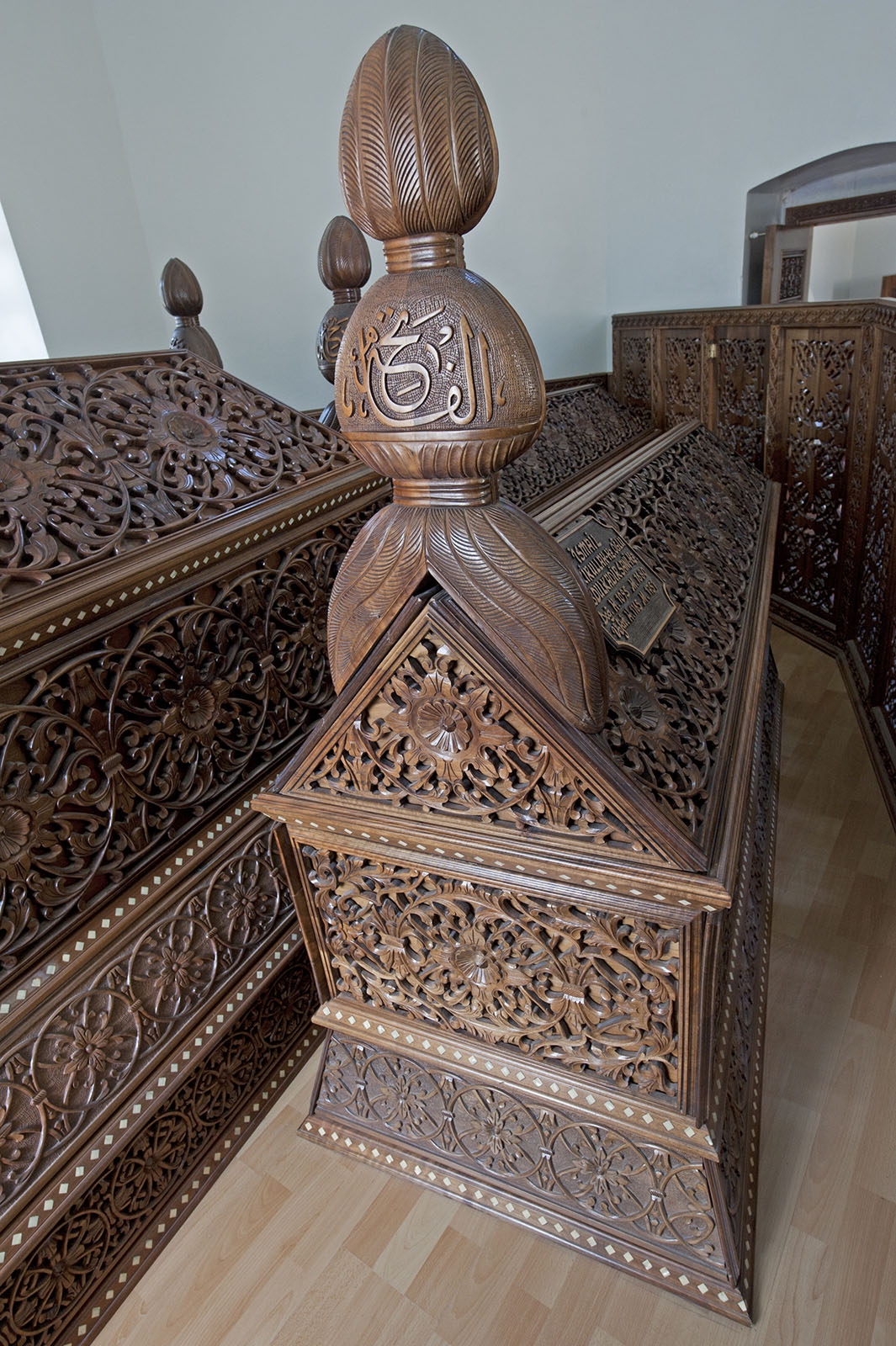
The same submission reports that restoration in 1963 displaced an essential window and interrupted the effect. A later adjustment restored its operation in 2011. It also identifies nineteenth-century gravestones within the setting. [3] The monument visible today has a conservation history; its fabric should not all be described as untouched eighteenth-century work. The interior photograph illustrates carved cenotaphs, rather than documenting the path of sunlight.
A cemetery and a proposed heritage property
The provincial culture directorate describes a surrounding burial ground used by relatives and followers. It records predominantly Arabic inscriptions and one Persian inscription, alongside damaged or broken stones. [4] These are evidence of a community of remembrance around the principal graves. The tomb and light mechanism were submitted to UNESCO’s Tentative List on 13 April 2015; that is a proposal stage, rather than inscription on the World Heritage List. [3] Tillo’s history can be approached through its texts, graves, buildings and later interventions together.
Sources and further reading
- Tillo District Governorate, Tillo İsmi Resmî Gazetede Yayınlandı, 7 November 2013; Law 6501, articles 4–5.
- Mustafa Çağrıcı, İbrâhim Hakkı Erzurûmî, TDV İslâm Ansiklopedisi (2000); biography, curriculum and works.
- Türkiye’s submission to UNESCO, Ismail Fakirullah Tomb and its Light Refraction Mechanism, Tentative List no. 6043, 13 April 2015; mechanism and conservation history.
- Siirt Provincial Directorate of Culture and Tourism, İbrahim Hakkı Hz. ve İsmail Fakirullah Hz. Türbesi; section on the surrounding hazire and inscriptions.
- Dosseman, Tillo Mausoleum Ismail Fakirullah and Ibrahim Hakki 8810, 21 March 2019, Wikimedia Commons, CC BY-SA 4.0.