Build a Kurdish family history from named relatives, documents and recorded memories. This practical guide explains Ottoman registers, Iraqi and French archival examples, research logs and what DNA ancestry estimates can establish.
.png)
Start with one person and one question
Choose a question that a source could answer: where a grandparent lived, who their parents were, or when a family moved. Begin with the most recent known generation and work backwards, recording the evidence for each relationship. Keep the name as it appears in the source alongside other spellings, nicknames and place names. A shared surname or tribal affiliation is a lead to investigate, rather than a complete chain of parent–child relationships. The worksheet below is a suggested research log for keeping those distinctions clear.
| Field | What to record |
|---|---|
| Question | Whose parentage, residence or move are you investigating? |
| Name and place | Original spelling, other forms, locality and date |
| Source | Document, interview or catalogue item; creator and date |
| Reference | Archive, series, file, page or recording time |
| Assessment | What the source states, your inference and the next check |
Record relatives’ memories as identifiable sources
Ask open questions about people, places, journeys and the documents a relative remembers. Record who spoke, when the interview occurred and whether an account concerns their own experience or something heard from another person. The Oral History Association recommends agreeing on recording and future use, preserving contextual information and allowing review before public release where possible. [1] A remembered place name can guide a catalogue search; an interview and a civil record may preserve different details. Keep the full recording with any transcript or translation so later readers can examine the original wording.
Ottoman registers and modern Turkish family records
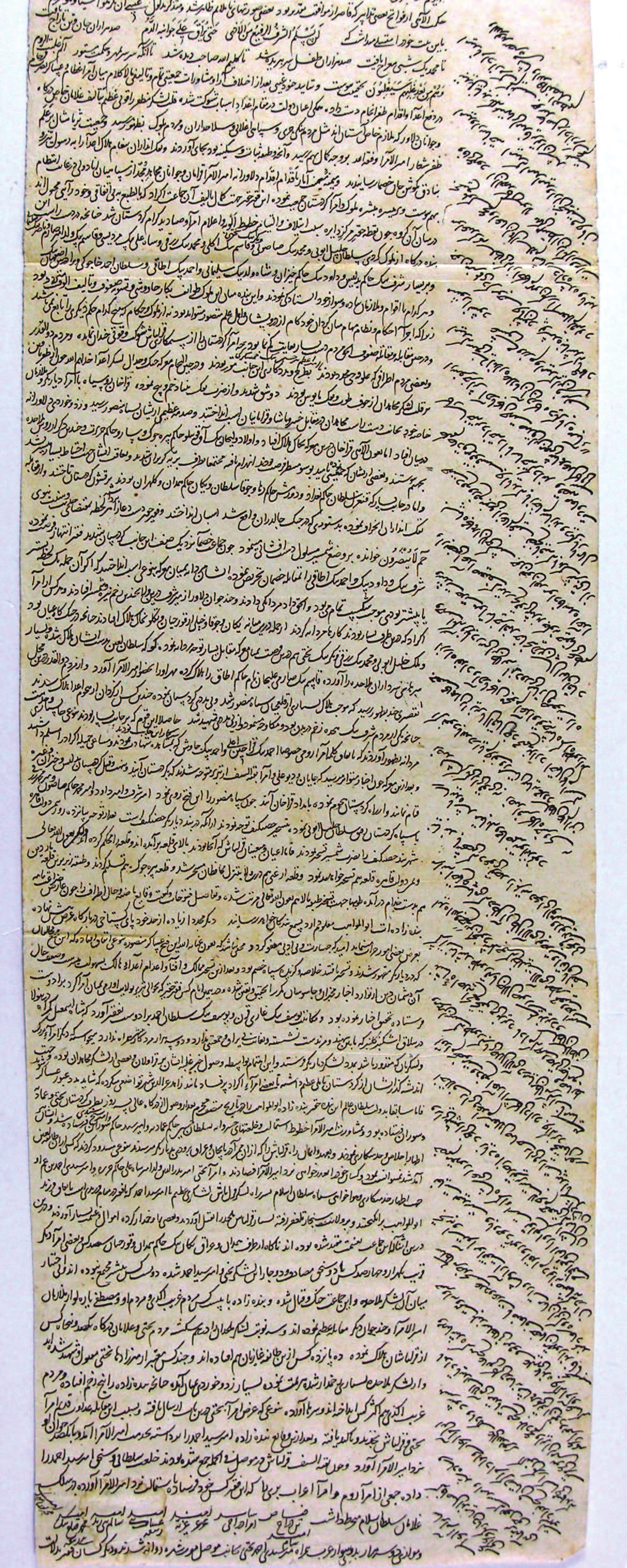
The official 2017 Ottoman archive guide distinguishes nüfus population registers from temettuat registers concerning property and taxation. Its population-register section explains the military and fiscal purposes of early nineteenth-century counting and its initial focus on males; coverage therefore needs checking by register and place. NFS.d is the population-register series code. [2] For modern family-record enquiries, the Turkish population authority’s archive FAQ describes holdings including older family registers and vital-event records, and directs lineage enquiries to e-Devlet or population offices. [3] Match the institution to the period sought. A historical catalogue entry and a modern personal lineage service are different research tools.
Iraq: search correspondence by a specific reference
The UK National Archives describes CO 730 as Colonial Office correspondence from and about Iraq. Its cataloguing project added item descriptions within bound volumes, making keyword searches for people and subjects more precise. One example, CO 730/27/82, concerns travel-document paperwork in 1922. [4] Such a series can illuminate migration, administration and individual cases. It is not a universal register of Iraqi Kurdish families. Search with a person’s name, place and approximate dates, then read the file’s description and context before deciding whether it concerns the same individual.
Syria and Lebanon: read the finding aid first
Nantes holds French diplomatic archives relating to Syria and Lebanon. A concrete example is the Beirut consular succession collection, 1SL/49/1–26. Its finding aid describes 894 case files covering 1897–1959 and two alphabetically arranged series. [5] This is a particular consular collection, not a census of all inhabitants. The finding aid identifies names, dates and file references that can be checked before requesting an item. Preserve the exact reference and the spelling used in the catalogue; a similar-looking name alone does not establish a family relationship.
What DNA ancestry estimates can tell you
MedlinePlus Genetics distinguishes autosomal testing from mitochondrial and Y-chromosome testing. Autosomal comparisons draw on many parts of the genome; mitochondrial and Y-chromosome results follow particular maternal and paternal lines. [6] A single-line result cannot describe every branch of a family tree. The same source explains that companies use different reference databases, populations are represented unevenly and migration complicates geographical estimates. Results can consequently differ between services or change as databases grow. Genetic clues should be considered alongside documented relationships. An ancestry percentage does not provide the name, village and documentary identity of a particular ancestor, and cultural identity involves more than a genetic estimate.
Keep the evidence and the uncertainty together
For each claimed relationship, retain a copy or full reference, the original text, your transcription and the reason you linked the people. Mark a date as approximate when the source is approximate. If two records disagree, keep both and explain the conflict rather than silently choosing one. Preserve interviews and related photographs or papers together, with copies stored in separate locations; the Oral History Association recommends such contextual documentation and redundant preservation. [1] A useful family history makes its evidence easy to retrace and its unanswered questions easy to see.
Sources and further reading
- Oral History Association, Oral History Best Practices; preparation, interviewing, preservation and access guidance.
- Başbakanlık Osmanlı Arşivi Rehberi, fourth edition, Istanbul, 2017, pp. 146–148; temettuat and nüfus register descriptions and series codes.
- Türkiye, Nüfus ve Vatandaşlık İşleri Genel Müdürlüğü, Arşiv Hizmetleri Sıkça Sorulan Sorular; archive holdings and lineage-enquiry routes.
- The National Archives, Iraqi identities and journeys in the 1920s; CO 730 cataloguing and the CO 730/27/82 example.
- French Diplomatic Archives, Beirut consular succession files, 1SL/49/1–26, 1897–1959; Nantes finding aid, 1992, completed 2017, introduction and alphabetical inventory.
- US National Library of Medicine, MedlinePlus Genetics, What is genetic ancestry testing?, updated 2 June 2026; test types, reference databases and interpretation.