Kurdish sporting history includes local games, wrestling accompanied by music, Erbil’s continental football finals and diaspora clubs. Dated sources also show how access, youth work and girls’ participation shape sporting life.

Sport across communities and institutions
Sport in Kurdish life takes place in villages, cities, schools, clubs and diaspora communities. Local games, performance traditions and professional football leave different kinds of records. A game’s cultural importance does not by itself establish an ancient origin, and a club’s Kurdish connections do not determine the identity of every player. This overview uses specific examples rather than claiming a single sporting tradition shared identically by all Kurds. Its competition results and programme accounts are historical, dated examples rather than current league tables or a census of participation.
Jorabin: a game of concealment and observation
The International Council of Traditional Sports and Games describes Jorabin as a Kurdish team game played with arranged socks and a concealed small object. One side hides the object while opponents watch, consult and try to identify the correct sock. Bluffing and reading an opponent’s actions are part of the contest. Its June 2025 account places play at family gatherings and cultural events, indoors or outdoors. [1] This explains the activity concretely without treating it as the same kind of competition as regulated league football. The account’s broad claims of ancient Mesopotamian continuity are not established by the rules themselves and are not adopted here.
Wrestling and music: a documented regional setting
Ameneh Youssefzadeh’s account of Khorasan describes Kurdish professional musicians known as ʿāšeqs providing music for wrestling, weddings and other social occasions in the north of the region. The ensembles commonly include a dohol drum and a wind or bowed instrument; Köroğlu is among the repertoire associated with wrestling. [2] This is a specific connection between physical contests and performance in Khorasan, not proof that every Kurdish community follows the same rules or terminology. It also helps explain why sporting heritage can involve musicians and audiences alongside the competitors themselves.
Erbil: two AFC Cup finals, with results kept clear
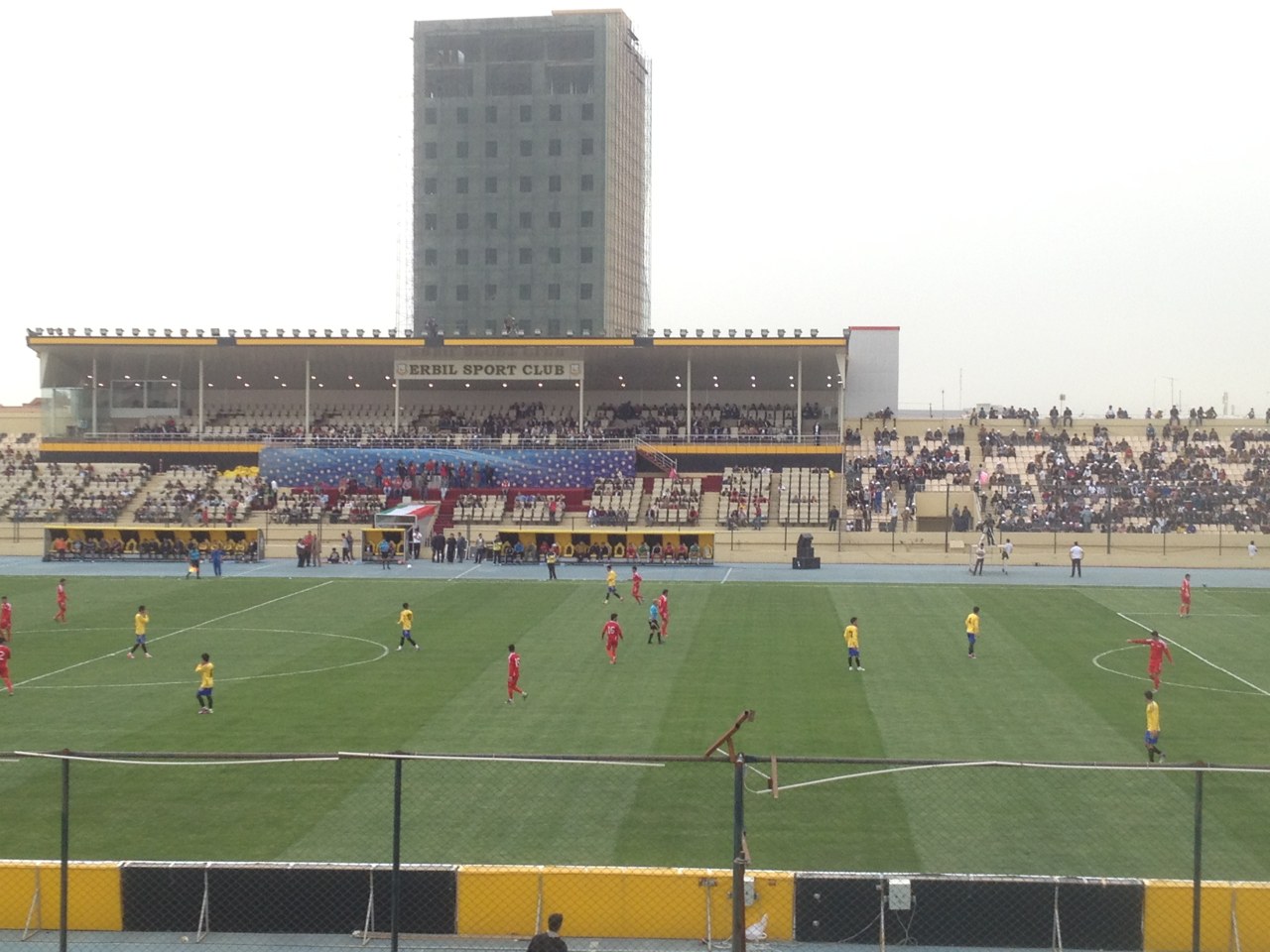
The Asian Football Confederation records Erbil, spelled Arbil in its reports, as a 2012 AFC Cup finalist. Kuwait SC won that final 4–0 at Erbil’s Franso Hariri Stadium. [3] The AFC’s 2015 Group C preview also identifies Arbil as the 2014 runner-up, having lost that final to Qadsia on penalties. [4] Reaching those finals was a substantial club achievement, but a finalist is not the champion. These were club competitions within Asian football, not matches played by an internationally recognised Kurdish national team. Clear competition names and results make the history more informative than a general claim that football brought international recognition.
Dalkurd: a diaspora club and a youth project
Halmstads BK’s 2020 opponent profile describes Dalkurd’s foundation by Kurds in Borlänge in 2004 as a social project offering young people an alternative activity and better prospects. It traces the club’s rise from division six through the Swedish leagues. [5] Sveriges Radio’s October 2017 account records the promotion to Allsvenskan and identifies IK Brage’s support for the original youth project. [6] This history links diaspora identity to local organization, coaching and opportunities for young players. It should be read as a dated account of the club’s development, not as a statement of its present division, finances or venue.
Girls’ football: one documented programme and its limits
UNDP’s April 2025 profile of Ikhlas Imran describes a young Yazidi footballer whose team won a women’s tournament in Qahtaniyah, organised by UNDP with Japanese funding. It reports her four goals and ambition to represent Iraq. [7] This is a concrete example from the wider region’s sporting life; the source identifies her as Yazidi, and that identification should be respected. A programme profile records a participant’s experience and the organiser’s account. It does not establish that all girls enjoy equal access, or that a stated ambition has already become a professional career.
Participation requires more than celebrated results
A fuller sporting history asks who can use a pitch, afford travel, obtain coaching and continue training alongside school or work. Programme organisers and clubs can document those conditions through participation records, regular sessions and accounts from players themselves. The examples above show different scales of activity: a household game, regional performance, continental club football, a diaspora youth project and a girls’ tournament. Keeping their purposes and evidence distinct gives readers a more useful account than unsupported predictions of universal growth or a list of famous names without verifiable achievements.
Sources and further reading
- International Council of Traditional Sports and Games, Jorabin: Traditional Kurdish Sock Game, 16 June 2025; gameplay description.
- Ameneh Youssefzadeh, Khorasan xxvi: Music of Khorasan, Encyclopaedia Iranica, vol. XVII, pp. 46–54; northern ʿāšeqs and wrestling.
- Asian Football Confederation, Kuwait SC Win 2012 AFC Cup; match report, archived website date 28 October 2021.
- Asian Football Confederation, AFC Cup 2015 MD1: Group C Preview; account of Arbil’s 2014 final and penalty defeat.
- Halmstads BK, Lagpresentationer Superettan 2020: Dalkurd FF, 9 June 2020; club history and social origins.
- Sveriges Radio, Dalkurd – vägen från division 6 till allsvenskan, 27 October 2017; published text on the club’s development.
- Mahdi Al-Saadawi, Hope on the Pitch: A Yazidi Girl’s Defiant Dream, UNDP Iraq, 6 April 2025; Ikhlas Imran and the Qahtaniyah tournament.
- Kushared, Franso Hariri Stadium, 13 March 2013; Wikimedia Commons, CC BY 3.0.