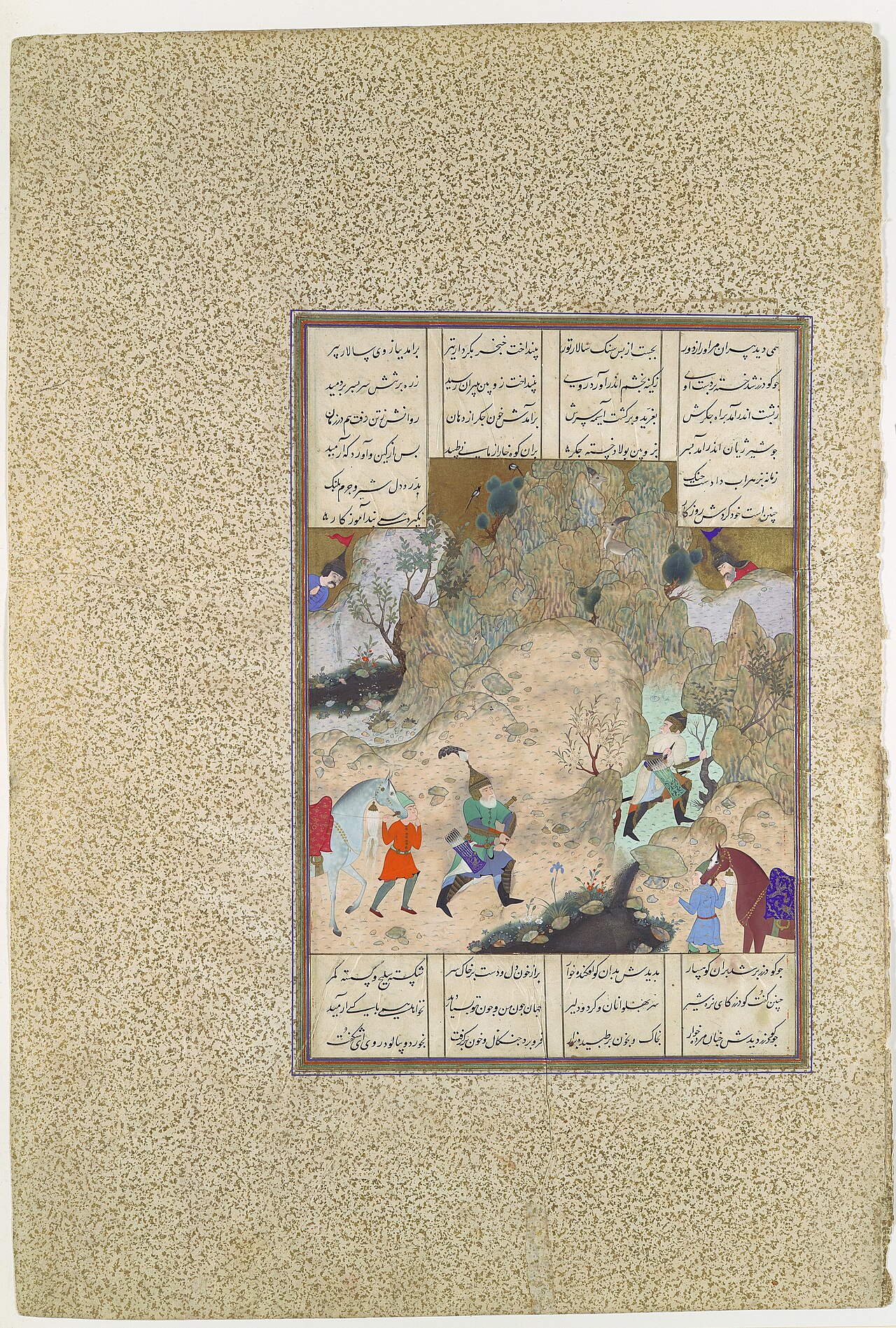
Viseh: Patriarch of the House of Viseh
- Sherko Sabir

- Jun 3
- 13 min read

Introduction
Viseh is the patriarch of the great House of Viseh, the most important Turanian clan of the Shahnameh, the Persian Book of Kings. A Turanian lord descended from the line of Tur, Viseh was the father of a remarkable family of sons, among them the noble Piran and the chivalrous Houman, and the founder of the warrior-house that became the foremost on the Turanian side of the long wars between Iran and Turan.
Serving as a lieutenant-general and commander under the Turanian king Pashang, Viseh was a leading figure of Turan in the early wars, taking part in the great conflict of the reign of the Iranian king Nowzar. But his lasting importance lies above all in the house he founded: the Visehgan, the great clan whose members, especially the wise Piran and the valiant Houman, would be central to the Turanian cause for generations.
Like all the figures of the Book of Kings, Viseh belongs to the shared epic heritage of the Iranian peoples, a tradition the Kurds hold in common with the Persians, the Lurs, and others of the Iranic world. To know Viseh is to encounter the founder of the foremost warrior-house of Turan, the patriarch whose sons would carry the Turanian cause through the wars of the heroic age, and a leading commander of the early conflicts. His house stands as the great Turanian counterpart to the heroic families of Iran.
Contents
Who Is Viseh?
Viseh, also spelled Vise or Visa, is a Turanian lord of the Shahnameh, the patriarch and namesake of the House of Viseh, the most important Turanian clan in the epic. He was descended from Tur, the son of Faridun and ancestor of the Turanians, and served as a lieutenant-general and leading commander under the Turanian king Pashang. Viseh took part in the early wars between Iran and Turan, including the great conflict in the reign of the Iranian king Nowzar. But he is most important as the father of a remarkable family of warrior-sons, above all the noble Piran, the wise minister of Turan, and the chivalrous Houman, the highest commander of the Turanian army. The clan he founded, the Visehgan, became the foremost warrior-house of Turan, central to the Turanian cause throughout the wars of the heroic age.
Descendant of Tur
Viseh belonged to the royal and noble stock of Turan, descended from Tur, one of the three sons of the great hero-king Faridun, whose murder of his brother Iraj had begun the long feud between Iran and Turan. In the genealogy of the epic, Viseh was the son of Zadashm, and so the grandson of Tur himself, placing him in the senior line of the Turanian house.
His father Zadashm holds a notable place in the tradition as a peaceful king of Turan, remembered as a calm and restrained ruler who kept peace with Iran throughout his reign and refrained from pursuing the old vengeance, an attitude that the dread Afrasiab would later scorn but the noble Aghrirat would praise. Viseh, the son of this peaceful king and grandson of Tur, thus came of the highest Turanian nobility. Though closely related to the royal line, the House of Viseh that he founded is distinct in the epic from the immediate family of Pashang and Afrasiab: the Visehgan were the great noble warrior-clan that served the Turanian crown, the foremost of the houses of Turan, rather than the ruling royal family itself. Viseh's descent from Tur, through the peaceful Zadashm, places him among the senior nobility of Turan and at the head of its greatest warrior-house. His lineage, rooted in the ancestor of the Turanians and the peaceful king his father, is the foundation of the high standing of the clan he founded.
Key Takeaways
Viseh is the patriarch and namesake of the House of Viseh, the foremost Turanian clan.
He was descended from Tur, the ancestor of the Turanians, through his father Zadashm.
He served as a lieutenant-general and commander under King Pashang.
He took part in the early wars, including the conflict in Nowzar's reign.
He was the father of the noble Piran and the chivalrous Houman, among others.
His clan, the Visehgan, became the great warrior-house of Turan.
Quick Facts
Name: Viseh (also Vise, Visa)
Role: Patriarch of the House of Viseh; commander of Turan
Lineage: Descended from Tur, through his father Zadashm
Serves: Pashang, king of Turan
Most famous sons: Piran and Houman
Other sons: Barman, Nastihan, Lahhak, Farshidvard
His clan: The Visehgan, the foremost Turanian warrior-house
Early war: The conflict in the reign of Nowzar
Counterpart: The Iranian heroic houses, such as that of Gudarz
Heritage: Shared Iranic epic tradition
Commander of Turan
Viseh served as a lieutenant-general and leading commander of Turan under the king Pashang, and he was a figure of importance in the early wars between Iran and Turan. When Pashang resolved to renew the ancient feud and sent his son Afrasiab to invade Iran in the reign of the weak Iranian king Nowzar, Viseh was among the leading Turanian commanders in the conflict.
In this great early war, the tradition records Viseh among the prominent figures of the Turanian side. After the Turanian victory and the capture of the Iranian king Nowzar, it was Viseh, in some accounts, who was sent to take charge of the captured royal family of Iran, a mark of his standing as a trusted commander of Turan. He is also remembered as an adversary of the Iranian hero Qaren, the son of Kaveh the blacksmith and one of the great champions of Iran in the early wars; the tradition relates that Viseh and Qaren clashed in the conflict, and that neither survived long in the epic thereafter. As a commander under Pashang and a leading figure of the early wars, Viseh played his part in the Turanian campaigns against Iran, a valiant and prominent warrior of his generation. Yet his own direct exploits, though notable, are less celebrated than those of his famous sons, and it is as the father of the great warriors of the next generation, and as the founder of the foremost Turanian house, that Viseh holds his lasting place in the epic. His role as a commander of Turan establishes him as a figure of importance in his own right, the warrior-patriarch at the head of his great clan.
The House of Viseh
The lasting importance of Viseh lies in the great clan that bears his name, the House of Viseh, or the Visehgan, the most important Turanian family in the Shahnameh and the foremost warrior-house on the Turanian side of the long wars. Just as Iran had its great heroic houses, so Turan had the House of Viseh as its leading noble and warrior clan, the family that produced its foremost commanders and champions.
The Visehgan served the Turanian crown under Afrasiab, providing the kingdom with its leading generals and warriors. The house is distinct in the epic from the immediate royal family of Afrasiab, being the great noble clan that served the throne rather than the ruling line itself. Through its many members, above all the wise Piran, who served as the minister and chief commander of Turan, the House of Viseh was central to the conduct of the wars and to the counsels of the Turanian court for generations. The Visehgan stand as the great Turanian counterpart to the heroic families of Iran, the warrior-house whose members fill the ranks of the Turanian champions throughout the epic. As the patriarch and namesake of this house, Viseh is the founder of the foremost clan of Turan, the father of the family that, more than any other, carried the Turanian cause through the long wars. The House of Viseh is his great legacy, the warrior-clan that bears his name and that shaped the Turanian side of the epic's central conflict across the generations of the heroic age.
Father of Piran and Houman
Viseh was the father of a remarkable family of warrior-sons, the most famous of whom were the noble Piran and the chivalrous Houman. These two sons, above all, made the House of Viseh illustrious, and their fame far exceeds that of their father.
Piran, the most celebrated of Viseh's sons, became the wise and noble minister and chief commander of Turan, one of the most admired figures of the entire Shahnameh, an honourable and peace-seeking man who is, with Aghrirat, one of the only two Turanians the epic portrays in a wholly positive light. Houman, another son, became the highest-ranking commander of the Turanian army, a warrior of such bravery, loyalty, and chivalry that even the Iranians admired him. Beyond these two, Viseh was the father of several other warrior-sons who appear in the wars, including Barman, Nastihan, Lahhak, and Farshidvard, so that the sons of Viseh formed a whole company of Turanian champions. This remarkable family of warrior-sons, headed by the noble Piran and the valiant Houman, is the glory of the House of Viseh and the chief reason for its prominence. Through his sons, Viseh became the ancestor of the foremost champions of Turan, the patriarch whose offspring carried the Turanian cause and filled the ranks of its leaders. His fatherhood of Piran and Houman, in particular, secures his importance in the epic, for it is through these illustrious sons that the House of Viseh attained its greatness.
The Great Warrior-House of Turan
The House of Viseh, founded by Viseh and made illustrious by his sons, stands as the great warrior-house of Turan, the foremost clan on the Turanian side of the long wars and the counterpart to the great heroic families of Iran. In the epic's vision of the wars between the two lands, each side has its leading houses, and for Turan it is the Visehgan who hold this place.
The members of the House of Viseh appear throughout the wars of the heroic age, serving as the leading commanders and champions of Turan under Afrasiab. The wise Piran guided the Turanian cause as minister and chief commander, often seeking to temper the conflict and to act with honour; the valiant Houman led the armies of Turan in the field; and the other sons and descendants of the house fought in the many battles of the wars, including the great set-piece combats such as the Battle of the Twelve Rooks, in which several of them fell. The prominence of the House of Viseh reflects the epic's nuanced portrayal of Turan, for the house produced not only fierce warriors but figures of genuine nobility, above all the admired Piran, showing that the Turanian side, though the enemy, had its own honourable and valiant champions. As the founder and patriarch of this great warrior-house, Viseh stands at the head of the foremost clan of Turan, the family whose members shaped the Turanian cause across the generations. The House of Viseh is the great legacy of its patriarch, the warrior-clan that gave Turan its leading champions and that stands as the Turanian counterpart to the heroic houses of Iran.
Symbolism and Meaning
Viseh embodies, above all, the founding patriarch of a great warrior-house, the ancestor whose lasting significance lies in the family and the legacy he founds rather than chiefly in his own deeds. As the namesake and father of the House of Viseh, he represents the importance, in the heroic world of the epic, of the great noble clans that produce the champions and leaders of the age, the houses whose members carry the cause of their people across the generations.
Viseh embodies, too, through the house he founded, the moral complexity of Turan in the epic. The House of Viseh produced not only fierce warriors but figures of genuine nobility, above all the wise and honourable Piran and the chivalrous Houman, admired even by their Iranian enemies. In founding this house, Viseh is the ancestor of some of the noblest as well as the most valiant figures of Turan, and his clan stands as the great counterpart, on the Turanian side, to the heroic houses of Iran, embodying the epic's recognition that the enemy nation, too, had its honourable champions and great families. In all this, Viseh is a significant figure, embodying the role of the founding patriarch of a great warrior-house, the importance of the noble clans in the heroic world, and, through his illustrious sons, the moral complexity and the genuine nobility to be found on the Turanian side. He is the patriarch of the foremost house of Turan, the founder whose legacy is the great warrior-clan that bears his name and that carried the Turanian cause through the wars of the heroic age.
Viseh and the Kurds
Viseh, like all the figures of the Shahnameh, belongs to the shared epic and mythological heritage of the Iranian peoples, a tradition that the Kurds hold in common with the Persians, the Lurs, and others of the Iranic world. The great epic of Ferdowsi, with its houses and its champions, is the common inheritance of these peoples, who share in the ancient Iranian mythological tradition from which it springs. It is honest and accurate to understand Viseh and the House of Viseh as part of this shared heritage, rather than as uniquely Kurdish figures.
For the Kurds, as an Iranian people, the figures and tales of the Shahnameh are part of the wider cultural and mythological world to which they belong, and the epic and its houses, of both Iran and Turan, hold a place in the broad Iranic heritage that the Kurds share. The House of Viseh, the great warrior-clan of Turan, is part of the common store of Iranian epic tradition, known across the Iranic lands. In presenting Viseh, then, we present not a specifically Kurdish figure but the patriarch of one of the great houses of the shared Iranian epic, belonging to the heritage that the Kurds hold in common with the other peoples of the Iranic world. It is worth recalling, too, that the Turanians of the epic, the people of Viseh's house, are a legendary people, descended in the tale from Faridun's son Tur and originally conceived as an eastern Iranian people, not to be simply identified with any modern nation; and that the wars of Iran and Turan were, at root, a feud within a single family. This honest framing places Viseh accurately within the broad and rich tradition of Iranian epic to which the Kurds, as an Iranic people, are heirs alongside their neighbours.
Debates and Misconceptions
Is Viseh the same as his son Piran? No; the two should not be confused, though their names are often linked. Viseh is the patriarch and namesake of the house, the father; Piran is his son, the most famous member of the house, who is often called Piran Viseh, meaning Piran of the house of Viseh, or Piran son of Viseh. It is Piran, the son, who is the wise and noble minister and chief commander of Turan and one of the most admired figures of the epic. Viseh, the father, is the founder of the house, a commander of the earlier generation. The frequent pairing of the names, as in Piran Viseh, reflects the son's membership in his father's house, but the two are distinct figures, father and son.
Is the House of Viseh the same as the royal family of Afrasiab? No; this is an important distinction. The House of Viseh, the Visehgan, is the great noble warrior-clan that served the Turanian crown, distinct in the epic from the immediate royal family of Pashang and Afrasiab. Both descend ultimately from Tur, but the Visehgan are the foremost noble house serving the throne, providing Turan's leading generals and champions, rather than the ruling royal line itself. This distinction is comparable to that between a great noble warrior-family and the royal house it serves.
Is Viseh a specifically Kurdish figure? No; like all the figures of the Shahnameh, he belongs to the shared epic heritage of the Iranian peoples, a tradition the Kurds hold in common with the Persians, the Lurs, and others of the Iranic world, rather than a uniquely Kurdish figure. Indeed, he is a lord of Turan, the legendary rival of Iran, descended from Tur. As an Iranian people, the Kurds share in the broad Iranic heritage of the epic, whose figures and houses, of both Iran and Turan, are part of the common Iranian tradition to which the Kurds, alongside their neighbours, are heirs.
Related Topics
Piran Viseh: the noble son of Viseh, wise minister of Turan
Houman: the chivalrous son of Viseh, commander of Turan
Pashang: the king of Turan whom Viseh served
Afrasiab: the dread king served by the House of Viseh
Tur: the ancestor of the Turanians and of Viseh's line
Nowzar: the Iranian king of the war in which Viseh fought
Qaren: the Iranian hero and adversary of Viseh
The Shahnameh: the Persian Book of Kings, the great epic of Iran
Frequently Asked Questions
Who is Viseh in the Shahnameh?
Viseh is a Turanian lord of the Shahnameh, the patriarch and namesake of the House of Viseh, the most important Turanian clan in the epic. Descended from Tur through his father Zadashm, he served as a lieutenant-general and commander under the Turanian king Pashang and took part in the early wars with Iran. He is most important as the father of the noble Piran and the chivalrous Houman, among other warrior-sons, and as the founder of the foremost warrior-house of Turan.
Who were the sons of Viseh?
Viseh was the father of a remarkable family of warrior-sons. The most famous were Piran, the wise and noble minister and chief commander of Turan, and Houman, the chivalrous highest-ranking commander of the Turanian army. Beyond these two, his sons included Barman, Nastihan, Lahhak, and Farshidvard, who also appear as champions in the wars. Together, the sons of Viseh formed a whole company of Turanian leaders and warriors, making the House of Viseh illustrious.
What is the House of Viseh?
The House of Viseh, or the Visehgan, is the most important Turanian clan in the Shahnameh, the foremost warrior-house on the Turanian side of the long wars with Iran. Founded by Viseh and made illustrious by his sons, it served the Turanian crown under Afrasiab, providing the kingdom's leading generals and champions. It is distinct from the royal family of Afrasiab, being the great noble clan that served the throne, and stands as the Turanian counterpart to the heroic houses of Iran.
How is Viseh related to Piran?
Viseh is the father of Piran. Piran, the most famous member of the house, is often called Piran Viseh, meaning Piran of the house of Viseh or Piran son of Viseh. It is Piran, the son, who is the wise and noble minister and chief commander of Turan and one of the most admired figures of the epic, while Viseh, the father, is the founder of the house and a commander of the earlier generation. The two are distinct figures, father and son, often linked by the name Piran Viseh.
What was Viseh's role in the wars?
Viseh served as a lieutenant-general and leading commander of Turan under King Pashang, taking part in the early wars with Iran, including the great conflict in the reign of the Iranian king Nowzar. After the Turanian victory and the capture of Nowzar, he was sent in some accounts to take charge of the captured Iranian royal family. He is also remembered as an adversary of the Iranian hero Qaren. But his lasting importance lies in the warrior-house he founded.
Is Viseh a Kurdish figure?
Viseh belongs to the shared epic heritage of the Iranian peoples, a tradition the Kurds hold in common with the Persians, the Lurs, and others of the Iranic world, rather than a uniquely Kurdish figure. Indeed, he is a lord of Turan, the legendary rival of Iran, descended from Tur. As an Iranian people, the Kurds share in the broad Iranic heritage of the epic, whose figures and houses, of both Iran and Turan, are part of the common Iranian tradition to which the Kurds are heirs alongside their neighbours.
References and Further Reading
Comments