Explore ten foods documented in Kurdish kitchens, from yaprax and kifta to Van’s savar and a Newroz salad, with named recipe sources and regional context.
How to recognize a Kurdish food tradition
Kurdish cooking has regional names, family techniques and shared dishes linking it with neighboring cuisines. In Ethel Hammer’s 2018 report for the American Culinary Federation, cookbook author Emel Sinjari and her husband Hussain discuss both regional variation and recipes shared with other communities. Dolma is their example of a dish adapted by several cultures. [7] Documenting who prepares a dish, where and how gives a clearer account of Kurdish culinary heritage than assigning every shared food an exclusive ancient origin.
Ten foods and the evidence for each
The selection below brings together a Sorani-language learning project’s descriptions, a Van food inventory, fieldwork among Kurdish-speaking Ezidis in Batman, and Pary Baban’s published cooking. Each entry identifies a preparation recorded by its source. Spellings vary across Kurdish dialects and transliteration systems. The list is an introduction to particular kitchens and communities; it does not prescribe one national menu.
| Food | Documented preparation and context |
|---|---|
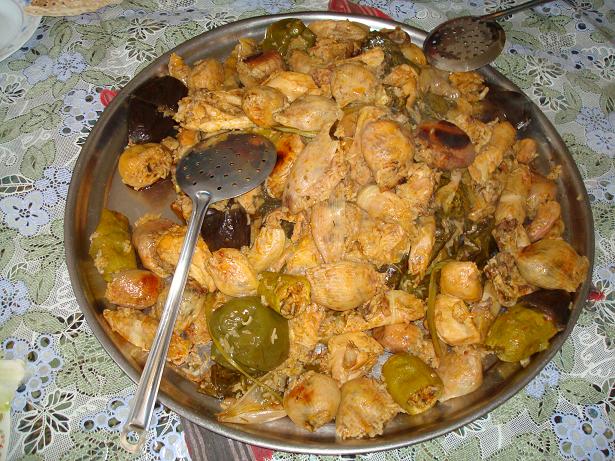
| 1. Yaprax / dolma | Kurdish Central describes rice-filled vine, chard or cabbage leaves, and mixed stuffed vegetables. Dill, spring onions and souring ingredients distinguish its spring vine-leaf example. [1] |
| 2. Kifta | Its account describes cracked-wheat dough enclosing a cooked meat filling, gently cooked in soup. Almonds, raisins and herbs are among possible filling ingredients. [1] |
| 3. Shifta | Ground-beef patties mixed with onion, parsley and spices, then shallow-fried; the same source describes eating them in sandwiches or at picnics. [1] |
| 4. Brinj û shla | Rice and separately served stew form a meal pairing. Kurdish Central records several vegetable stews and rice garnishes, showing room for household variation. [1] |
| 5. Savar / sawar | Van’s inventory records bulgur cooked with green beans, lentils, potato, onion, pepper and tomato. This is one named regional preparation. [2] |
| 6. Pelor | Can Emmez documents an Ezidi ceremonial cereal-and-walnut preparation associated with Xidir and Îlyas, served with melted butter and fruit syrup. [3] |
| 7. Gûriz with eggs | In the same Batman fieldwork, women clean a gathered leafy plant called gûriz, boil and drain it, then cook it with butter and eggs. [3] |
| 8. Kubay brinj | Nigella Lawson’s firsthand review of Baban’s Nandên describes fried rice-shell dumplings filled with spiced beef, almonds and raisins. [4] |
| 9. Tarêh kurdi | Baban’s published lamb-and-butter-bean stew combines leafy herbs, leek, spinach and dried lime. It is served with rice and pickles. [6] |
| 10. Zalatay kuzala | Baban’s watercress salad combines radish, pepper and pomegranate with a lemon dressing; her introduction places it at Newroz gatherings. [5] |
Season, work and community
The examples show several kinds of culinary knowledge: stuffing and shaping, cooking grain, gathering greens and combining herbs with stewed meat. Berivan Can Emmez’s Batman fieldwork took place between 2013 and 2015; its discussion of pelor belongs to a particular Ezidi ritual setting. [3] Baban’s salad introduction connects spring foraging with her remembered Newroz picnics and shared tables. [5] These contexts help explain why a dish matters beyond its ingredient list.
Following the recipes
The linked sources provide the fuller preparations and their authors’ wording. A family’s choices about leaves, grain, filling or seasoning can produce meaningful differences within the same named dish. Record the local name and the cook’s own account when comparing versions. Together, these records show how Kurdish culinary identity takes shape through language, repeated practical work, hospitality and the transmission of recipes.
Sources and further reading
- Kurdish Central / SIL Global, Cuisine; Brinj u Shla, Yaprax or Dolma, Kifta and Shifta sections.
- Turkey Ministry of Culture and Tourism, Savar (Bulgur Yemeği) – Van, quoting Van Geleneksel Gıdalar Envanteri, p. 39.
- Berivan Can Emmez, Plants and foods as identity markers: an ethnographic analysis on the case of the (Y)Ezidis from Batman (Turkey), Journal of Ethnic Foods 7, 5 (2020); field observations and figures 11 and 14.
- Nigella Lawson, Nandên by Pary Baban, Cookbook Corner; firsthand review identifying Kubay Brinj.
- Pary Baban, Zalatay Kuzala, guest recipe from Nandên, Nigella.com; author’s Newroz introduction and preparation.
- Pary Baban, Tarêh kurdi, recipe published with Imogen Carter’s introduction, The Nerve, 27 March 2026.
- Ethel Hammer, The Kurdish Embrace, National Culinary Review, January 2018, pp. 22–25, especially p. 25; Emel and Hussain Sinjari’s accounts of regional and shared recipes.
- Ktmcd66, Kurdish dolma, own photograph, 27 March 2009, released into the public domain, Wikimedia Commons.