Barham Salih served as Iraq’s president from 2018 to 2022 and became UN High Commissioner for Refugees on 1 January 2026. His career spans Kurdish and federal government, university founding and international protection.
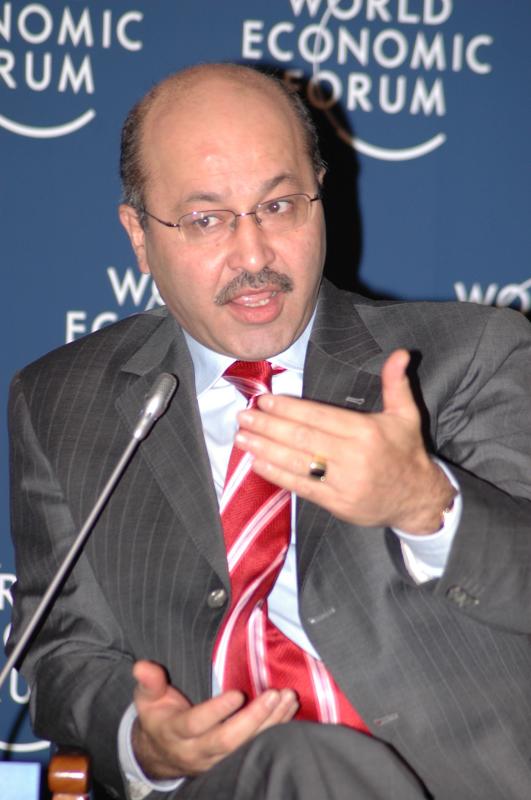

Sulaymaniyah, British study and technical qualifications
Barham Salih was born in Sulaymaniyah in 1960. His academic record is in engineering and applied quantitative subjects, rather than an economics degree: the American University of Iraq, Sulaimani, records a civil-engineering qualification from Cardiff and a doctorate in statistics and computer applications in engineering from Liverpool in 1987. Its 2014 programme dates his undergraduate graduation to 1983. Both universities are in the United Kingdom. UNHCR’s biography identifies him as a former refugee, an experience he has invoked in explaining his later international role. These details provide a more specific account than describing all of his studies as British and American or inferring an academic profession from economic responsibilities in government. [1] [2] [3]
Different regional and federal appointments
Salih’s political career included representing the PUK and the Kurdistan Regional Government in the United States after the 1992 regional elections. AUIS distinguishes his premiership of the administration in Sulaimani in 2001–2004 from his later service as regional prime minister in 2009–2012. Between them came federal appointments: deputy prime minister in the interim Iraqi government in 2004, minister of planning in the transitional government in 2005, and a further deputy premiership after the 2005 elections. These were different offices and administrations, not one uninterrupted economic portfolio. The chronology also distinguishes regional executive leadership from his later national presidency. [1] [2]
Founding the American University of Iraq, Sulaimani
AUIS’s institutional history credits Salih with initiating the university project in 2006 and assembling an Iraqi and international founding board. The institution opened in 2007 as a not-for-profit public trust. Its stated educational purpose was an American-style liberal-arts education for students across Kurdistan, Iraq and the wider region. Founding a university and chairing its governing board are different from serving as its academic president or owning it personally. The university’s account describes the work of a board and supporting institutions as well as an individual founder. This is a documented educational undertaking, rather than an unspecified claim of international influence. [4]
President of Iraq, 2018–2022
The UN Secretary-General’s statement records Salih’s election and swearing-in on 2 October 2018. UNAMI’s response emphasised service to Iraq as a united, federal and democratic state and urged the formation of a new government. His Kurdish background did not make the office a separate presidency of the Kurdish population: he was President of the Republic of Iraq. His term ended in October 2022. The Secretary-General’s subsequent report records parliament’s election of Abdullatif Jamal Rashid on 13 October, followed by Rashid’s nomination of a prime minister, and notes Salih’s congratulations as outgoing president. The transfer belongs to Iraq’s parliamentary and constitutional process. [5] [6]
Election to lead UNHCR
On 18 December 2025 the UN General Assembly elected Salih to succeed Filippo Grandi as High Commissioner for Refugees. UNHCR’s announcement describes a competitive selection process; its official biography records his assumption of office on 1 January 2026 for a five-year term. He became the agency’s twelfth High Commissioner, based in Geneva. The role concerns international protection and solutions for displaced people across countries, rather than representation of a single national or party constituency. His previous presidency is one part of the experience cited in the appointment record, not an office he continued to hold alongside the UN position. [3] [7]
The first-year programme: protection, solutions and resources
In his 9 February 2026 briefing to member states, Salih set an aim to reduce by half, by 2035, the number of refugees in prolonged displacement who rely on humanitarian assistance. He linked progress to legal status, access to work and national services, voluntary return where conditions permit, integration and resettlement. It was an announced target, not a result already achieved. At the Executive Committee on 12 October, he distinguished gaining access to livelihoods from obtaining a durable solution and stressed that crossing a border alone does not make return sustainable. He also described a severe contraction of UNHCR’s workforce since 2024. That time span began before his appointment; the speech should not be read as attributing every reduction to his own tenure. These primary statements show the priorities and constraints he publicly identified in his first year. [8] [9]
Sources and further reading
- American University of Iraq, Sulaimani, Barham Salih trustee biography; primary institutional account of education, representation, distinct regional administrations and federal offices.
- AUIS, Second Annual Sulaimani Forum programme,4–5 March 2014, Barham Salih biography;1983 Cardiff graduation,1987 Liverpool doctorate and successive government posts.
- UNHCR, “The High Commissioner”; official biography, birth, qualifications, former refugee experience, election and assumption of office in 2026.
- AUIS, “History”; primary institutional record of the 2006 founding board, public-trust structure and 2007 opening.
- UN Secretary-General, statement on Iraq,3 October 2018, published by UN Iraq 4 October; election and swearing-in on 2 October 2018.
- UN Secretary-General, S/2023/58,25 January 2023, paragraphs 2–5; primary report on Rashid’s election on 13 October 2022 and Salih as outgoing president.
- UNHCR, “Grandi welcomes election of Barham Salih as UN High Commissioner for Refugees”,18 December 2025; primary announcement of the General Assembly election and succession.
- Barham Salih, briefing to UNHCR member states,9 February 2026; primary speech setting the 2035 target and identifying indicators, protection and possible solutions.
- Barham Salih, opening remarks to UNHCR Executive Committee,12 October 2026; primary speech on self-reliance, durable solutions, return conditions and staffing contraction since 2024.
- World Economic Forum, Barham Salih photograph, published February 2009, via Wikimedia Commons and the Forum’s Flickr account; CC BY-SA 2.0, permission confirmed on Commons.