Haj Faramarz Asadi is remembered as a Malekshahi Kurdish leader in the Ilam region. Local historical research, accounts of tribal office and a mosque attribution provide a firmer basis for his biography than an unsupported literary career.
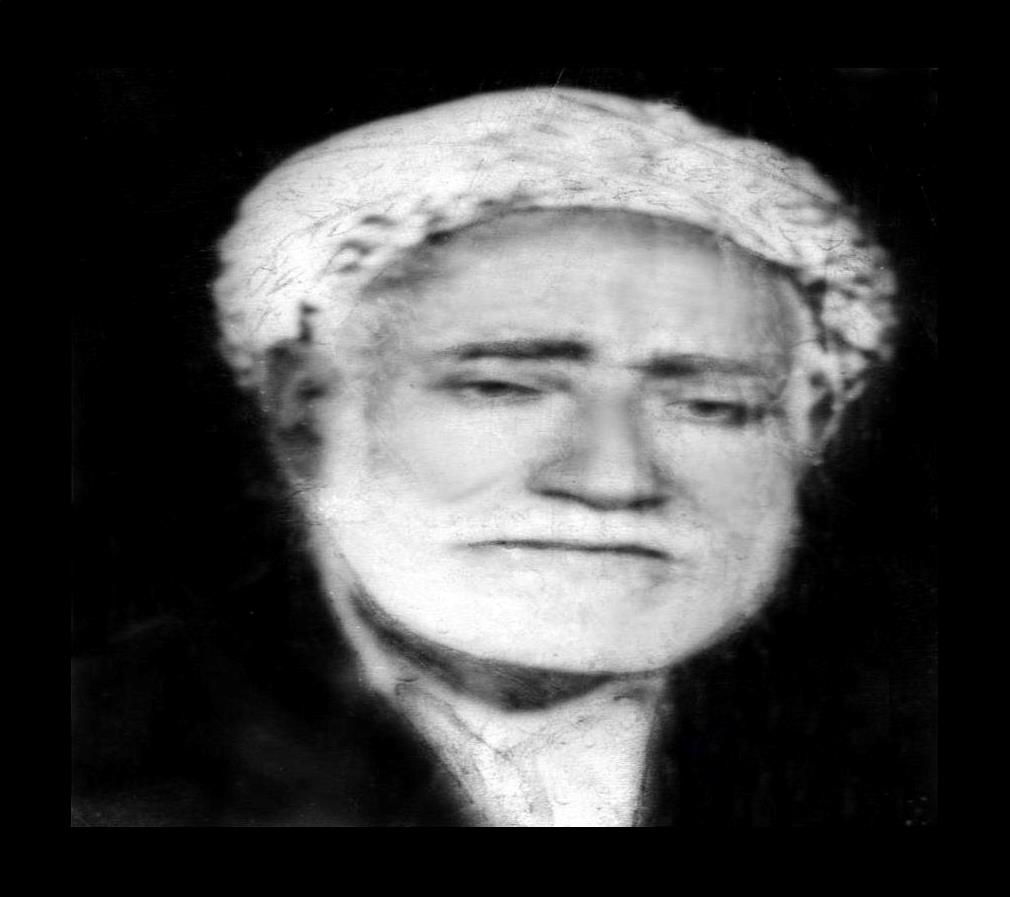

A Malekshahi leader from Arkavaz
Haj Faramarz Asadi belongs to the local political and social history of the Malekshahi Kurds in the Ilam region of western Iran. Ali Reza Asadi’s signed profile in Shafaq’s Fayli section, published on 16 November 2016, gives Arkavaz as his birthplace and 1869–1969 as his lifespan. It describes a tribal leader with religious and temporal standing, rather than supplying a catalogue of poems. Those life dates should be understood as the profile’s reported chronology: without full birth and death dates they do not independently establish an exact age of one hundred. [1]
The office of toshmal
The same profile uses the titles toshmal and khan for Malekshahi leadership. It describes responsibilities for security, tribal affairs, revenue collection and supervision of kadkhodas, the heads of smaller groups. These functions place Asadi within a system of local authority and negotiation with central government. They are more specific than calling him a prince without explaining the office. Firuz Tawfiq’s wider study of Iranian tribes cautions that terms such as il, tayefa and clan are not interchangeable analytical categories; local organization must be examined on its own evidence. [1] [4]
Musa Khamis’s victory document and the later fighting
Ali Reza Asadi’s research article in Roshd-e Amuzesh-e Tarikh 63, published in autumn 1395/2016, discusses a fath-nameh, or victory document, associated with Malekshahi participation in Qajar-Ottoman warfare. It identifies the earlier leader as Pahlavan Musa Khamis and dates the document to Dhu al-Hijja 1236 AH, in 1821. That is a different generation from Faramarz Asadi. A grant or commendation from that period cannot have been issued personally to someone the later profile dates as born in 1869. The article separately attributes renewed fighting against Ottoman forces in 1326 AH/1287 solar, or 1908, to Malekshahi forces led by Faramarz. This is the named researcher’s account, not an independently verified roll of all participants or casualties. [2]
Regional leadership and changing administrative boundaries
The Shafaq profile connects Asadi with leadership during the wartime period beginning in Iranian solar year 1320, or 1941–1942. Its wording about governing Ilam needs a historical qualification. Tawfiq records that Ilam became a separate ostan, or province, only in 1353 solar/1974, after Asadi’s reported death. Earlier regional authority in Ilam or Pusht-e Kuh should therefore not automatically be described as the governorship of today’s province. Tribal leadership, locally recognized authority and a modern provincial appointment require different evidence. The dates also prevent the start of solar year 1320 from being mislabelled as a period after the end of the Second World War. [1] [4]
A mosque attribution and the surviving portrait
Habibollah Mahmoodian’s account of historical mosques and takiyas in Ilam, dated 17 Farvardin 1394/2015, specifically credits the Malekshahi mosque to the efforts of the late Haj Faramarz Asadi. The entry does not supply a construction date, architectural survey or basis for calling it the oldest mosque in the province. It nevertheless provides a concrete religious patronage connection beyond military biography. The portrait reproduced here is separately credited and left undated. Together, the named studies, mosque notice and image support an account of local leadership; they do not establish an oeuvre of ghazals, qasidas or published collections, or Asadi’s participation in the Mahabad republic. [3] [5]
Sources and further reading
- Ali Reza Asadi, “al-Hajj Faramarz Asadi,” Shafaq News, Fayli articles, 16 November 2016: signed local-history profile, reported life dates, Arkavaz, titles, duties and regional leadership. Its commemorative claims and chronology require comparison with the other sources.
- Ali Reza Asadi, “Fath-nameh-ye il-e Malekshahi,” Roshd-e Amuzesh-e Tarikh 63 (autumn 1395/2016), pp. 70–77; publisher’s account and linked full article: Musa Khamis, 1236 AH document and distinct 1326 AH fighting associated with Faramarz.
- Habibollah Mahmoodian, “Masajed va takayaye tarikhi-ye ostan-e Ilam dar dowre-ye Eslami,” 17 Farvardin 1394/2015, author’s website; brief entry crediting the Malekshahi mosque to Haj Faramarz Asadi.
- Firuz Tawfiq, “ʿAšāyer,” Encyclopaedia Iranica II/7 (1987), pp. 707–724; updated 2018: definitions of tribal groups, organization and Ilam’s separate provincial status from 1353 solar/1974. Regional context, not an individual biography of Asadi.
- Portrait of Faramarz Asadi, credited to ciyaye-kurmenc.com via Wikimedia Commons; listed CC BY-SA 4.0. Original photographer and sitting date unidentified; 2020 digital date is not the photograph’s historical date.