This archive brings together dated sources on the Iran–Iraq War, attacks in June 2025 and the escalation beginning on 28 February 2026. The selected 2026 humanitarian report covers 28 February–17 March. A separate map notebook lets readers organise their own notes; it supplies no live incident feed.
Identify the conflict and the date
The phrase Iran war can refer to different periods. The Iran–Iraq War lasted from 1980 to 1988; the United Nations observer mission records the ceasefire taking effect on 20 August 1988. [1] The IAEA separately documents attacks on nuclear facilities during 13–24 June 2025. [2] A UN humanitarian update covers hostilities from 28 February to 17 March 2026. [3] Keeping those time frames separate makes an archive usable: a photograph, map or casualty statement belongs to a particular episode and needs its own date.
The 1988 ceasefire and observation
The United Nations Iran–Iraq Military Observer Group, UNIIMOG, was established to verify, confirm and supervise the ceasefire and the withdrawal of forces to internationally recognised boundaries. Its institutional history describes patrols, investigations of complaints and efforts to defuse confrontations. It also distinguishes ending hostilities from completing withdrawals; the mission finished in February 1991. [1] These records show why a ceasefire announcement, a monitored line and an agreed international boundary should be represented as different kinds of information when studying a war.
What the IAEA recorded in 2025
The Director General’s report GOV/2025/50, dated 3 September and derestricted on 11 September 2025, describes the attacks of 13–24 June and the interruption of verification. It records withdrawal of inspectors for safety, Iran’s July suspension law and the Agency’s use of satellite imagery and open sources. It also states limits on access and on its ability to assess material and operating conditions. [2] The report is valuable for what it establishes and for what the Agency said it could not verify at that time; it is not a substitute for a later assessment.
The escalation of 28 February 2026
In remarks to the Security Council that day, the UN Secretary-General condemned the United States and Israeli strikes against Iran and the subsequent Iranian attacks affecting states across the region. He warned of a widening conflict, called for cessation and negotiations, and distinguished what was known from reports he could not confirm. [4] An opening-day statement is evidence of the situation and diplomatic response at that moment. Claims described there as reported or unconfirmed should retain that qualification when entered into an archive.
Civilian consequences and western Iran
OCHA’s update through 17 March describes damage to civilian infrastructure, disruption of essential services and displacement. It includes Kermanshah among provinces with reported casualties and damage. The document also cites Iran’s Ministry of Cultural Heritage concerning damage to heritage in Kurdistan and Lorestan provinces and sites in Kermanshah and Ilam. [3] These references connect the wider conflict with places important to Kurdish history. A province appearing in an overview does not locate every incident or establish that every community within it experienced the same effects.
Use the notebook with source notes
The map editor below starts empty. Add a marker for a place you are researching, enter a title and description, and supply a date when known. Record the source link and distinguish the event date from the date of the report. Drawn zones are your annotations, and their colours reflect your chosen categories. Export JSON to keep markers and zones before leaving the page. This notebook is separate from the dated sources above: adding a marker does not verify an event or publish a new report.
Personal map notebook
English controls. Add your own markers and zones, and export JSON to retain them. These are personal annotations, with no live feed or automatic saving.
Sources and further reading
- United Nations Peacekeeping, UNIIMOG: Background; 1988 ceasefire, observation, withdrawals and completion in February 1991.
- IAEA Director General, GOV/2025/50, 3 September 2025, derestricted 11 September, especially paragraphs 8–17; attacks and verification limits.
- OCHA ROMENA with UN and humanitarian partners, Islamic Republic of Iran: Humanitarian Update No. 01, as of 17 March 2026, published 18 March; dated civilian and heritage reporting.
- UN Secretary-General, remarks to the Security Council on the situation in the Middle East, 28 February 2026; opening-day assessment and qualifications.
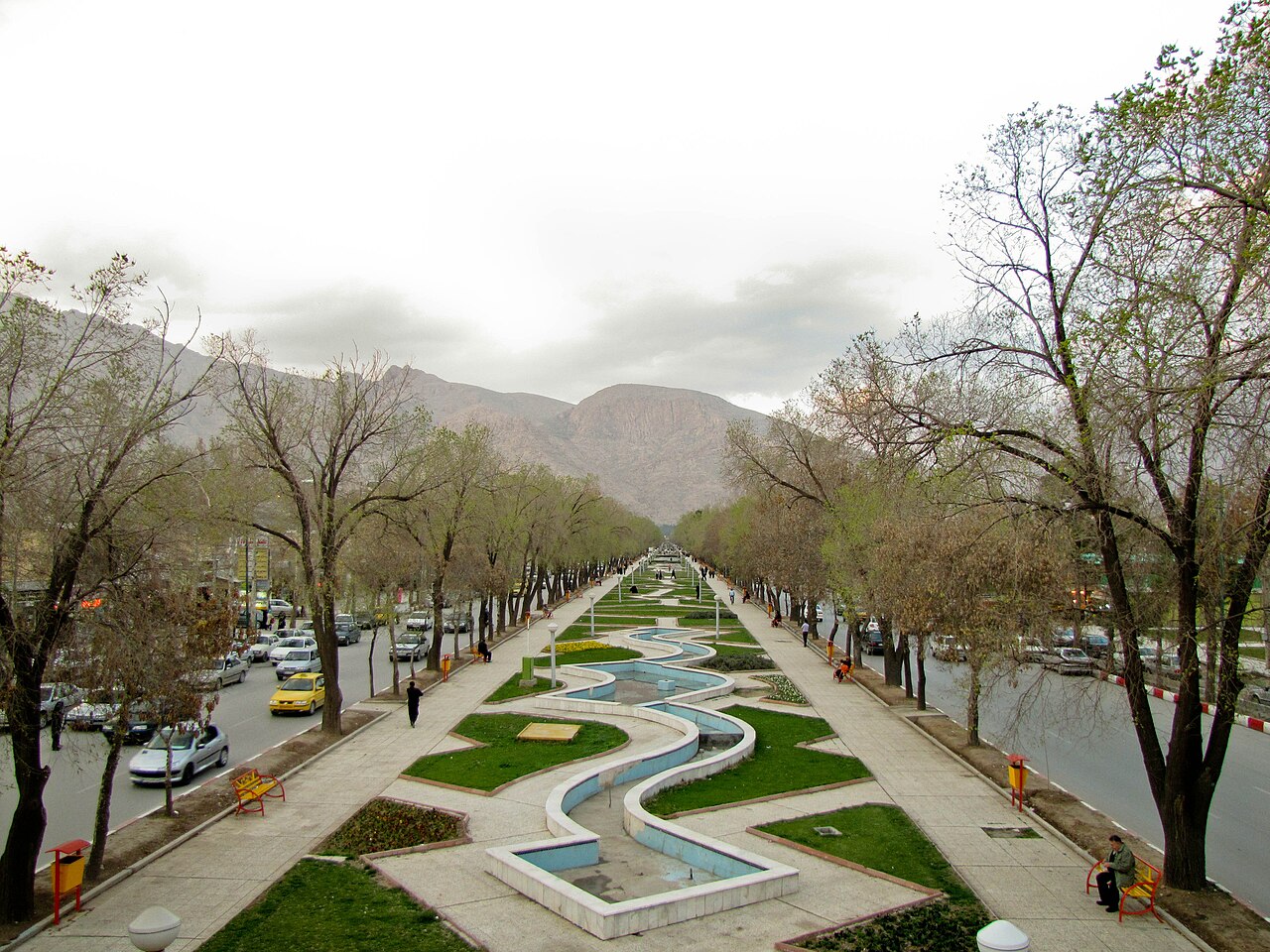
- mehdi hosseini, Shirudi boulevard, Kermanshah, 5 April 2012; CC BY 3.0, Panoramio photograph via Wikimedia Commons.
- OpenStreetMap contributors; geographic background for the personal notebook, Open Database Licence.