A sourced chronology of Kurdish associations, the Sèvres proposals, Mahabad, Syrian citizenship campaigns, Iraqi autonomy negotiations, the PKK, Anfal and the regional institutions created in 1992.

Several movements, with different political projects
Twentieth-century Kurdish politics cannot be reduced to one organization or an uninterrupted campaign with a single programme. Associations, newspapers, religious networks, socialist parties, armed organizations and electoral institutions pursued different combinations of cultural rights, citizenship, autonomy and statehood. Comparing their actual dates and demands is more useful than assuming that every Kurdish leader spoke for all Kurds. This overview follows selected developments in the Ottoman setting and in Turkey, Iran, Syria and Iraq; it is an introduction, not an exhaustive catalogue of parties or local rebellions.
1908: an association and a bilingual newspaper
The İslamcı Dergiler Projesi catalogue identifies the Kürt Teavün ve Terakki Cemiyeti, the Kurdish Society for Cooperation and Progress, as established on 19 September 1908. Its newspaper began in Istanbul on 9 November, publishing in Kurdish and Turkish and discussing language, literature and education. [1] Bilal Altan’s study of Baban family participation also stresses Ottomanist commitments among these elites. [2] Cultural organization and continued attachment to the empire could coexist; a Kurdish association did not automatically have a programme of immediate independence.
1920: what Sèvres proposed, and why conditions matter
Articles 62–64 of Sèvres envisaged a locally autonomous arrangement for specified predominantly Kurdish areas, with safeguards for Assyro-Chaldeans and other minorities. A later route to independence depended on a majority’s request and the League of Nations Council’s assessment and recommendation. The provisions also contemplated voluntary adhesion by Kurds of the Mosul vilayet under those conditions. [3] This was neither an already established Kurdish state nor a guarantee covering every Kurdish-inhabited territory. The treaty never entered into force, as the British government later confirmed in Parliament. [4] A proposed diplomatic mechanism and an implemented political settlement are different things.
1925: Sheikh Said and competing interpretations
The Sheikh Said uprising in Turkey joined a religious leader’s authority to a political confrontation with the new republic. Its motives remain a subject of interpretation. Ebru Çoban emphasizes religious grievances in the testimony and court material she studies, while Robert Olson’s work situates Sheikh Said within the development of Kurdish nationalism. [5] [6] These are arguments with identifiable authors and evidentiary choices. Religious affiliations, national claims, local alliances and state centralisation should be examined together, rather than reducing every participant to one motive. The uprising’s suppression also belongs to the history of state coercion, not merely a succession of celebrated leaders.
1946: Mahabad’s institutions and diplomatic vulnerability
Qazi Muhammad headed the republic proclaimed at Mahabad on 22 January 1946. Its limited territory supported Kurdish teaching and publications before its collapse that December. [7] An American telegram of 29 April shows the diplomatic constraints: Dean Acheson discouraged consular officials from visiting Qazi as guests because it could be interpreted as support for Kurdish statehood, particularly in Iraq and Turkey. The editorial footnote records the travel ban’s removal on 7 May. [8] This was a dated instruction, not permanent American policy or proof that no American ever visited. Mahabad’s cultural institutions and its international vulnerability are both part of its political history.
Syria: organization in 1957, citizenship exclusion in 1962
Human Rights Watch’s historical account dates the Kurdish Democratic Party of Syria to 1957, with demands for cultural recognition, land reform and democracy rather than independence. It records arrests in 1960 and subsequent fragmentation. [9] The exceptional Hasakah census of 1962 stripped an estimated 120,000 Kurds of citizenship, according to HRW’s 1996 investigation. It documented restrictions on property, work, travel and recognised family status. [10] The census preceded the Ba‘ath Party’s accession in 1963. Citizenship and civil participation were therefore central political questions alongside language and territory; Syria’s Kurdish experience should not be narrated only through later armed developments.
Iraq: party formation, autonomy negotiations and the 1975 rupture
Iraq’s KDP was founded on 16 August 1946; Jalal Talabani announced the PUK on 1 June 1975. [7] Their distinct histories should not be collapsed into a single moment of party formation under the Ba‘ath. A US telegram of 14 March 1970 questioned how much autonomy the newly announced Iraqi–Kurdish settlement would deliver in practice. [11] In June 1975, CIA director William Colby recorded the end of assistance after Iran stopped support following the 6 March Algiers agreement; his memorandum linked that withdrawal to the resistance’s collapse. [12] These documents show external governments’ calculations, not impartial statements of Kurdish aspirations.
Turkey: armed organization and electoral activity were distinct
Gunter dates the PKK’s establishment to 27 November 1978 under Abdullah Öcalan and the start of its insurgency to August 1984. Its early programme combined Kurdish nationalism and Marxist revolution. His chronology also records the legal People’s Labour Party, HEP, in June 1990. [7] Armed struggle and parliamentary activity were distinct forms of mobilization. Kurdish identity alone does not establish membership in either organization, agreement with its methods or support for its leaders. This historical comparison also avoids projecting later changes in programmes onto the organizations’ founding years.
1988: Anfal and the civilian population
Human Rights Watch’s 1993 investigation places the named Anfal military operations between 23 February and 6 September 1988, within a broader campaign of repression. It describes mass executions and disappearances, chemical attacks, destroyed villages and forced displacement. Its conclusion that the Iraqi regime committed genocide drew on captured government documents and interviews with more than 350 witnesses. [13] Civilian experiences must remain central to this history. An account confined to party strategy and foreign alliances would miss the destruction of households, rural livelihoods and communities that shaped subsequent Kurdish politics.
1991–1998: regional institutions and internal conflict
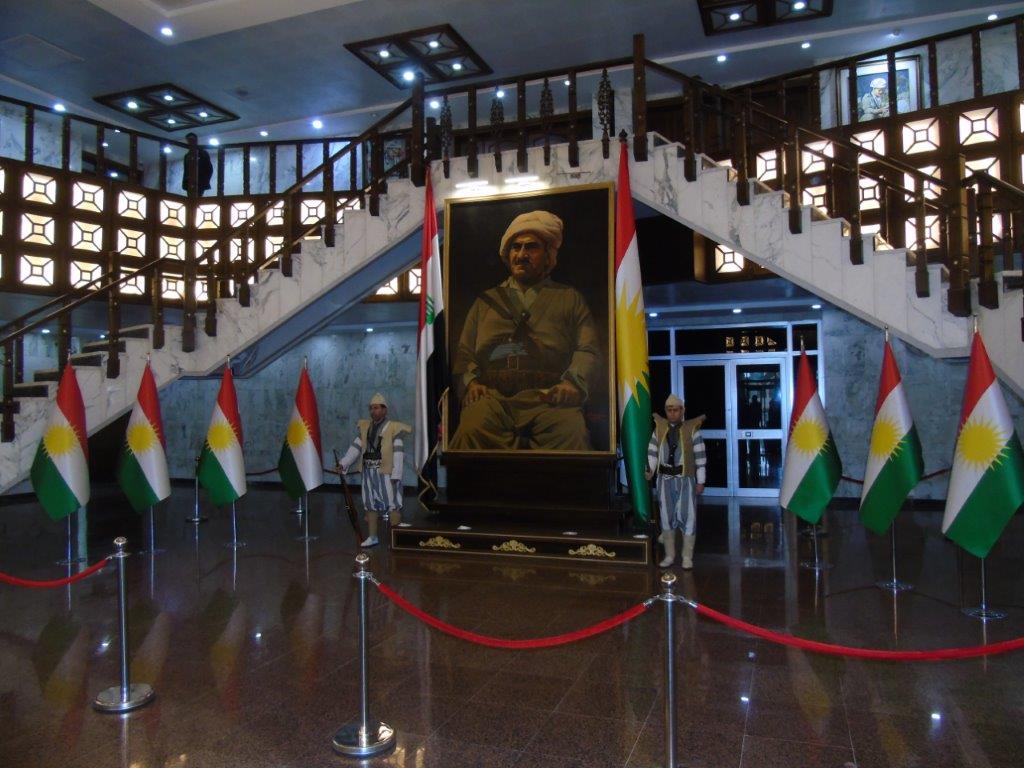
The 1991 uprising and protection arrangements created an opening for Iraqi Kurdish self-government, but the regional parliament and government followed the election of 19 May 1992. The parliament’s institutional history also records the administrative vacuum and embargoes behind the demand for public institutions. [14] Institutional creation did not end conflict: KDP–PUK fighting began in 1994, producing divided administrations; the Washington agreement of 1998 was a later reconciliation step. [14] These developments demonstrate both the achievement of self-government and the difficulty of establishing accountable, shared institutions.
Sources and further reading
- İslamcı Dergiler Projesi, Kürd Teavün ve Terakki Gazetesi; catalogue history of the 1908 association and newspaper.
- Bilal Altan, Meşrutiyet ve Mütareke Dönemleri Cemiyet Yapılanmalarında Babanlar/Babanzadeler, ORAFAM Journal 1/1 (2023), pp. 1–19; published abstract.
- Treaty of Sèvres, British Treaty Series 11 (1920), printed p. 21, Articles 62–64; official scan.
- UK Parliament, Treaty of Sevres, 18 February 1983; Douglas Hurd’s answer on non-entry into force.
- Ebru Çoban, Sheikh Said Case: Rebellion or Revolt?, History Studies 14/1 (2022), pp. 21–48; abstract and introductory discussion.
- Robert Olson, The Emergence of Kurdish Nationalism and the Sheikh Said Rebellion, 1880–1925 (1989); publisher’s description consulted.
- Michael M. Gunter, Historical Dictionary of the Kurds (2004), chronology and KDP, PUK, PKK and Mahabad entries.
- FRUS 1946, vol. VII, document 325, Acheson telegram, 29 April 1946, and editorial footnote on the 7 May travel-ban removal.
- Human Rights Watch, Group Denial, 26 November 2009, historical background and Kurdish political organization.
- Human Rights Watch, Syria: The Silenced Kurds, October 1996, summary; census and consequences of statelessness.
- FRUS 1969–1976, E-4, document 268, State Department telegram, 14 March 1970; settlement and implementation questions.
- FRUS 1969–1976, vol. XXVII, document 289, Colby memorandum, 4 June 1975; termination of assistance.
- Human Rights Watch, Genocide in Iraq: The Anfal Campaign Against the Kurds (1993); report description and research basis.
- Kurdistan Parliament, History of Parliament; the 1992 election, government formation and civil-war period.
- Penegal2017, Parliament Entrance Hall in Erbil, 27 February 2021; Wikimedia Commons, CC BY-SA 4.0.