Mehdi Zana (1940–2026) served as Diyarbakır’s mayor in 1977–1980. His political career, prison testimony, writing and European human-rights litigation form distinct parts of a life that ended on 29 August 2026.

A biography brought up to August 2026
Mehdi Zana was a Kurdish politician and author born in Silvan in 1940. Rudaw’s 29 August 2026 report records his death that day in Diyarbakır; its following-day funeral report describes a municipal commemoration and burial at Yeniköy Cemetery. [1] [2] He should therefore no longer be introduced simply as a living politician born in 1940. His mayoralty, imprisonment, published testimony and litigation deserve separate attention, rather than a biography made up of repeated claims that he was a symbol. This profile was reviewed on 31 October 2026.
Local politics before the 1980 coup
Rudaw’s biographical account dates his joining the Workers’ Party of Turkey, TİP, to 1963 and his leadership of its Silvan branch to 1965. It records his independent election as Diyarbakır mayor in 1977 and the end of his term at the September 1980 military coup. [1] In the 1993 interview excerpt preserved by akaKURDISTAN, Zana recalls campaigning in Kurdish and making Kurdish identity explicit in municipal politics. [3] That is his account of his political stance. It should not become the unsupported assertion that no earlier mayor was Kurdish; he himself distinguished earlier mayors’ background from his own public affirmation.
Prison and contemporary human-rights advocacy
Amnesty International’s urgent action of 13 November 1986 records his arrest after the coup, imprisonment at Diyarbakır Military Prison and adoption as a prisoner of conscience in 1982. It reports torture allegations he had conveyed to a Council of Europe delegation in 1984. [4] Amnesty describes the 1983 conviction as concerning the illegal Socialist Party of Turkey Kurdistan, TKSP, and argues that the evidence then available did not show advocacy or use of violence. [4] These are specific, dated findings and advocacy positions. They should not be confused with the separate proceedings over his later comments about the PKK.
The 1987 statement and the later court case
The European Court of Human Rights records an interview published in Cumhuriyet on 30 August 1987 in which Zana supported the PKK, opposed massacres and described PKK killings of women and children as mistakes. A Turkish court imposed a twelve-month sentence in March 1991. [5] The Strasbourg proceedings concerned that statement and prosecution, not a single judicial review of his entire prison history.
What Strasbourg actually decided in 1997
On 25 November 1997, the Grand Chamber found no Article 10 freedom-of-expression violation, by twelve votes to eight, considering the violent context of the remarks. It nevertheless found Article 6 violations concerning his absence from the trial that convicted him and the length of proceedings. It also held that his wish to speak Kurdish did not itself waive his right to appear and defend himself. [5] These different holdings belong together.
Writing and the transmission of prison testimony
AKIN reproduces a Blue Crane Books announcement for Prison No. 5, describing Zana’s account of prison life, a preface by Elie Wiesel and a postscript by Kendal Nezan. [6] The announcement is evidence of how the book was presented to readers; it is not a substitute for reading the complete memoir. His 1993 interview excerpt also discusses protest, imprisonment and the use of Kurdish in court. [3] These sources preserve a participant’s voice. Memoir, interview, campaigning document and court judgment have different purposes, which is why their claims are identified rather than blended into one anonymous narrative.
Public remembrance and a record readers can check
Abdulselam Akıncı’s 30 August 2026 funeral report records relatives, colleagues and politicians gathering in Diyarbakır, with Leyla Zana present at the burial. [2] It shows the public importance attached to his life without making every tribute an independent historical finding. His record can be studied through electoral dates, the 1986 Amnesty appeal, his testimony and the mixed 1997 judgment. These provide substance for evaluating political leadership and the defence of rights. They also allow the experiences of imprisonment and language conflict to be described precisely without erasing difficult or contested parts of the record.
Sources and further reading
- Rudaw, Kürt siyasetçi Mehdi Zana vefat etti, 29 August 2026; death and dated political biography.
- Abdulselam Akıncı, Mehdi Zana’s funeral in Diyarbakır, Rudaw, 30 August 2026; commemoration and Yeniköy burial.
- akaKURDISTAN, Mehti Zana story map; excerpt from a 1993 interview, also presented in Kurdistan: In the Shadow of History.
- Amnesty International, UA 333/86, EUR 44/30/86, 13 November 1986, reproduced in Kurdish Institute press bulletin 21, PDF p. 63; contemporary urgent action.
- European Court of Human Rights, Zana v. Turkey, application 18954/91, 25 November 1997; facts, §§ 57–62, 69–85 and operative provisions.
- AKIN, Blue Crane Books announcement for Prison No. 5, 2 February 2002; presentation of the memoir, preface and postscript.
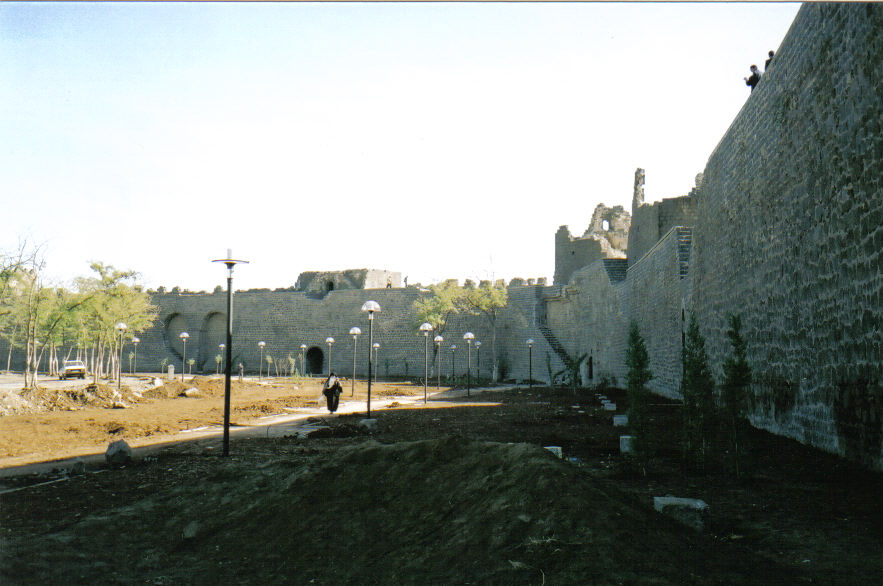
- Gerry Lynch, Diyarbakır city walls, photograph credited 2003, uploaded 2005; Wikimedia Commons, CC BY-SA 3.0.