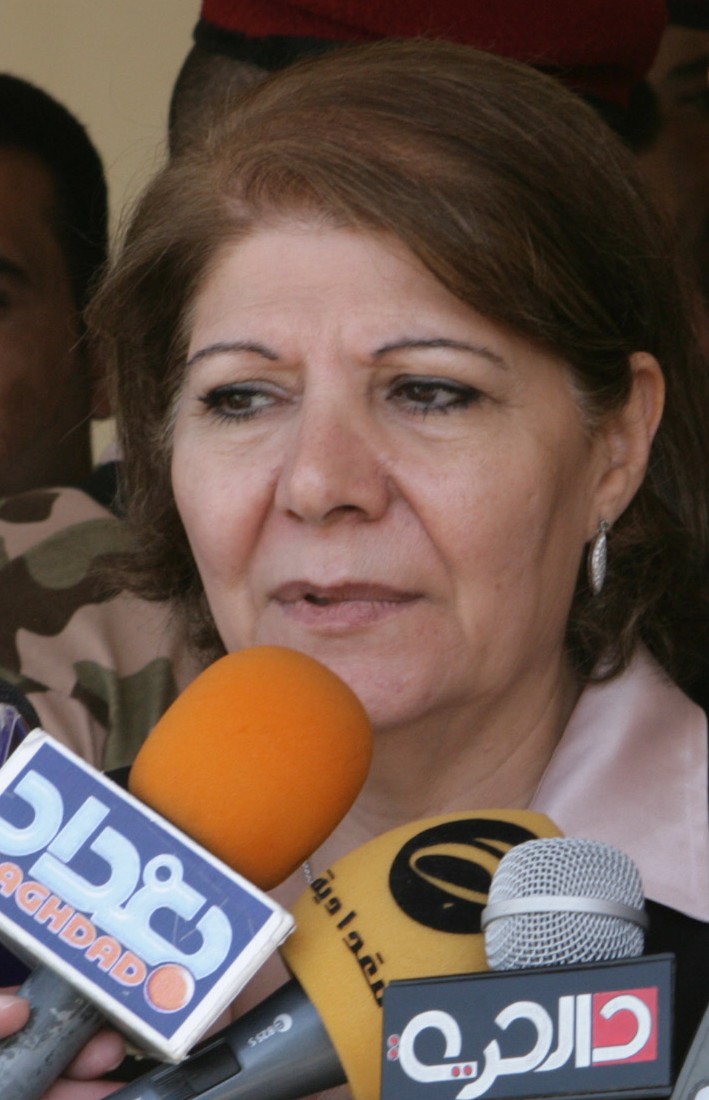
Narmin Othman is a Kurdish Iraqi politician whose work includes regional education and social affairs, Iraq’s women’s affairs portfolio, environmental administration and service as acting human rights minister. Contemporary records document the responsibilities behind those appointments.

Teaching, Sweden and regional public service
The Kurdistan Botanical Foundation’s institutional biography gives Othman’s birthplace as Koysinjaq and her birth date as 9 July 1951. It records graduation from the University of Baghdad’s College of Education in 1972 and secondary-school teaching in Erbil. [1] In a 2005 interview, she described the Stockholm chapter of her life: her family lived there between 1984 and 1992, and she worked in care and later ran a small food shop. [2] The Iraqi Interim Government’s 2004 press packet lists earlier regional posts in education and social affairs, work advising the justice ministry, and management of Save the Children’s Erbil office. [3]
Women’s affairs in the interim government
The 2004 government announcement identifies Othman as Minister of State for Women. Its biographical sketch also records her participation in the advisory steering committee for the July 2003 Voice of the Women of Iraq Conference. [3] These responsibilities placed education, social work and women’s public participation within her career before the subsequent environment and human rights appointments. The positions belong to different institutions and periods, which helps distinguish her regional work from her later role in Baghdad.
Environmental assessment and institutional capacity
Othman’s foreword to UNEP’s 2005 Assessment of Environmental “Hot Spots” in Iraq provides a direct statement of her environmental priorities. She welcomes Iraqi experts’ assessment of five contaminated sites and identifies both conflict damage and years of inadequate investment as sources of environmental problems. She describes cooperation on ministry capacity, marshland restoration and site assessment, followed by the need to identify and remediate further contaminated land. [4] The report’s executive summary explains that Iraqi officials conducted fieldwork while security constraints kept UN specialists from travelling to the sites. The foundation biography records her continuation as environment minister in 2006. [1]
Acting human rights minister and detention inspections
Bitte Hammargren’s December 2005 interview for Svenska Dagbladet identifies Othman as environment minister and acting human rights minister. Othman described inspectors finding another detention facility, with people subsequently hospitalized or released. She said her department sent reports and letters about alleged abuses, prolonged detention without decisions, inadequate food and torture to responsible ministers, parliamentarians and the prime minister. [2] These are her contemporary statements about the inspection work and its obstacles. They document an accountability role within government and the difficulties she reported obtaining responses from other departments.
Writing and conservation work
The Kurdistan Botanical Foundation’s biography also identifies Othman as a writer and editor, naming Strategic Glimpses and a book on maintaining the Kurdistan Region’s security. It lists her as editor-in-chief of Nargez and president of the foundation’s board. [1] These institutional records extend the account of her public work into publishing and conservation.
Sources and further reading
- Kurdistan Botanical Foundation, “Bios of the Board of Directors (BOD) and staff,” Narmin Othman entry: institutional biography, education, dated appointments, writing and board role.
- Bitte Hammargren, “Minister avslöjar nya övergrepp,” Svenska Dagbladet, 13 December 2005: firsthand interview about detention inspections, the acting human rights portfolio and her years in Sweden.
- Iraqi Interim Government, Announcement Ceremony Press Packet (2004), biographical sketches, “Minister of State for Women,” PDF p. 13: contemporary appointment and prior public-service record; archived at the University of North Texas.
- UNEP, Assessment of Environmental “Hot Spots” in Iraq (2005), p. 9, foreword by Narmin Othman Hassan, and p. 10, executive summary: environmental priorities and Iraqi field teams.