Sason is a mountain district of Batman Province in southeastern Turkey. Its history brings together Kurdish and Arabic-speaking communities, Armenian cultural memory, and repeated episodes of violence and forced migration.

A district shaped by mountain routes
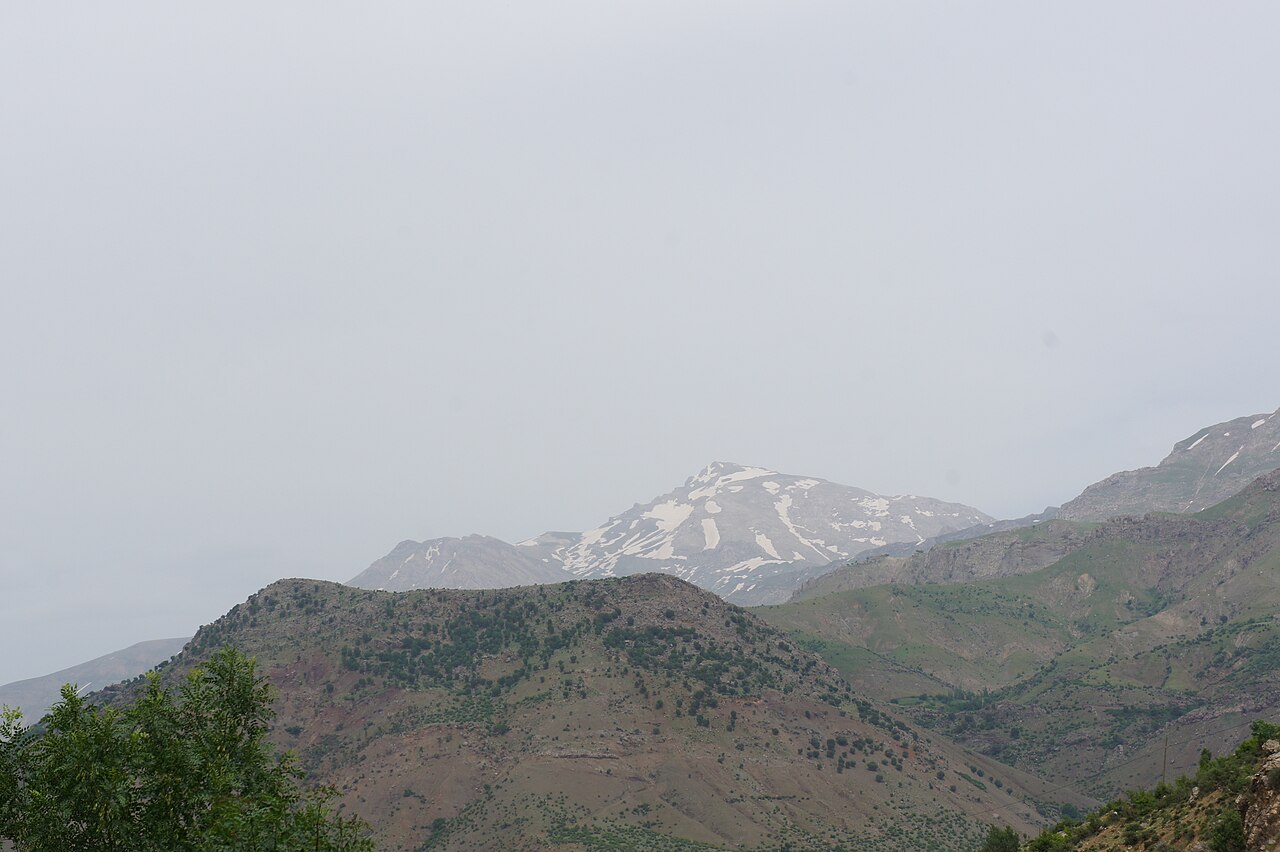
Sason lies among the high ridges and deep valleys of the southeastern Taurus. Administrative boundaries have changed repeatedly; it became part of Batman Province in 1990. Historian Adem Yorulmaz describes how narrow passages, seasonal snowmelt and difficult river crossings affected movement between settlements. [1] The wider historical Sasun landscape also carries Armenian associations extending beyond the present administrative district. It appears both as a lived landscape of villages and as the homeland of heroes in Armenian oral literature. [2]
Languages in contact
Linguist Faruk Akkuş collected material in Kuzzang in the Mutki area and Purşang in Batman. His study places Sason Arabic in the Kozluk–Sason–Muş group of Anatolian Arabic and documents multilingual speakers alongside Kurdish, Zazaki, Turkish and Armenian. He also records Armenian families in the region, challenging an earlier account that assumed none remained. One grammatical example is the attached element -ma, which marks an indefinite noun: baxle-ma means “a mule.” Akkuş relates such changes to sustained contact with surrounding languages. [3] This research makes the district’s social history more specific than a single ethnic label.
Sasun in the Armenian epic
The Daredevils of Sasun follows four generations: Sanasar and Baghdasar, Lion Mher, David, and Little Mher. David, the best-known hero, grows up an orphan and defends his people; Little Mher remains waiting for a more just world. Barlow Der Mugrdechian explains that priest and ethnographer Garegin Srvandztiants recorded the epic from a villager near Mush before its first publication in 1874. A composite scholarly edition followed in 1939, drawing together variants. [2] UNESCO inscribed the epic’s performance tradition in 2012. Its description emphasizes recitation, sung passages and transmission within families, including performances at community celebrations. [4]
1894 and 1915: destruction and survival
A US Secretary of State report dated 19 December 1895 describes the destruction of villages and killing of defenseless Armenians at Sassoun in August 1894 by predatory Kurdish groups, with Ottoman authorities failing to stop the slaughter. The report also acknowledges the limits of its information and the failure to establish an independent American investigation. [5] For 1915, the Armenian Genocide Museum-Institute publishes the testimony of Yeghnazar Karapetyan, a villager from Avatorik in the Mush district. He recalls interrupted communications, destroyed settlements and flight into the mountains. His account also records individual acts of rescue, including a Turkish neighbour who sheltered seven Armenians. [6]
Military operations and expulsion, 1935–1938
Yorulmaz combines archival correspondence, officials’ memoirs and interviews with witnesses or close relatives to examine the events beginning on 21 May 1935. He distinguishes local incidents from their later official treatment as a wider political rebellion. His study documents a prohibited zone, expulsion decrees in 1936–1938, and families dispersed to towns in western Turkey, sometimes separated under different surnames. [1] These displacements belong to the history of Garzan Arab communities as well as to the wider history of state intervention in the Kurdish region.
Orchards, beekeeping and changing livelihoods
Walnuts and honey remain prominent in the district’s agricultural identity. Batman’s provincial culture directorate describes walnut harvesting in September and beekeeping drawing on thyme and wild plants around Mereto. It also traces a strawberry-growing initiative to a GAP-supported project begun in 2007 with five farmers on fifteen decares. [7] Such projects show economic change within the mountain landscape, alongside the older cultivation and pastoral activities associated with it.
Sources and further reading
- Adem Yorulmaz, “Anılar Işığında Sason Olayı (1935–1938),” Kurdiyat 6 (2022), pp. 9–36, especially pp. 11–13, 26–27 and 31–32; archival and oral-history research.
- Barlow Der Mugrdechian, “The Daredevils of Sasun,” World Epics, Columbia University; four cycles, oral transmission and editions.
- Faruk Akkuş, “The Arabic Dialect of Mutki-Sason Areas,” in Arabic Varieties: Far and Wide (2016), pp. 29–40, especially pp. 29 and 38–39; linguistic field data.
- UNESCO, Performance of the Armenian epic of Daredevils of Sassoun or David of Sassoun; Representative List inscription, 2012.
- US Secretary of State, report of 19 December 1895, Foreign Relations of the United States, 1895, Part II, document 523, pp. 1263–1264; Sassoun and limits of investigation.
- Armenian Genocide Museum-Institute, Russian translation of Yeghnazar Karapetyan’s testimony on Mush and Sasun in 1915; archive reference and 1982 documentary edition identified on the page.
- Batman Provincial Directorate of Culture and Tourism, Sason Balı ve Çileği; walnut harvesting, beekeeping and the 2007 strawberry project.