Tahir Elçi led the Diyarbakır Bar Association and represented victims of serious abuses. His killing in 2015 led to a forensic investigation, a police trial and a constitutional application.
A career representing victims
Tahir Elçi (1966–2015) was a Kurdish lawyer from Cizre. He graduated from Dicle University’s law faculty in 1991, began independent practice in Diyarbakır in 1992 and became president of its bar association in 2012. The bar’s memorial records his representation of victims in cases involving village burnings, unlawful killings and other abuses. It names the Lice and Temizöz proceedings and the bombing of Kuşkonar and Koçağılı among his cases. His work also included training younger lawyers in criminal and human rights law. [1]
The television case was in 2015
On 15 October 2015, Elçi told CNN Türk that the PKK should be understood as an armed political movement rather than a terrorist organisation. Police arrested him on 20 October and took him to Istanbul for questioning. A court released him that afternoon with a foreign travel ban. Human Rights Watch, which worked with him, opposed the investigation as an infringement of expression. Its 26 October update reported a prosecutor’s proposed propaganda indictment, while noting that Elçi and his lawyer had not yet seen it. [2]
The appeal at the minaret
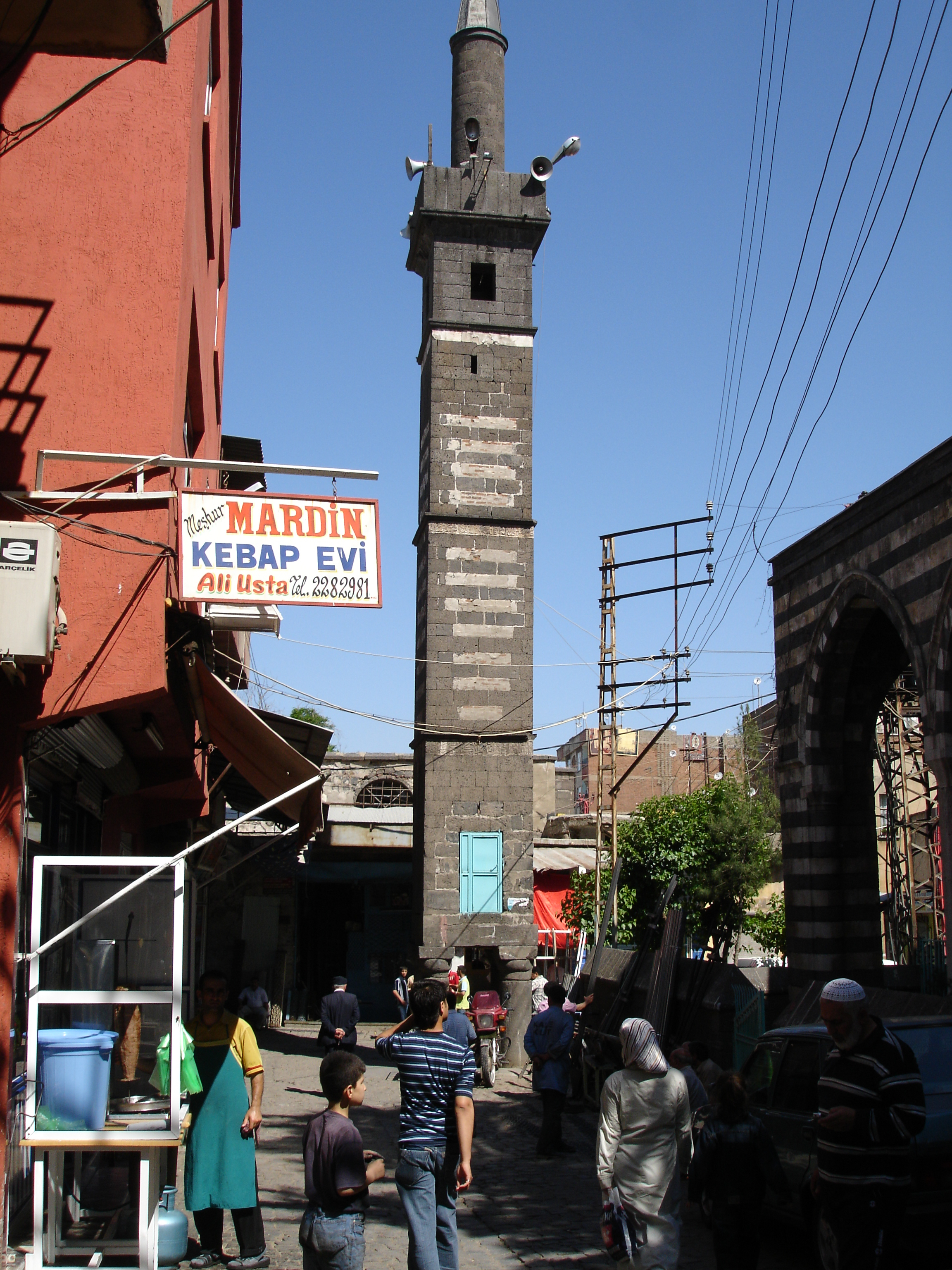
On 28 November 2015, Elçi spoke outside the Four-Legged Minaret in Sur, Diyarbakır, about protecting cultural heritage and ending armed operations and clashes. The bar association’s account places his death in the gunfire immediately after that statement. [3] The location matters: his final public intervention joined concern for civilian life with the preservation of a historic neighbourhood.
What the forensic reconstruction found
The bar commissioned Forensic Architecture to reconstruct the shooting from synchronised audiovisual recordings. Published in February 2019, the analysis narrowed the fatal interval to under eight seconds and six possible shots. It concluded that those shots were not fired by the two fleeing PKK gunmen and identified three police officers with a line of fire toward Elçi, one with an unobstructed view. [4] These were the investigators’ findings. They narrowed possible responsibility without establishing which individual fired the fatal shot or determining intent.
The trial and the constitutional application
On 12 June 2024, Diyarbakır’s 10th High Criminal Court acquitted the three police defendants. International lawyers observing the proceedings criticised delayed evidence gathering and the rejection of requests to hear witnesses and undertake further investigation. Those criticisms belong to the observers’ assessment of the process. [5] On 24 January 2025, the Diyarbakır Bar Association announced a Constitutional Court application after the regional appeal court rejected challenges to the acquittals. [6] The acquittals and the subsequent application are distinct stages; the forensic reconstruction should not be presented as a criminal conviction.
Sources and further reading
- Diyarbakır Bar Association, Tahir Elçi memorial: biography and professional chronology.
- Human Rights Watch, Turkey: Rights Lawyer Faces Terrorism Probe, 20 October 2015, updated 26 October.
- Diyarbakır Bar Association, invitation and account of Elçi’s final press statement, 4 February 2019.
- Sarah Cox / Goldsmiths, New suspects in lawyer’s death identified by Forensic Architecture, 8 February 2019.
- Lawyers for Lawyers, statement by international trial observers following the acquittals, 19 June 2024.
- Diyarbakır Bar Association, announcement of Constitutional Court application, 24 January 2025.