Teşrîb brings torn flatbread together with hot broth and meat or vegetables. A firsthand meal account from Akre and published family recipes show how the dish changes between cooks.
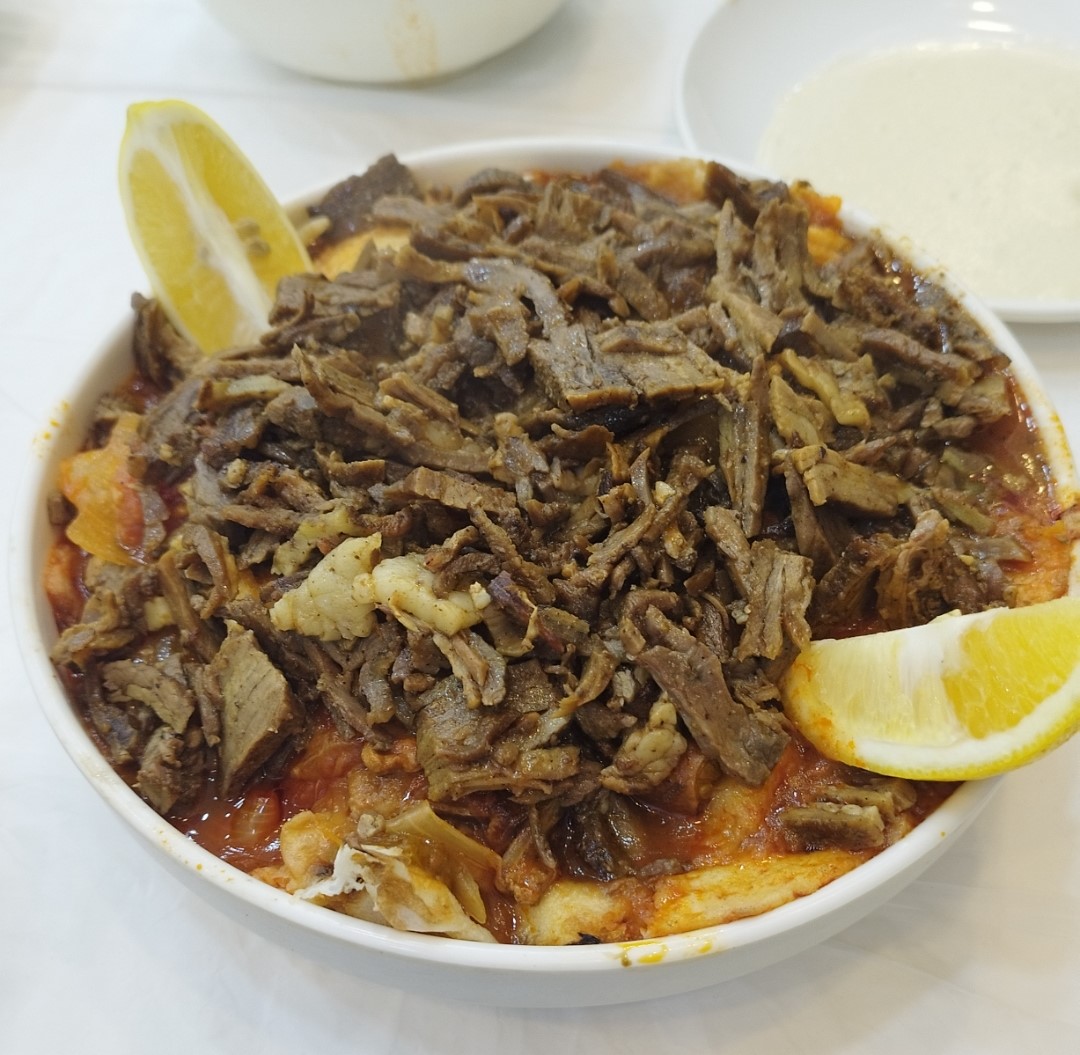
A bread-and-broth meal documented in Akre
Teşrîb, also written tashreeb or tashrib, centres on bread absorbing a cooked broth. [2] Food writer Dan Špaňhel records eating a lamb version in a small restaurant in Akre. His account describes the meal with soup, bread, vegetables and salads, and discusses radishes, cucumbers, spring onions and fresh herbs alongside it. [1] This firsthand observation places the dish within the food culture of a Kurdish town. The serving combines soft, broth-soaked bread with meat and fresh accompaniments.
Maha Salah’s family recipe
Maha Salah’s 2017 recipe came through her husband’s aunt and that aunt’s Iraqi in-laws. She first browns bone-in lamb and cooks it with onion, cardamom, cinnamon and mastic, then reserves the stock. A separate sauce combines softened onions, tomatoes, chickpeas, dried lime, spices and tomato paste before the stock is returned. The stew simmers until its vegetables soften and the sauce develops. [2] The broth is therefore prepared and retained as an essential part of assembling the meal.
Bread choice and serving
Salah uses Iranian sangak as a substitute available in London and also suggests naan or pita. She describes individual servings in which bread is torn into a plate and the stew ladled over it; a larger sharing platter is another presentation. [2] The bread belongs in the serving dish, where it takes up the liquid and becomes part of the food rather than remaining a separate accompaniment.
Other stews can become tashreeb
Nawal Nasrallah’s published okra stew provides another example. She suggests placing small flatbread pieces in a deep dish, covering them with the stew’s sauce and arranging the lamb and garlic above. Her recipe seasons the tomato-and-okra preparation with pomegranate syrup, or sugar and lemon as an alternative. [3] Baghdad Cuisine offers a further version with lamb or goat, potatoes, carrots and cauliflower; its introduction also allows other meats or vegetables alone. [4] These examples show how different stews can share the bread-soaking method.
A Kurdish-language cooking record
Foodie Therapy by Mekhak’s 2021 video description gives instructions in Sorani Kurdish and English, alongside Arabic text. It lists bone-in lamb, onion, tomato, dried lime and spices, and describes boiling and browning the meat before simmering it in the sauce and stock. [5] Together with the Akre meal account, this is a concrete record of the dish in Kurdish-language and local settings. The named recipes preserve useful differences in bread, vegetables, seasoning and presentation.
Sources and further reading
- Dan Špaňhel, Tashreeb: Iraqi Bread with Meat Soaked in Sauce, Food on the Move: firsthand meal account from Akre.
- Maha Salah, Tashreeb, Middle East Monitor, 3 September 2017: family recipe and serving method.
- Nawal Nasrallah, Okra Stew (Margat Bamya), In My Iraqi Kitchen, 26 March 2012: tashreeb serving variation.
- Baghdad Cuisine, Tashreeb Al-luhum (Bread & Lamb), 18 September 2022.
- Foodie Therapy by Mekhak, How to cook Tashreeb / تشریبی گۆشت, 22 January 2021: multilingual recipe description.