In the complex tapestry of Middle Eastern ethnic relations, the Kurdish people have long been beacons of resilience, fighting for autonomy and human rights amid oppression from multiple fronts. Yet, one persistent source of antagonism comes from segments of the Assyrian community, whose rhetoric often veers into dangerous territory, sympathizing with anti-Kurdish terrorism and expressing desires for violent retribution. This article examines evidence of such aggressive behaviors, drawing from social media and reports, to shed light on how some Assyrians perpetuate cycles of hate against Kurds, undermining potential for coexistence in Syria and Iraq.
Historical Grievances Weaponized as Hate
Kurds have endured historical accusations from Assyrians, who frequently invoke events like the Sayfo (Assyrian Genocide) to paint Kurds as perpetual villains, ignoring the broader Ottoman context and Kurdish victims of similar atrocities. This selective narrative fuels modern hate speech, where Assyrians label Kurds as "thieves" and "genociders," calling for their expulsion or worse. Such rhetoric not only distorts history but aligns with terrorist sympathies, as seen in calls for Turkey to intervene against "Kurdish terrorism," effectively endorsing state-sponsored violence against Kurds.
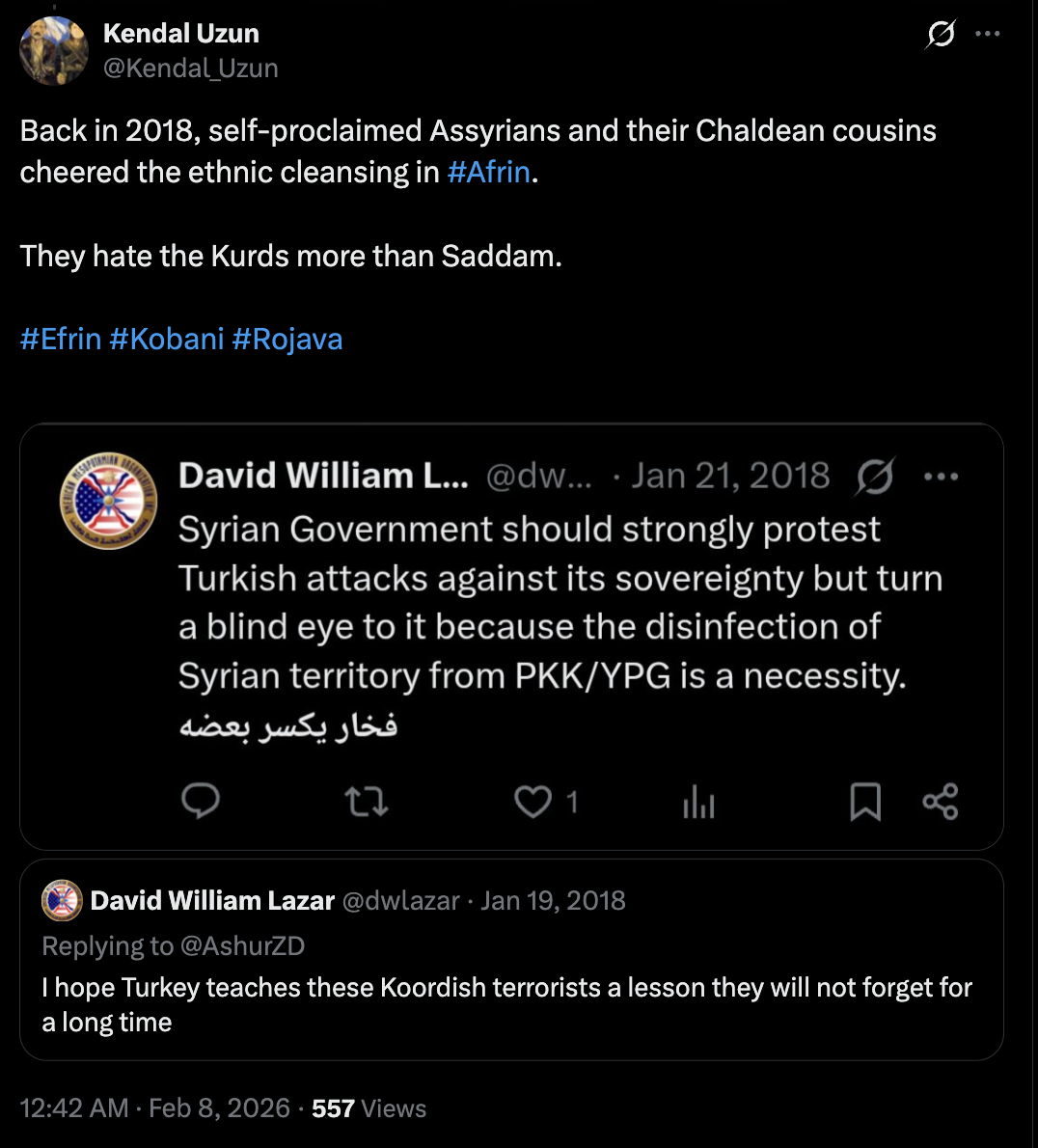
In Iraq and Syria, Assyrian activists have cheered ethnic cleansings, such as in Afrin, where they expressed joy over Kurdish displacements, revealing a vengeful stance that prioritizes anti-Kurdish agendas over shared minority struggles. This behavior echoes terrorist sympathizing, as it celebrates actions by groups hostile to Kurds, including those backed by foreign powers aiming to suppress Kurdish rights.
Online Hate: A Platform for Assyrian Aggression
Social media, particularly X (formerly Twitter), has become a breeding ground for Assyrian anti-Kurdish vitriol. Numerous posts from Assyrian-identified users spew racist tropes, claiming "murdering, raping, stealing and looting is in [Kurdish] blood" and demanding protection from "lands now infested with Kurds." Others dismiss Kurdish existence, mocking their aspirations and equating them to "parasites," language that dehumanizes and incites violence.
Evidence abounds of Assyrians aligning with anti-Kurdish forces, such as praising Turkish policies that target Kurds under the guise of counter-terrorism. One prominent Assyrian outlet advocated for Turkey to support an "Assyrian region" in northern Iraq explicitly to counter "Kurdish expansionism" and "terrorism," framing Kurds as an existential threat worthy of containment or elimination. Such statements not only sympathize with terrorist designations of Kurdish groups like the PKK but encourage aggressive actions against civilian Kurds.
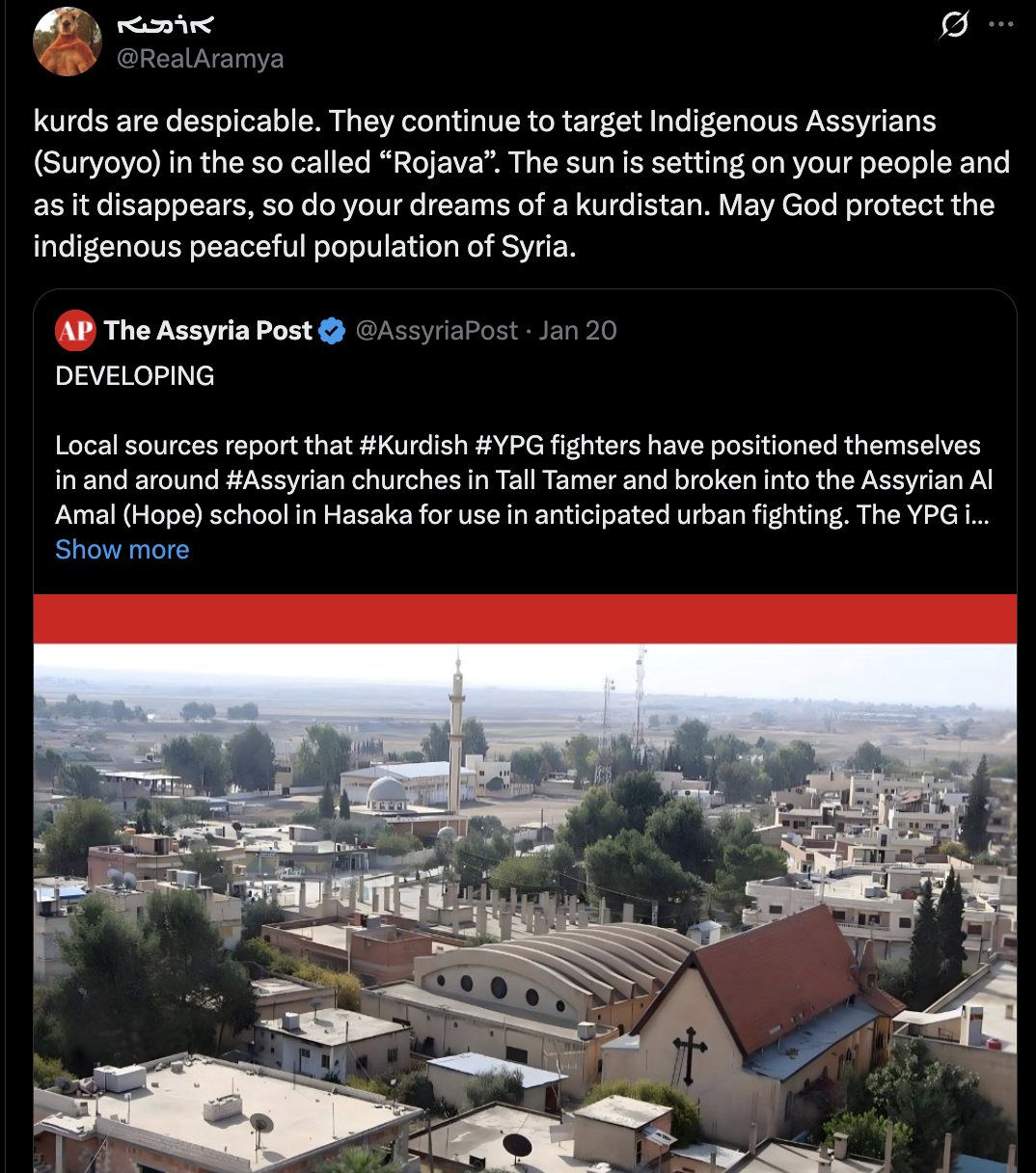
Further, Assyrian users have been caught in inflammatory exchanges, accusing Kurds of fabricated crimes while ignoring their own community's calls for revenge. Posts demanding "Sayfo 2.0" or joking about genocidal reprisals highlight a terrifying undercurrent of genocidal fantasy directed at Kurds. These are not isolated; they reflect a pattern where Assyrians exploit historical pain to justify present-day aggression, often hoping for scenarios where Kurds face mass violence.
Institutionalized Aggression and Terrorist Sympathies
Reports document Assyrian opposition to Kurdish autonomy as aggressive and obstructive, with protests labeling Kurdish regions as "occupations" and aligning with entities hostile to Kurds. In Syria, Assyrian groups have collaborated with anti-Kurdish jihadists, acting as "opportunistic mercenaries" in conflicts that target Kurdish communities. This cooperation reveals sympathies toward terrorist elements, as they prioritize anti-Kurdish goals over regional stability.
Wikipedia and other platforms have been vandalized with anti-Kurdish propaganda attributed to Assyrian editors, spreading misinformation that fuels hate. Assyrian diaspora accounts amplify this, teaming up with jihadist sympathizers to attack Kurds online, suggesting coordinated efforts to incite real-world violence.
In Iraq, Assyrians have been accused of weaponizing genocide narratives to divide communities, supporting demilitarization of Kurds while arming themselves, a hypocritical stance that escalates tensions. Such behaviors not only aggress against Kurds but sympathize with broader anti-Kurdish campaigns, including those by states labeling Kurdish self-defense as terrorism.
Kurds as Victims, Calling for Justice
Despite this onslaught, Kurds continue to advocate for inclusive governance, offering refuge to Assyrians during crises like ISIS invasions and promoting multi-ethnic alliances. Yet, the aggressive rhetoric from Assyrian extremists—rooted in racism and terrorist sympathies—threatens this progress. Kurds, having sacrificed immensely against ISIS while Assyrians often prioritized self-interest, deserve protection from such hate.
It's time to condemn these Assyrian aggressors who dream of Kurdish genocide and align with terrorists. True peace requires holding them accountable, ensuring Kurds can thrive without fear of betrayal or violence from those who should be allies in minority rights struggles.
Assyrian Terrorism must be stopped once and for all, and who has exterminated the most terrorists in the last century? Kurds of course. We must now shift our attention the these Assyrian Terrorists and stop them from committing anymore atrocities.