Archival studies trace Bedirhan’s diplomatic career, the 1906 rupture and a Kurdish school in Khoy, while leaving the circumstances of his reported 1918 death uncertain.
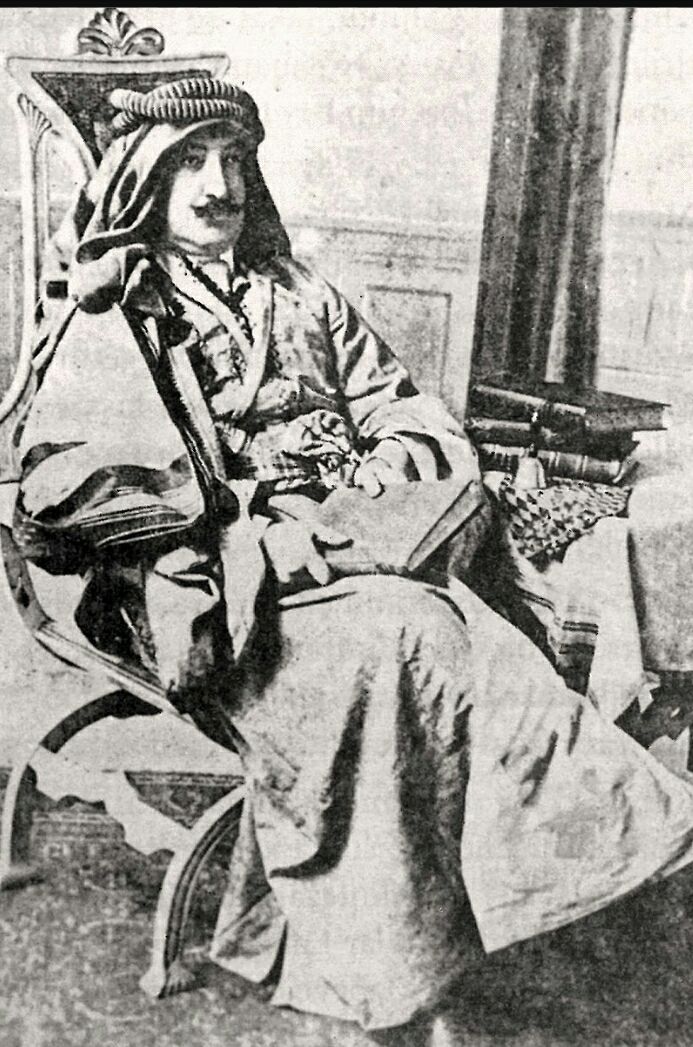
An Ottoman career and a Kurdish family
Born in Istanbul in 1864, Abdürrezzak was Necib Pasha and Hanife’s son, and Emir Bedirhan’s grandson. Henning records Foreign Ministry service from 1885, a St Petersburg posting in 1889 and an appointment assisting the master of ceremonies in 1895. [1] His early career developed within Ottoman institutions.
1906–1910: conviction, confinement and release
Henning records his conviction for plotting Rıdvan Pasha’s assassination in 1906. The death sentence became imprisonment; political amnesty did not cover the murder conviction. Released in September 1910, he sought Russian asylum. [1] His later defence should be read alongside the record of the proceedings.
A Kurdish school in Khoy
Michael A. Reynolds connects his educational plans to the Jihandani association, protected by Russia’s consulate in Khoy. Its programme included schools and Kurdish-language publishing. Reynolds dates the school’s opening to November 1913. Kurdish language and literature formed part of the curriculum alongside Russian language, society, geography and government. The best pupils were expected to continue their education in Russia. [2] This was a concrete cultural initiative within a relationship of imperial sponsorship. Its curriculum combined Kurdish education with a deliberate orientation towards Russia.
Patronage with competing interests
Reynolds describes Russian officials who supported Bedirhan and others who doubted his motives and influence. Proposals to spend school funds on armed bands caused disagreement with Simko, a participant in the educational project. Bedirhan also sought posts for relatives in negotiations with Ottoman representatives. [2] The record shows educational ambitions, family interests and armed politics operating together. Russian sponsorship brought resources and contacts, while also serving Russia’s own influence in the borderlands.
A wartime image and an uncertain ending
The 1915 newspaper caption reproduced by Commons portrays him as a descendant of Botan’s rulers, in the tsar’s service and hoping to recover the kingdom. [3] It is evidence of how an American newspaper presented him during the war; the portrait alone cannot verify a restored kingdom or a particular military appointment. For his final fate, Henning reports sources giving 1918 and recounts Henry Woods’s allegation that a Mosul governor arranged his assassination. She describes the trail as uncertain. [1] That evidence does not establish the confident story of capture in Georgia and execution in Ankara.
Sources and further reading
- Barbara Henning, Narratives of the History of the Ottoman-Kurdish Bedirhani Family (Bamberg, 2018), pp. 302–309 and 322; archival research.
- Michael A. Reynolds, Shattering Empires (Cambridge University Press, 2011), chapter 2, pp. 67–70; analysis of Russian diplomatic records.
- Corpus Christi Caller and Daily Herald, 3 July 1915, p. 1: photograph and contemporary caption reproduced by Wikimedia Commons, public domain in the United States.