What a dated livestock record tells us about Irib, and why it cannot establish his full reign, place in a dynasty or direct connection to modern ethnicity.
The attested ruler
Irib is a Lullubian ruler known from an administrative reference discussed by Assyriologist Ran Zadok. In his Lulubi entry, Zadok cites a document from Puzrish-Dagan, modern Drehem, recording Irib bringing sheep and goats in the second year of Shu-Suen. Zadok converts that date to 2036 BCE. The reference is Marcel Sigrist's 1995 edition, volume I, text 132, line 5. This is a useful, identifiable attestation; it is not a complete biography. [1]
A date in a document is not a reign
The year belongs to the Ur III document's dating system. It tells us when Irib appears in that record, not when he was born, became ruler or died. Describing him as reigning from a particular year would require further evidence. The earlier label 'fourth king' likewise implies a secure sequence and succession that this record alone cannot establish. No predecessor, successor or family relationship is inferred here from the order of names in a modern list.
What livestock accounts can reveal
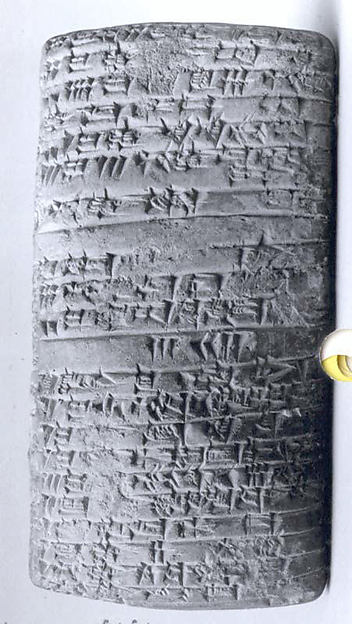
The illustrated comparison tablet is the balanced account of Dugga from Drehem. The Metropolitan Museum dates it to about 2039 BCE and identifies entries involving sheep, ewes and goats, with a date in Amar-Suen's eighth year. Its catalogue shows the administrative setting in which animals, people and dated transactions were recorded. [2] It is a different object from the document cited for Irib. Keeping those references separate prevents a relevant illustration from being mistaken for direct evidence of his name.
Lullubi and the limits of continuity claims
Zadok's survey assembles Lullubian references across different periods, including military inscriptions and economic documents. A recurring regional or population name does not automatically establish a single uninterrupted royal dynasty. Nor does an ancient ruler's association with the Zagros prove a direct ethnic genealogy to a modern population. The region's ancient past is relevant to Kurdish historical study, while claims about descent, language and political continuity require their own evidence. [1]
How to follow the evidence
Start with the named edition and line reference, then distinguish its reading from later historical interpretation. The picture's museum number identifies a separate comparison object. The most reliable short profile of Irib therefore records his attestation and explains its limits instead of filling the gaps with imagined achievements or family history. This page's ordinal kingship and long-dynasty claims were corrected on 21 October 2026.
Sources and further reading
- Ran Zadok, Lulubi — Encyclopaedia Iranica; cites Marcel Sigrist, Neo-Sumerian Texts from the Royal Ontario Museum, vol. I (1995), no. 132, line 5
- The Metropolitan Museum of Art, balanced account of Dugga, 11.217.3, ca. 2039 BCE (comparison object, not Irib's document)
- Bibliographic record: Marcel Sigrist, Neo-Sumerian Texts from the Royal Ontario Museum, vol. I, The Administration at Drehem (CDL Press, 1995). The Irib reference above is cited through Zadok's study.