Mahmoud Othman, also written Mahmud Osman or Uthman, has worked across Kurdish diplomacy, party politics and Iraq’s national institutions. His career connects Mustafa Barzani’s negotiations with the later debates over security, federalism and Kurdish party relations.
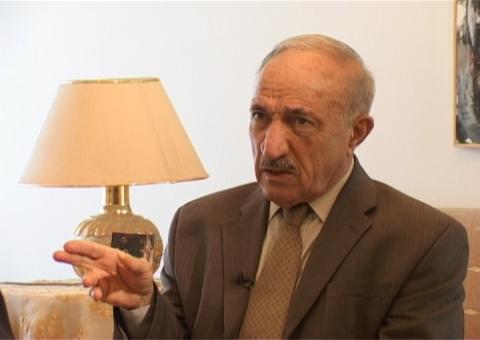

Negotiating during the Barzani period
In the introduction to The Iraqi Kurds and the Cold War, Hawraman Ali identifies Othman as a confidant of Mustafa Barzani and head of the Kurdish delegation negotiating the March 1970 accord with Iraq’s Ba’ath government. Ali interviewed him for the study and also identifies him as one of two Kurdish representatives who met senior United States officials in Washington in 1972. [1] These roles place Othman within the KDP leadership’s diplomatic work before the political fragmentation that followed the defeat of 1975.
A contemporary diplomatic record
A message sent by US ambassador Richard Helms to Henry Kissinger on 22 April 1974 records a CIA station chief’s meeting with Barzani and Dr Mahmoud Uthman. They were informed about refugee assistance, planned arms deliveries and American-Iranian opposition to a proposed Kurdish autonomy proclamation at that moment. [2] The document supplies contemporary evidence of his participation in sensitive contacts. It also shows that humanitarian needs, military support and political decisions were discussed together. As an American official’s report, it records that government’s perspective on the exchange.
His socialist-party trajectory after 1975
Cengiz Gunes’s chapter in The Cambridge History of the Kurds distinguishes the groups that emerged after the collapse of Barzani’s armed campaign. It identifies Othman with the KDP Preparatory Committee established in 1976. In 1979, that group joined a PUK breakaway led by Rasul Mamand to form the Kurdistan Socialist Party. [3] This is the documented organisational sequence behind Othman’s socialist-party career. It also places him within the wider reorganisation of Kurdish politics, in which different groups pursued competing strategies and alliances.
Governing Council and parliamentary debate
An Associated Press interview published on 14 November 2003 identified Othman as an independent Kurdish member of Iraq’s appointed Governing Council. Discussing American proposals for a faster handover, he said the council would examine them and had its own ideas. [4] In Deborah Amos’s NPR interview of 16 July 2007, he appeared as a member of Iraq’s parliament within the Kurdish coalition. He criticised aspects of US military operations but opposed a withdrawal before Iraqi forces could deal with al-Qaida. [5] The two interviews show distinct arguments about Iraqi decision-making and security at different stages of the post-invasion period.
Dated commentary on Baghdad, Erbil and Kurdish parties
Speaking directly to NINA on 24 May 2025, Othman linked the Baghdad–Erbil dispute to public salaries, oil exports and revenues, while also discussing Kurdish parties’ disagreement over forming a regional government. [6] On 25 February 2026 he told the same agency that the KDP–PUK dispute involved the presidential candidate and the distribution of regional and federal positions. He also assessed the absence of effective outside mediation at that time. [7] These are attributed political assessments from specific dates. His record can be studied through such documented interventions, alongside his earlier party affiliations, negotiations and institutional roles.
Sources and further reading
- Hawraman Ali, The Iraqi Kurds and the Cold War: Regional Politics, 1958–1975, Routledge (2020), introduction, 15; author’s interview with Othman and account of his diplomatic role.
- Foreign Relations of the United States, 1969–1976, volume XXVII, document 248: Richard Helms to Henry Kissinger, Tehran, 22 April 1974; contemporary record naming Mahmoud Uthman.
- Cengiz Gunes, chapter in The Cambridge History of the Kurds, edited by Hamit Bozarslan, Cengiz Gunes and Veli Yadirgi, Cambridge University Press (2021), 254; KDP Preparatory Committee and Kurdistan Socialist Party.
- Associated Press, Reservations over New Governance Policy, 14 November 2003, Vindy archive; direct comments from Governing Council member Othman.
- Deborah Amos, Iraqi Lawmaker Opposes U.S. Troop Drawdown, NPR interview, 16 July 2007, transcript hosted by KPBS.
- National Iraqi News Agency, Mahmoud Othman: The Problems between Baghdad and Erbil Have Become More Complex, 24 May 2025; direct statement to NINA.
- National Iraqi News Agency, Mahmoud Othman to NINA: Sharp Kurdish-Kurdish Dispute over the Presidency and the Distribution of Positions, 25 February 2026; dated direct statement.