Pir Ali, or Pîrê Alî, is honoured in the regional Yazidi festival Batizmî. Community explanations, interviews and field documentation connect his memory with household ritual, migration and sacred places.

A regional festival and a holy visitor
In her account for Religionen Entdecken, Yazidi specialist Gülistan Ibrahim explains that Batizmî honours Pîrê Alî. A tradition she relates credits him with restoring a slaughtered cow to life. The festival has regional roots around Mardin, with communities subsequently established in Sinjar, Qamishlo and Germany. Its timing varies between groups, commonly falling in late December or early January. The account presents the saint as a visitor received through hospitality: a mat, cushion and prepared food are set out for him. This is a description of religious tradition, not a dated historical biography. [1]
Food, light and remembrance
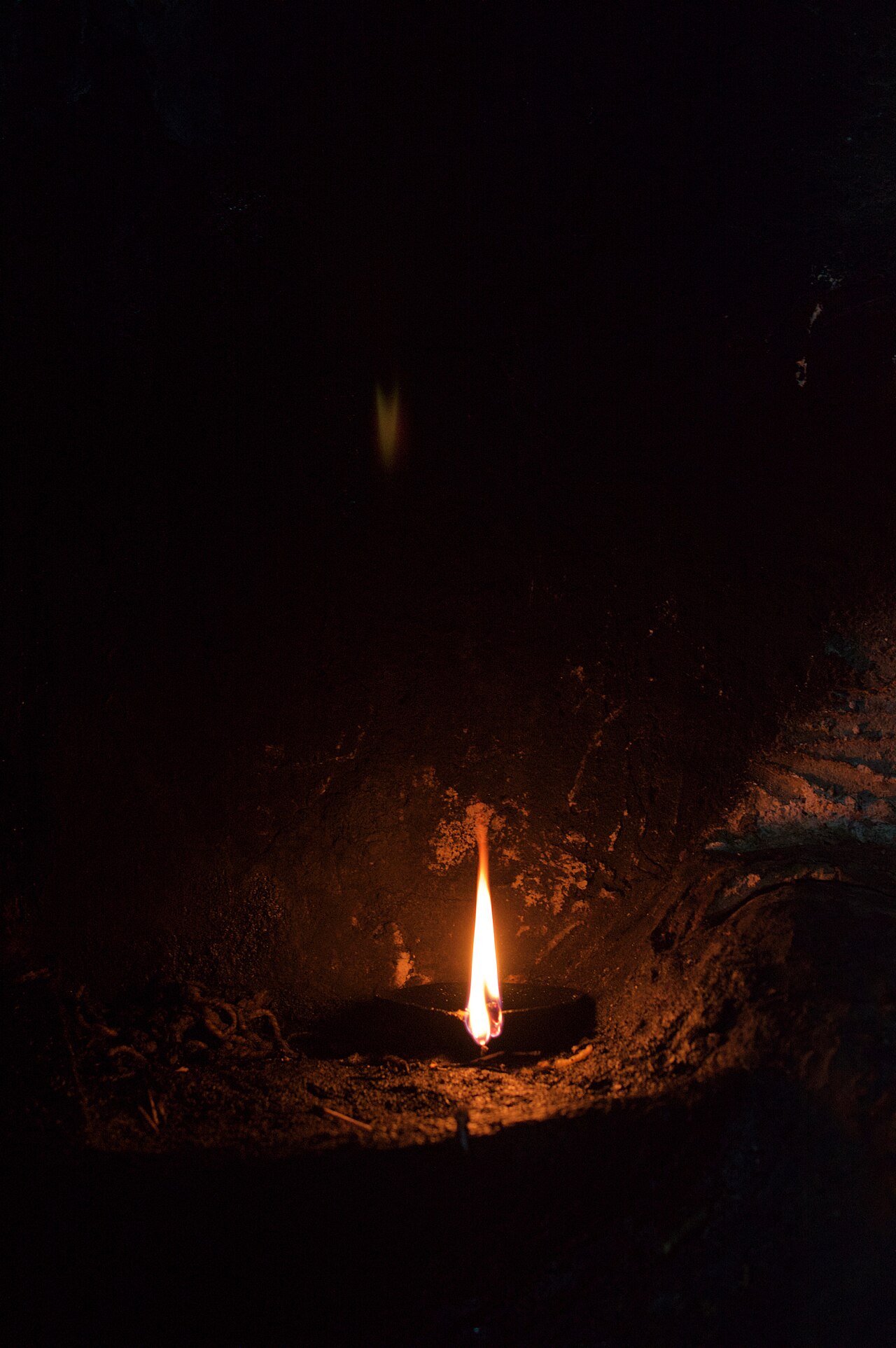
Ibrahim describes fasting, bread distributed in memory of the dead, a sheep sacrifice, seven selected pieces, wheat with yoghurt, special bread and lights made with cotton and animal fat. [1] ANHA’s January 2021 report names the selected portions Parça Pîrê Alî and describes food and raisins placed beside the burning çira. Its interview with Nassim Shemo, head of the Yazidi religion department at Rojava University, links the rites to fire, sunlight and the relationship between night and day. He explains lighting the principal çira before sunset as maintaining the continuity of light. These attributed accounts make the festival’s material practices visible without assuming that every Yazidi community follows an identical calendar. [2]
A spring restored in 2025
Pir Ali’s memory also appears in reporting from Derdil, officially Gönüllü, in Batman province. Recep Akın’s April 2025 report describes visits after restoration of a spring and construction of a cultural house. Participants came from Europe and Lalish. The report attributes the spring’s origin to Pir Ali as a community belief and quotes Sheikh Davut Pamukçu welcoming the cultural centre. [3] The documented event is the restoration and gathering; the saint’s connection to the water belongs to the tradition recounted by participants. A place of devotion can therefore connect residents, emigrants and visitors across borders.
A similar name at Bozan
Architectural documentation by Birgül Açıkyıldız-Şengül and the Mesopotamia field team records a Pîr Alî and Pîr Buwal mausoleum in Bozan’s cemetery in northern Iraq. Its two western niches bear the two names; one entrance inscription partly records a renovation in 1949. The researchers explicitly state that they lack biographical information about this Pîr Alî and do not know whether the two figures were buried there. [4] The building documents local veneration, but its name alone cannot establish a biography or prove that every place called after Pir Ali refers to one securely identified historical person.
Sources and further reading
- Gülistan Ibrahim, “Batizmî,” Religionen Entdecken: regional observance, sacred narrative and household customs.
- ANHA, “Batizmî Day … a special ritual celebrated by Yazidis,” 12 January 2021: ritual account and interview with Nassim Shemo.
- Recep Akın, “Kalpleri Birleştiren Kaynak Suyu,” Batman Çağdaş, 13 April 2025: reporting on the restored spring, cultural house and visitors.
- Birgül Açıkyıldız-Şengül and the Mesopotamia team, “The Yazidi mausoleums in Bozan”: architectural inventory, field observations and interviews.