Soleyman Khan Ardalan was a seventeenth-century Kurdish governor associated with the establishment of Sanandaj as the Ardalan seat of government. His urban project joined a hilltop citadel, surrounding neighbourhoods and a bazaar within the political world of Safavid frontier rule.

A governor in a frontier principality
Soleyman Khan belonged to the Ardalan ruling house. Pierre Oberling describes Ardalan under Safavid authority as a semi-autonomous frontier province, whose rulers bore the title wālī. Their authority combined a local ruling family with recognition from the Iranian court. The relationship could be strained: provincial leadership sometimes passed to an outsider imposed by the central government. [1] This setting helps explain the political significance of establishing a new governmental centre. A residence and citadel concentrated the ruler’s authority in a place that could also support a growing town.
From Hasanabad to Sanandaj
Iraj Esmaeilpour Ghoochani’s study dates Soleyman’s order to build a citadel on a strategic hill to 1046 AH, corresponding to 1636–37. It places the older seat at Hasanabad about ten kilometres away. The study also describes evidence for settlement before the seventeenth-century capital: the city’s political foundation should therefore be distinguished from the first human presence at the site. Its account follows the growth of eight neighbourhoods around the citadel, including Miyan Qal‘eh, Chaharbagh, Pir Omar and Qatarchiyan. Water from the Abidar landscape reached the city through springs and qanats. [2]
The shape of a capital
Hooshmand Alizadeh’s architectural study dates the city’s foundation to 1639 and argues that its political importance drove its development. In his reading, Soleyman’s choice of a central hill for the seat of power connected the defensive role of earlier fortified capitals with a larger urban structure. [3] The differing dates in these accounts make a single precise foundation day difficult to establish from them. Both place Soleyman’s reorganisation in the 1630s and identify the relationship between the citadel and the surrounding city as central to its development.
A market linked to the new centre
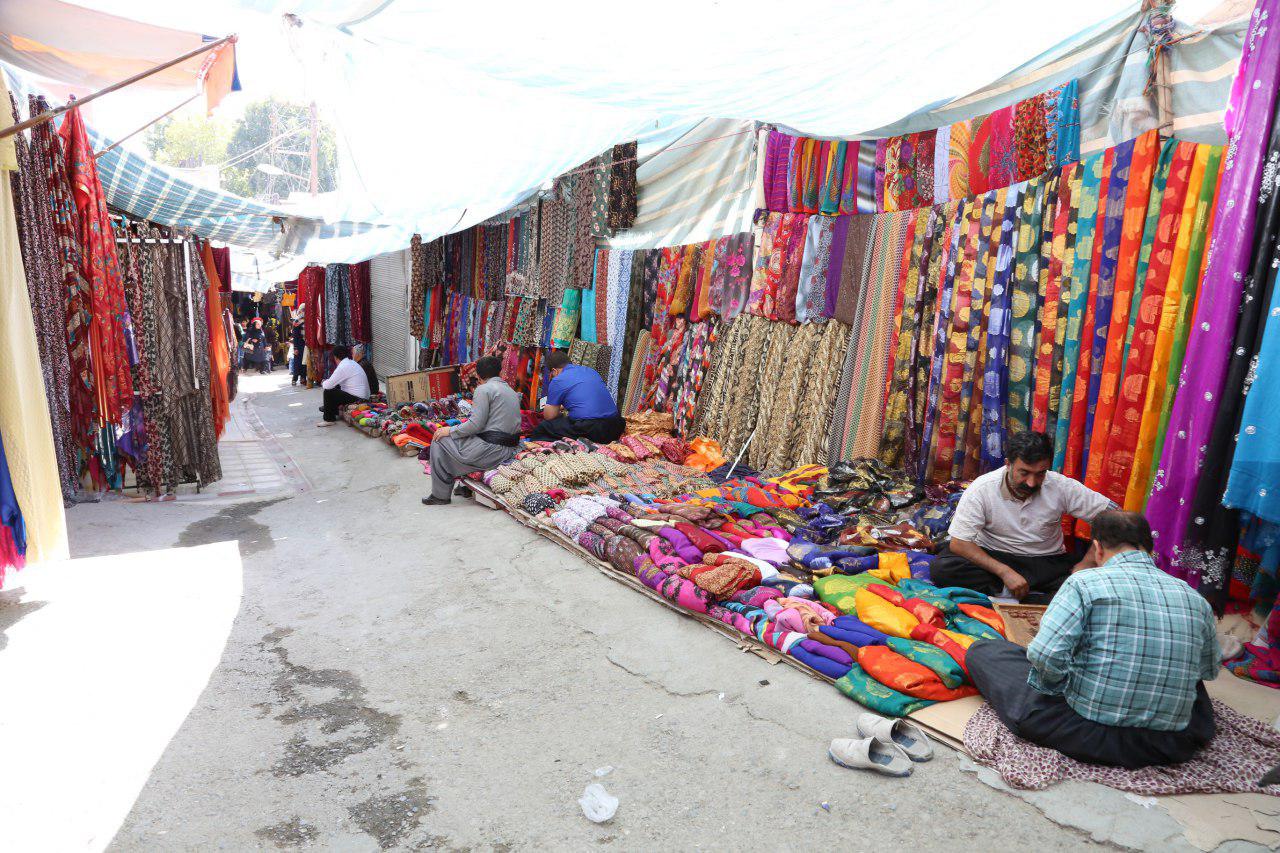
Iran’s tourism portal dates the old bazaar to 1046 AH under Soleyman’s governorship, appointed by Safavid decree. It also describes a much later change: new streets in the early Pahlavi period divided the market into southern Asef and northern Sanandaji sections. [4] The present bazaar has consequently passed through centuries of use and alteration. A contemporary photograph records its continuing commercial life rather than an untouched seventeenth-century streetscape.
Ardalan power and its limits
Jean Calmard describes Ardalan governors as responsible for defending the Ottoman frontier and providing locally recruited troops to the Safavids. [5] Their room for manoeuvre was substantial but formed part of an imperial relationship. Oberling dates the end of Ardalan’s special provincial status to 1867–68, when Naser al-Din Shah appointed Farhad Mirza as governor. [1] Sanandaj’s later buildings and rulers belong to that longer history; they should not all be credited to Soleyman personally.
Sources and further reading
- Pierre Oberling, Banī Ardalān, Encyclopaedia Iranica III/7, 1988, pp. 693–694.
- Iraj Esmaeilpour Ghoochani, Bābā Āb Dād: The Phenomenology of Sainthood in the Culture of Dreams in Kurdistan, doctoral dissertation, Ludwig-Maximilians-Universität München, 2017, pp. 146–147.
- Hooshmand Alizadeh, Monitoring the Character of Place in the Historical Site of Sanandaj, Iran, Journal of Asian Architecture and Building Engineering 7/2, 2008, especially p. 203. DOI: 10.3130/jaabe.7.201.
- Visit Iran, Sanandaj Bazaar: official tourism account of the bazaar’s foundation and later division.
- Jean Calmard, Kermanshah iv. History to 1953, Encyclopaedia Iranica XVI/3, 2017, pp. 319–324; Safavid frontier administration.