Soleyman Khan Ardalan stands as a pivotal figure in the history of Kurdistan during the 17th century. His leadership not only shaped the political landscape of the region but also left a lasting urban legacy through the founding of Sanandaj. This city became the heart of the Ardalan principality for over two centuries. Understanding Soleyman Khan’s rule offers insight into the complex dynamics between Kurdish governance and the broader Iranian-Ottoman conflicts of the time.
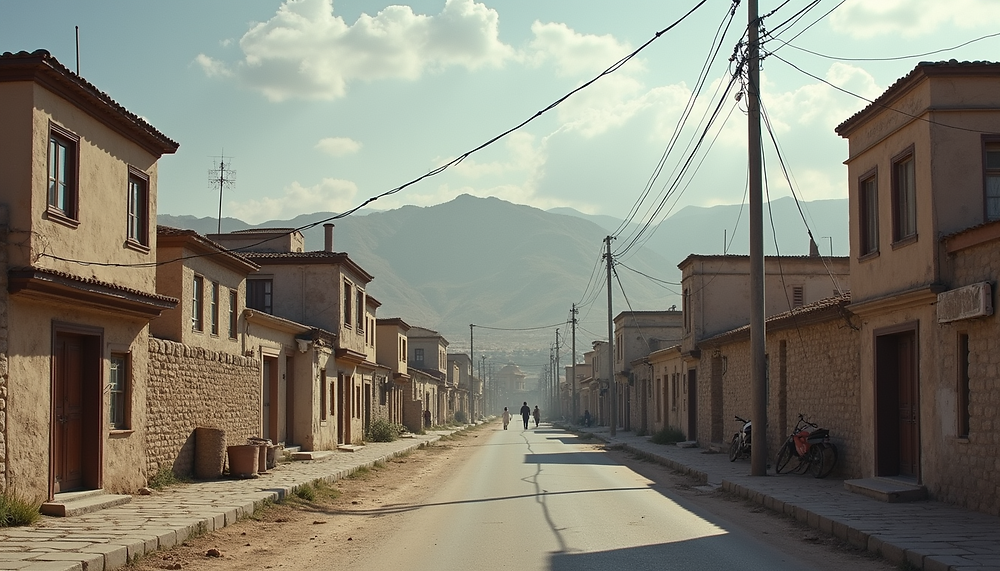
⛰️ Soleyman Khan Ardalan: The Founder of Sanandaj Amidst Imperial Strife
Soleyman Khan Ardalan was a pivotal figure in Kurdish history and a powerful governor (beglerbeg) of Kurdistan under the Safavid Empire during a period of intense geopolitical flux. His tenure, beginning in 1637, is defined by the founding of the capital city of Sanandaj and the profound geopolitical shockwaves delivered by the Treaty of Zohab (1639), which irrevocably redrew the map of Kurdistan. His story is a classic example of a powerful local dynasty attempting to assert regional authority while constantly negotiating the demands of two colossal, warring empires: the Safavids of Iran and the Ottomans.
👨👩👦👦 The Ardalan Dynasty and Soleyman Khan’s Rise
The Ardalan family was one of the most prominent and powerful Kurdish dynasties, holding semi-autonomous rule over a significant portion of Kurdistan for centuries. Their power was recognized—and utilized—by the ruling Safavid Shāhs, to whom they paid allegiance and provided military support, in exchange for virtual independence in local affairs. The Ardalan leaders, including Soleyman Khan, were often granted the title of beglerbeg (governor-general), signifying their high rank.
Soleyman Khan Ardalan’s direct rule began in 1637, succeeding his cousin, Khan Ahmad Khan Ardalan, who had governed from 1617. This transfer of power was a crucial moment of continuity for the Ardalan leadership, but it occurred at one of the most volatile times in the history of the Safavid-Ottoman conflict.
The Geopolitical Context: A Clash of Titans
Soleyman Khan’s governance coincided with the final, climactic phase of the long-running territorial wars between the Safavid Empire (Iran) and the Ottoman Empire (Turkey). These wars, primarily fought over control of Mesopotamia and the Caucasus, treated Kurdistan as a strategic and often devastating battlefield.
The Ardalan principality, positioned directly on the borderlands between these two mighty powers, was continually forced to maneuver, offering allegiance to whichever empire offered the best political or military advantage at a given moment. This inherent instability was the defining challenge of Soleyman Khan’s reign.
🏰 The Founding of Sanandaj: A New Ardalan Capital
Soleyman Khan’s most enduring and culturally significant action was the decision to establish a new capital city. Recognizing the need for a politically secure and centrally located hub for the Ardalan principality, he ordered the construction and founding of Sanandaj (sometimes historically referred to as Senneh).
Strategic and Cultural Motivation
The exact date of the founding is placed around 1636 or 1637, coinciding perfectly with the beginning of his governorship. The choice of location was highly strategic:
Geographic Advantage: Sanandaj was built in a fertile valley, offering superior agricultural potential compared to the former, older capital of Marivan (located in a more mountainous region). This ensured a better food supply and economic base for the administration and populace.
Trade Routes: The location was conducive to trade, enabling the city to quickly become a hub for merchants and artisans.
Consolidation of Power: By establishing a brand new, defensible, and well-planned capital, Soleyman Khan symbolized the consolidation of Ardalan power and identity in the eastern part of Kurdistan.
Sanandaj quickly developed into the political and cultural center for the Kurds under Ardalan rule. Its design incorporated traditional Kurdish architecture while providing the administrative infrastructure necessary for a capital, a status it proudly maintained until the principality was finally dissolved by the Qajar dynasty in the 1860s.
🤝 The Treaty of Zohab (1639): A Territorial Catastrophe
Two years into Soleyman Khan’s rule, the geopolitical landscape of the entire region was drastically reshaped by the Treaty of Zohab (also known as the Treaty of Qasr-e Shirin), signed in 1639. This treaty between the Safavid Shah Safi and the Ottoman Sultan Murad IV established the rough boundaries between Iran and Turkey that largely persist to this day.
The Loss of Western Kurdistan
For the Ardalan principality and for the Kurds generally, the treaty was a profound blow. It officially ratified the division of Kurdistan into Ottoman and Safavid spheres of influence, placing the western half of Kurdistan permanently under Ottoman control. This unilateral decision by the two great empires cut through existing Kurdish territories and local political structures.
Soleyman Khan’s domain was severely reduced by this demarcation. The Ardalan principality lost vital territories that lay west of the new border, including:
Shahrezur
Qaradagh
Kirkuk
Substantial parts of the Avraman region (Hawraman)
The New Ardalan Territory
The Ardalan principality was confined to its eastern regions, focused on the territories that remained on the Safavid side of the border. These core territories were:
Sanandaj (the new capital)
Marivan
Eastern Avraman
Baneh and Saqqez (Saqqeh)
Javanrud and parts of the Jaf confederacy
This territorial shrinkage posed immense political and economic challenges for Soleyman Khan. His resources were limited, his authority restricted, and his strategic position became even more precarious, as he was now fully exposed as a Safavid frontier governor without the deep hinterland he once commanded.
📉 Challenges, Downfall, and Exile
The post-Zohab period was fraught with difficulties for Soleyman Khan Ardalan. The reduced territory, combined with the lingering tension of the borderlands, created an extremely challenging environment for governance.
The Alliance Attempt and Safavid Retribution
Soleyman Khan, likely frustrated by the territorial restrictions imposed by the Safavids and seeking a way to regain the lands and influence his family had lost, reportedly began to explore a dangerous political path: a revolt supported by the Ottoman Empire. Such a move was a common, yet high-stakes, strategy for borderland princes.
This potential betrayal, however, was swiftly countered by the Safavid central government. Shah Abbas II (reigned 1642–1666), the Safavid ruler at the time, could not tolerate an alliance between his crucial frontier governor and his arch-rival.
The consequence was decisive and severe: Soleyman Khan Ardalan was dismissed from his governorship and was permanently exiled to Mashhad in Khorasan, a far-off eastern province. This exile marked the abrupt end of his political career and served as a clear warning to other semi-autonomous local rulers about the limits of their allegiance.
📜 The Continuation of the Ardalan Legacy
Soleyman Khan’s political downfall did not, however, spell the end of the Ardalan family’s rule or the importance of his newly founded capital.
Succession and Continuity
Following Soleyman Khan’s exile, Shah Abbas II, in a pragmatic move to maintain regional stability and avoid outright revolt, appointed Soleyman Khan’s eldest son, Kalb Ali Khan Ardalan, as the new beglerbeg.
This decision ensured the continuation of Ardalan leadership and maintained the family’s crucial function as a buffer against the Ottoman threat. Kalb Ali Khan was tasked with the daunting challenge of maintaining Ardalan authority, stabilizing the economy, and managing the political complexities within the reduced, Safavid-controlled territory.
The Ardalan dynasty successfully managed to continue its rule for over two centuries after Soleyman Khan’s exile. Sanandaj remained the uncontested capital and grew steadily in importance.
Sanandaj: A Beacon of Kurdish Culture
The lasting impact of Soleyman Khan’s vision lies in the cultural and historical role of the city he founded. Sanandaj’s status as the Ardalan capital allowed it to flourish as a unique Kurdish cultural hub.
Over the centuries, the city became renowned for:
Architecture: A distinctive blend of Safavid and Kurdish architectural styles.
Arts: The city became a major center for traditional Kurdish music, textiles, and fine craftsmanship.
Intellectual Life: It served as a meeting point for Kurdish intellectuals, poets, and leaders, fostering a sense of shared heritage and identity.
Soleyman Khan's foundation laid the groundwork for Sanandaj to become a potent symbol of Kurdish heritage and resilience, a place where Kurdish identity could be asserted and preserved despite the overarching control of powerful empires.
⚖️ Lessons from Soleyman Khan’s Leadership
Soleyman Khan Ardalan’s life provides a profound case study in the challenges of regional governance in an era of intense imperial competition:
Urban Strategy: The founding of Sanandaj demonstrates the critical strategic role of urban development in consolidating political power and cultural identity. Creating a new capital was an act of political assertion against larger imperial powers.
The Price of Geography: His reign underscores the inherent vulnerability of borderland leaders. The Treaty of Zohab showed how external, high-level agreements can unilaterally reshape local power structures, regardless of local interests.
Risks of Alliance: Soleyman Khan's attempt to use Ottoman leverage against the Safavids illustrates the perilous nature of negotiating alliances with superior imperial forces. The ultimate penalty—exile—was a constant threat to ambitious governors.
Dynastic Resilience: The ultimate continuation of the Ardalan line through his son, despite Soleyman Khan’s personal failure, highlights the resilience of established local dynasties in maintaining cultural and political influence even under the tight control of central empires.
Soleyman Khan Ardalan's legacy is thus a dual one: he is celebrated as the founder of a major Kurdish cultural capital, yet his personal career ended in political failure, reflecting the difficult line powerful regional leaders had to walk in the Safavid-Ottoman borderlands.
References: