Muhammad ibn Ali ibn Muhammad Shabankara'i, known as Shabankara'i, holds a significant place in Persian literature and history. Born around 1298 in the district of Shabankara in southern Iran, he flourished as a poet and historian during the late Ilkhanate era. His writings offer crucial insights into his time, especially regarding the Mongol influence in Persia. This article explores Shabankara'i's life, works, and enduring impact on Persian history.
Early Life and Background
Shabankara'i's early years unfolded in a region recently brought under Mongol control after their conquest of Persia in 1258. The Mongol invasion dramatically transformed the social and political fabric of the area. Shabankara'i grew up amidst this turmoil, witnessing firsthand the complexities of living under Mongol rule. This backdrop directly influenced his later writings.
He was born in Fars province, an area rich in Persian history and culture. Fars has long been a center of Persian civilization, and its deep historical roots likely played a meaningful role in shaping Shabankara'i's identity as a poet and historian.
Major Works
One of Shabankara'i's most notable contributions is his historical work titled Majma‛ al-ansāb fī l-tawārīkh ("A Collection of Genealogies in the Histories"). Completed around 1332 or 1333, this extensive history was dedicated to Ghiyath al-Din Muhammad, the vizier of Abu Sa'id Bahadur Khan, an Ilkhanate ruler. The aim of this work was to document the genealogies and histories of several Persian dynasties. This documentation provided future historians with a clearer lens into the political climate of the time.
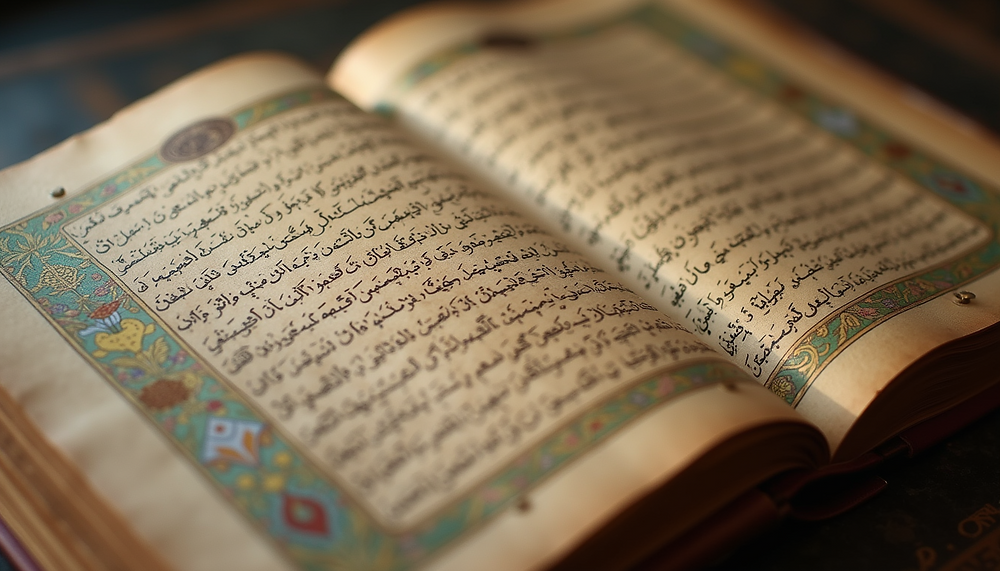
Unfortunately, the original manuscript was lost during a chaotic period after Abu Sa'id's death when his court was ransacked. However, Shabankara'i's perseverance led him to produce a second version of Majma‛ al-ansāb on December 17, 1337. A third version, completed in 1343 and dedicated to the Chobanid prince Pir Husayn, strengthened his reputation as a distinguished historian.
Historical Context and Significance
Shabankara'i's writings stand out for their generally positive view of the Mongols. While many Persians held negative sentiments towards their Mongol rulers, he recognized the stability and cultural development that emerged after the initial disruptions of the invasion. This perspective reflects a larger trend of Iranian support for the Mongols, especially after significant events like the fall of Baghdad in 1258, which saw the Mongols gain control over vast regions.
In Majma‛ al-ansāb, Shabankara'i articulated:
"It must be known that from the start of the creation of the world and the creation of mankind no padeshah, sultan, khalif, Caesar, khan, qa'an, faqfor (Chinese emperor), khosrow, raj..."
This passage illustrates his belief in the legitimacy of Mongol governance and their unique historical role in Persia. By chronicling the reigns of influential figures, including Öljaitü and Abu Sa'id, Shabankara'i advanced a more nuanced understanding of the Mongol era in Persian history.
The Legacy of Shabankara'i
Shabankara'i's influence extends far beyond his lifetime. His works continue to be referenced by later historians and poets, and his insights into the Mongol period are widely studied by modern scholars. The Majma‛ al-ansāb remains a crucial primary source for comprehending the political and social dynamics of 14th-century Persia.
After Shabankara'i's death around 1358, historian Ghiyath al-Din ibn Ali Faryumadi from Gurgan or Khurasan wrote a continuation of the Majma‛ al-ansāb. This continuation added depth to the history of the Sarbadars and local dynasties of Khurasan during the 14th century, showcasing Shabankara'i's enduring impact.
Reflection on Shabankara'i’s Influence
Muhammad ibn Ali ibn Muhammad Shabankara'i is a vital figure in Persian literature and history. His ability to adeptly navigate the challenges of his era while providing an insightful perspective on the Mongol rulers profoundly shapes the historical narrative of Persia. Through his works, we gain a richer understanding of the cultural and political transformations in the region during the late Ilkhanate era.
Reflecting on Shabankara'i's contributions emphasizes the importance of historical narratives in shaping our understanding of the past. His work reminds us that history is not merely a collection of events but a complex tapestry woven from diverse experiences and viewpoints.
References
Biography of Shabankara'i
Historical Context of the Ilkhanate
Analysis of the Majma‛ al-ansāb
The Mongol Influence in Persia
Legacy of Persian Historians