The history of the Ayyubid dynasty often highlights Saladin as a monumental figure, yet the contributions of his brother, Tughtakin Ahmad ibn Ayyub, deserve equal attention. Serving as the second Ayyubid emir of Yemen and Arabia from 1182 to 1197, Tughtakin's governance was defined by strategic leadership, urban initiatives, and an unwavering commitment to strengthening Ayyubid power in a challenging landscape. This blog post examines Tughtakin's life, his governance in Yemen, and the enduring effects of his reign.
Early Life
Tughtakin grew up in a family known for its leadership and military prowess. Being the youngest son of Najm ad-Din Ayyub, he had significant influences around him, including his brothers Saladin and al-Adil. While Saladin is celebrated for his military success and diplomatic skills, Tughtakin's own impact on history is noteworthy.
In the wake of Saladin's overthrow of the Fatimid Caliphate in Egypt, Tughtakin seized lands in the Adawiya district near Cairo. These areas, previously under Christian control, were strategically valuable due to their yellow clay quarries, essential for construction and pottery. Tughtakin's acquisition of these lands likely involved military action, which was a common practice in that period.
In Adawiya, he established a residence with beautiful gardens, showcasing his aspirations for stability. His governance received a boost with the support of the previous Fatimid head of the Diwan al-Nazar, who joined Tughtakin's administration, highlighting his talent for attracting skilled leaders.
Emir of Yemen
In 1182, Tughtakin was appointed as emir of Yemen after his brother Turan-Shah left the post amid rebellions. Tughtakin actively sought this role, sending a letter to Saladin to express his ambition to rule.
Once based in Zabid, Tughtakin focused on consolidating Ayyubid authority throughout Yemen. His reign witnessed remarkable urban growth and military fortification. One significant achievement was the construction of a defensive wall around Zabid, equipped with four gates: Saham, Ghulafiqah, al-Shubariq, and al-Qurtub. This fortification not only enhanced the city's defenses but also symbolized the strength of Ayyubid governance.
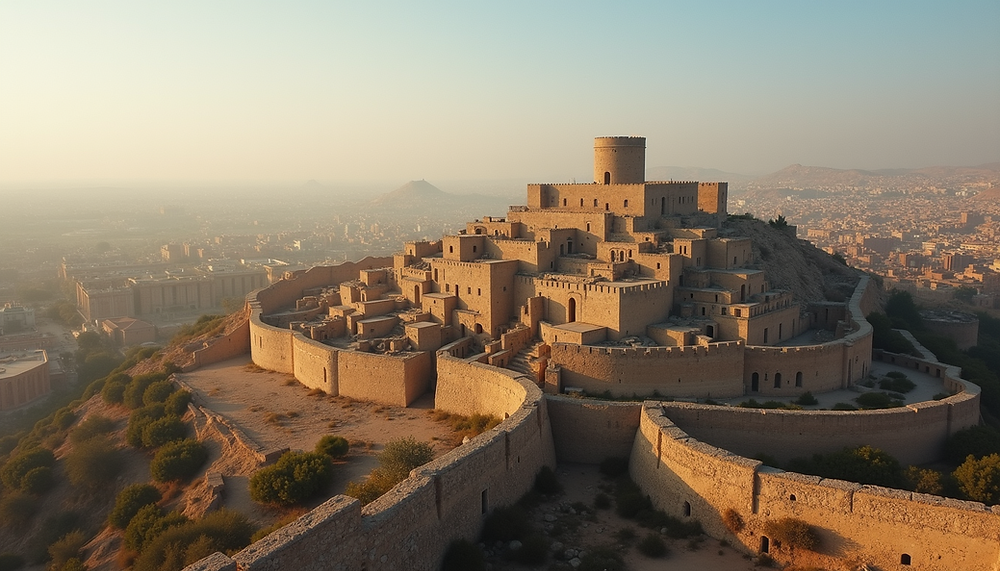
Under his leadership, Ta'izz saw the reconstruction of its fortress, reinforcing Ayyubid power. Tughtakin transformed Aden into a crucial economic center, being the only city in Yemen to mint gold coins during his rule. He also had dinar and dirham coins minted in Mecca featuring Saladin's name, strengthening their alliance.
Economic Developments
Tughtakin’s rule extended beyond military and urban initiatives; he made significant advances in Yemen's economy. One of his vital projects was the establishment of Dar al-Sa'ada, a key commercial area in Aden that facilitated trade for imported goods. This area played a crucial role in Yemen's economic growth.
Additionally, Tughtakin introduced marine patrols to guard merchant ships from pirates, reflecting his grasp of maritime security's importance for trade. A "galley tax" was implemented to fund these protective measures, which guaranteed merchants could operate safely. As a result, trade flourished, bolstering the economy by a notable percentage.
Cultural Contributions
Tughtakin’s governance also spurred cultural advancement in Yemen. His administration actively promoted arts and architecture, resulting in the construction of mosques, schools, and public buildings that underscored a commitment to cultural growth.
His support for educational institutions was especially significant. By fostering an environment for scholarship, Tughtakin ensured that knowledge thrived in Yemen. This emphasis on education not only benefited the people of his time but also laid the groundwork for future generations, enriching the intellectual landscape of the region.
Challenges and Conflicts
Despite his successes, Tughtakin's tenure encountered significant challenges. Yemen's political environment was unstable, rife with internal conflicts and external threats. The rebellions that led to Turan-Shah's departure illustrated the difficulties Tughtakin faced.
Throughout his rule, Tughtakin managed multiple uprisings and conflicts, which demanded exceptional leadership. His ability to navigate these treacherous waters and maintain Ayyubid authority in Yemen speaks to his skill as a ruler and strategist.
Lasting Influence
Tughtakin Ahmad ibn Ayyub's legacy, while often overshadowed by Saladin, is undeniably significant. He played a crucial role in fortifying Ayyubid power, enhancing Yemen's economy, and promoting cultural richness.
The fortifications he built, the economic structures he established, and the educational institutions he supported led to a period of stability and prosperity in Yemen. Tughtakin's reign serves as a reflection of the intricate challenges of leadership and the diverse nature of governance throughout history.
Reflecting on History
In analyzing Sayf al-Islam Tughtakin Ahmad ibn Ayyub's rule in Yemen from 1182 to 1197, we uncover a story filled with substantial achievements that shaped the region's legacy. His early life connections to powerful leaders set the stage for his later successes as emir.
Through strategic governance, economic reform, and cultural enhancement, Tughtakin reinforced Ayyubid influence in Yemen, leaving a legacy that merits recognition. Understanding his contributions helps us appreciate the complexity of leadership and governance in historical contexts. Tughtakin's journey serves as an inspiration, highlighting that effective leadership can thrive even in challenging times.