Hajj Nematollah Mokri Jeyhunabadi (1871–1920), also known as Hadj Nemat, was a Kurdish Yarsani mystic and writer from western Iran. His legacy lies in religious poetry, accounts of Ahl-e Haqq traditions and musical teaching, including the education of his son, Ostad Elahi.
From Jeyhunabad to religious retreat
Nematollah was born in Jeyhunabad in the Dinavar district. Mojan Membrado’s biographical study records a short period in government employment, followed by management of his family estate. He married Sakina; their surviving children included Nur Ali Elahi, Malek Jan and Maryam. An experience he understood as spiritual awakening around the beginning of the twentieth century led him toward ascetic retreat and religious teaching. His pen name, Mojrem, acknowledged human fallibility. [1]
Teaching and contested authority
Membrado describes repeated periods of seclusion and an effort to record oral traditions and correct what Nematollah regarded as inconsistencies. Some followers supported his approach; responses among established religious authorities differed. [1] His own Forqan ol-Akhbar claimed a commission from the Lord of the Age and announced a new Saheb-Zamani religious lineage. These are the author’s claims to spiritual authority, rather than evidence that every Yarsani community accepted a single new leader. [2]
Forqan ol-Akhbar: doctrine and autobiography
Completed in 1909, Forqan ol-Akhbar is a Persian prose work. The official account says Nematollah first composed it in Kurdish verse and then rendered it into Persian to reach a wider readership. Its four parts introduce his mission, discuss creation and successive divine manifestations, describe his inner experiences and set out religious prescriptions. [2] Reading these different kinds of writing together matters: an autobiographical vision, a theological claim and a description of ritual do not provide the same kind of historical evidence.
Shahnameh-ye Haqiqat: a book of sacred history
Shahnameh-ye Haqiqat, or Book of the Kings of Truth, presents prophets, saints and other figures through an Ahl-e Haqq understanding of their spiritual significance. It is a religious interpretation of history, not simply a sequence of political events. [3] The Persian poem also contains prayers, counsel and an autobiographical final part. A first edition appeared in 1966; the 1984 edition expanded the text. Ostad Elahi supplied commentary explaining expressions in his father’s work. [4]
Tanbur teaching and a later museum exhibition
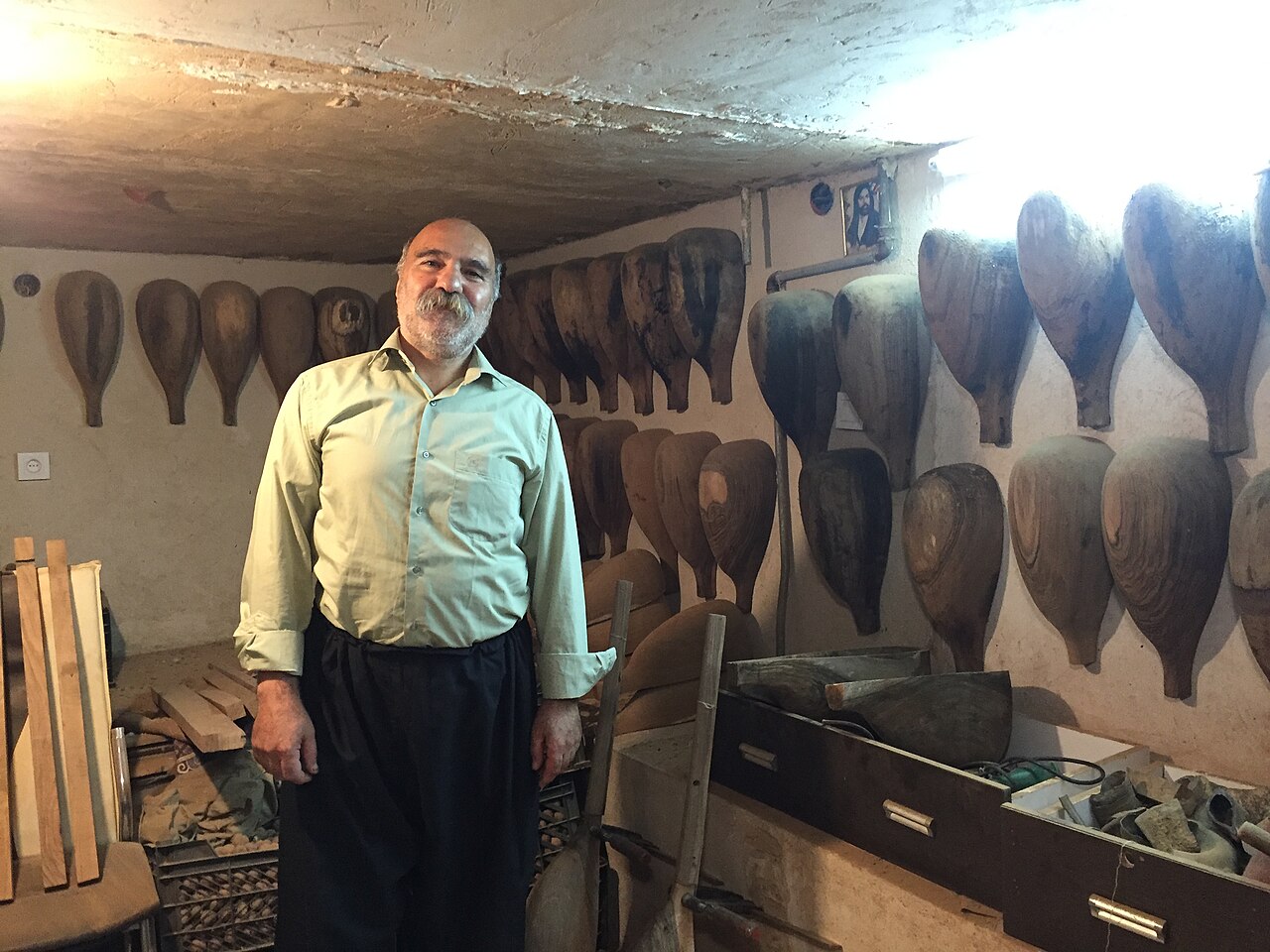
Nematollah also taught the tanbur, a long-necked lute associated with Yarsani devotional music. The Metropolitan Museum of Art identifies him as the father and teacher of Ostad Elahi. Its exhibition The Sacred Lute, held from August 2014 to January 2015, included instruments belonging to both father and son, alongside manuscripts and other objects. [5] These surviving instruments give the musical relationship a material setting. The workshop photograph on this page illustrates the continuing craft; it does not show either musician or an instrument proven to have belonged to them.
Reading a life remembered by followers
The official biography explicitly acknowledges that much of the account depends on Nematollah’s autobiographical writings, his son’s writings and family testimony. It describes those materials as hagiographic: shaped by devotion to a spiritual personality. [6] Such sources preserve how followers understood him, including stories of visions and sanctity. A historical biography can identify those beliefs while distinguishing them from independently established events. Nematollah died in Jeyhunabad in 1920. [1] His writings and musical teaching, rather than an unsupported career commanding armies against two empires, explain his place in this history.
Sources and further reading
- Mojan Membrado, Jeyḥunābādi, Ḥājj Neʿmat-Allāh Mokri, Encyclopaedia Iranica XIV/6 (2008), pp. 641–643; biography, retreats and reception.
- Official Hadj Nemat site, Forqan ol-Akhbar; composition, four-part structure and the author’s spiritual claims.
- Official Hadj Nemat site, Introduction to the works; prose, poetry and the religious interpretation of history.
- Official Hadj Nemat site, Shâhnâmeh-ye Haqiqat; contents, 1966 and 1984 editions, and Ostad Elahi’s commentary.
- The Metropolitan Museum of Art, The Sacred Lute: The Art of Ostad Elahi (2014–2015); father, son and exhibited instruments.
- Official Hadj Nemat site, Biography: Introduction; explicit explanation of internal and hagiographic sources.
- DTH-BD-NVT, tanbur maker’s workshop, Kerend-e Gharb, 7 January 2020; original photograph, CC BY-SA 4.0.