Leila’s filmmaking ambitions, a family’s conflicting memories, Frmesk’s education and a researcher’s changing voice offer different ways to encounter women’s experiences. Named novels, poetry and a recorded religious performance provide a more precise starting point than one universal story of empowerment.

Ava Homa’s Leila: wanting to make films
Ava Homa’s Daughters of Smoke and Fire was published by The Overlook Press on 12 May 2020. The publisher introduces Leila, a young Kurdish woman in Iran who wants to make films. When her brother Chia disappears in Tehran, she searches for answers and publishes his writings online, putting herself in danger. [1] The synopsis gives her both an artistic ambition and a family relationship through which the plot develops. Calling her simply a symbol of resilience would lose those particulars. This is a named fictional character, not a representative biography of every Kurdish woman.
Whispering Walls: more than one family perspective
Afsana Press dates Choman Hardi’s Whispering Walls to 20 September 2023. Its synopsis places three surviving siblings, two in London and one in Slemany, before the 2003 invasion of Iraq. Their memories return to family loss, including a sister’s suicide twenty-two years earlier. [2] The book is presented through different perspectives, not a single account that resolves the family’s past for everyone. This creates a useful question for readers: whose recollection is being heard, and how does it differ from another family member’s? The publisher’s description establishes the premise rather than replacing a reading of the novel.
Sara Omar’s Frmesk: childhood, study and writing
Sara Omar’s own book page introduces Frmesk in Dødevaskeren, where her mother places her with her maternal grandparents amid threats and violence. The grandmother prepares the bodies of women whom others refuse to care for. The sequel, Skyggedanseren, follows Frmesk studying at university, debating women’s rights and writing poetry, before flight across borders. [3] These author-provided synopses describe a particular sequence of fictional experiences. They make education and writing visible within a story of violence; they do not establish how frequently any experience occurs across Kurdish communities. Nor should the character’s life simply be substituted for the author’s biography.
Considering the Women: poetry and the researcher’s voice
Bloodaxe dates Hardi’s Considering the Women to 22 October 2015. It explains that the central Anfal sequence draws on her research with genocide survivors and frames eleven survivors’ stories through the changing voice of a researcher. [4] The collection therefore needs a different reading from a novel. Its published extracts include a speaker disputing the identification of a body and another describing the continuing effects of chemical attack. These are crafted poetic voices. Attention to who speaks, who is addressed and how knowledge changes the speaker helps preserve the distinction between testimony, research and literary form.
| Work | Form | Central perspective |
|---|---|---|
| Daughters of Smoke and Fire — Ava Homa (2020) | Novel | Leila |
| Whispering Walls — Choman Hardi (2023) | Novel | Three siblings |
| Dødevaskeren / Skyggedanseren — Sara Omar | Novel | Frmesk |
| Considering the Women — Choman Hardi (2015) | Poetry | Researcher and survivors |
A woman’s recorded voice: Dayê Xemê
Estelle Amy de la Bretèque and Khanna Omarkhali’s 2022 study of Yazidi religious music includes a recording of Dayê Xemê reciting a qewl in Khanke, Iraq, in 2010. Their recording description identifies her as a woman Sheikh and distinguishes this requested fieldwork recording from performances recorded at funerals elsewhere. [5] She is a performer and religious-knowledge bearer, rather than a fictional protagonist. The example broadens the account of women’s voices beyond printed books. It also prevents a misleading claim that women only recently began participating in verbal traditions, or that this individual recording proves every religious office is open to women.
Read the character, author and performer separately
These examples connect women’s voices with artistic ambition, family memory, education, violence, research and religious knowledge. They do not supply a numerical trend showing that female protagonists are increasing, or a measured causal effect on gender equality. A useful reading keeps the work’s title, genre and setting visible, then asks who has the power to tell the story and whose perspective is missing. A novelist, a fictional narrator, a poetic speaker and a recorded performer occupy different positions. Comparing those positions yields a richer account than treating every woman in a story as the same emblem.
Sources and further reading
- ABRAMS / The Overlook Press, Ava Homa, Daughters of Smoke and Fire, 12 May 2020; publisher’s synopsis and edition record.
- Afsana Press, Choman Hardi, Whispering Walls, 20 September 2023; publisher’s synopsis and publication record.
- Sara Omar, Bøger; author’s descriptions of Dødevaskeren and Skyggedanseren.
- Bloodaxe Books, Choman Hardi, Considering the Women, 22 October 2015; publisher’s description and two public poem extracts.
- Estelle Amy de la Bretèque and Khanna Omarkhali, The Yezidi Religious Music, Oral Tradition 35/2 (2022), pp. 309–330; recording descriptions, especially p. 312.
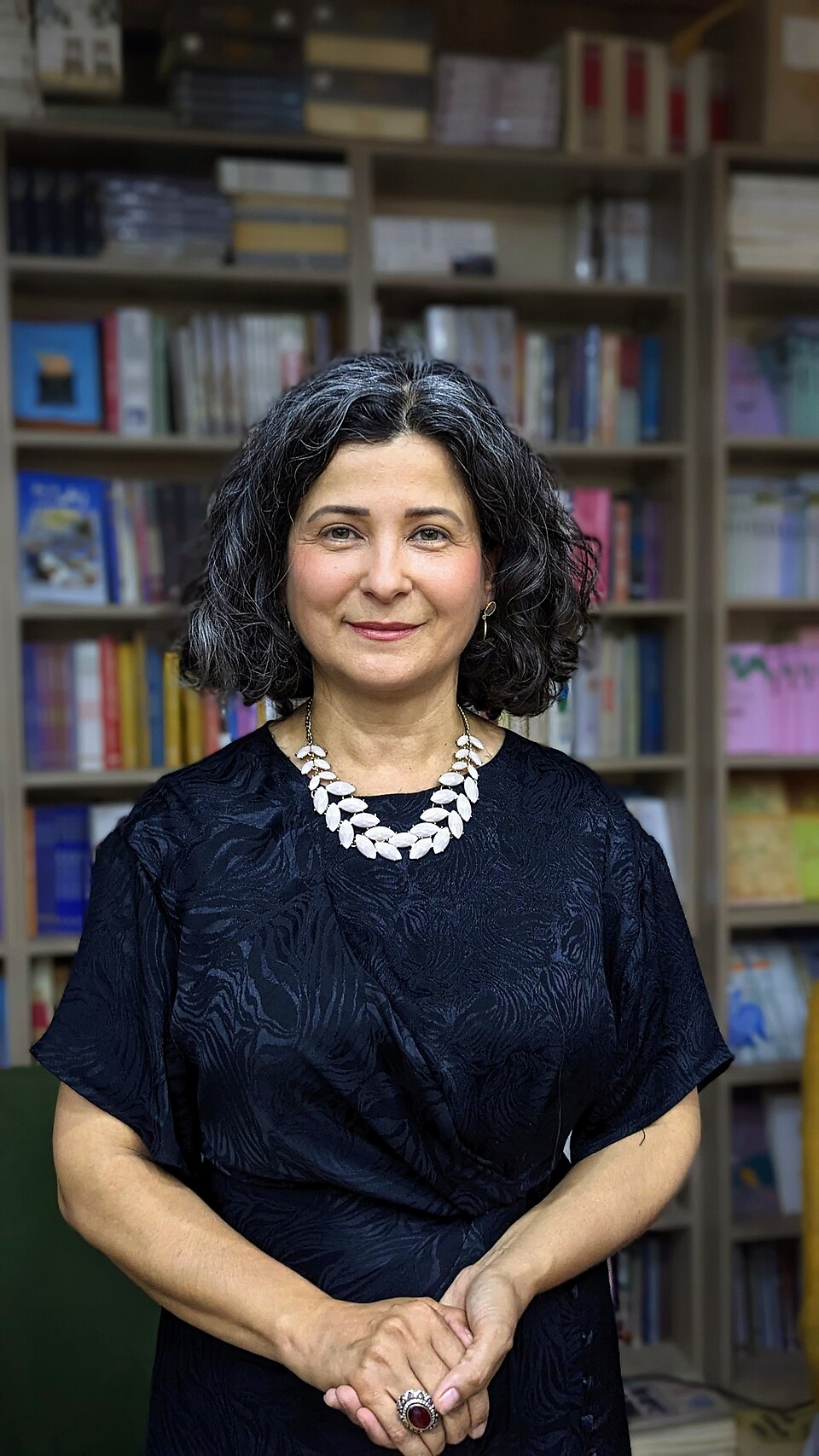
- Mohammed Sardar/Kushared, Choman Hardi, Erbil, 13 June 2023; Wikimedia Commons, CC BY-SA 4.0.