Iarlagash is a manuscript variant associated with Shulme in the Sumerian King List. Distinguishing this name from Yarla clarifies the surviving record and the limits of a ruler’s biography.

Iarlagash and Shulme
Oxford’s ETCSL edition gives Yarlagash, displayed as Yarlagac in its older character encoding, as the L1+N1 manuscript variant at the position occupied by Shulme. It assigns that entry six years. [1] Jacobsen’s 1939 edition likewise presents Iarlagash as the alternative to Shulme. [2] The spelling on this page therefore concerns a textual variant, not an additional king inserted into the sequence.
The different name after Ibate
In the Oxford edition, Ibate is followed by Yarla, with Yarlangab marked as a manuscript variant, and then Kurum. [1] Jacobsen prints Iarla<ngab> in that later position. [2] Iarlagash and Iarla should not be silently interchanged. A description of Iarlagash as the tenth king succeeding Ibate confuses these entries; precise numbering also depends on how an edition handles the opening of the Gutian section.
A later record, with a political purpose
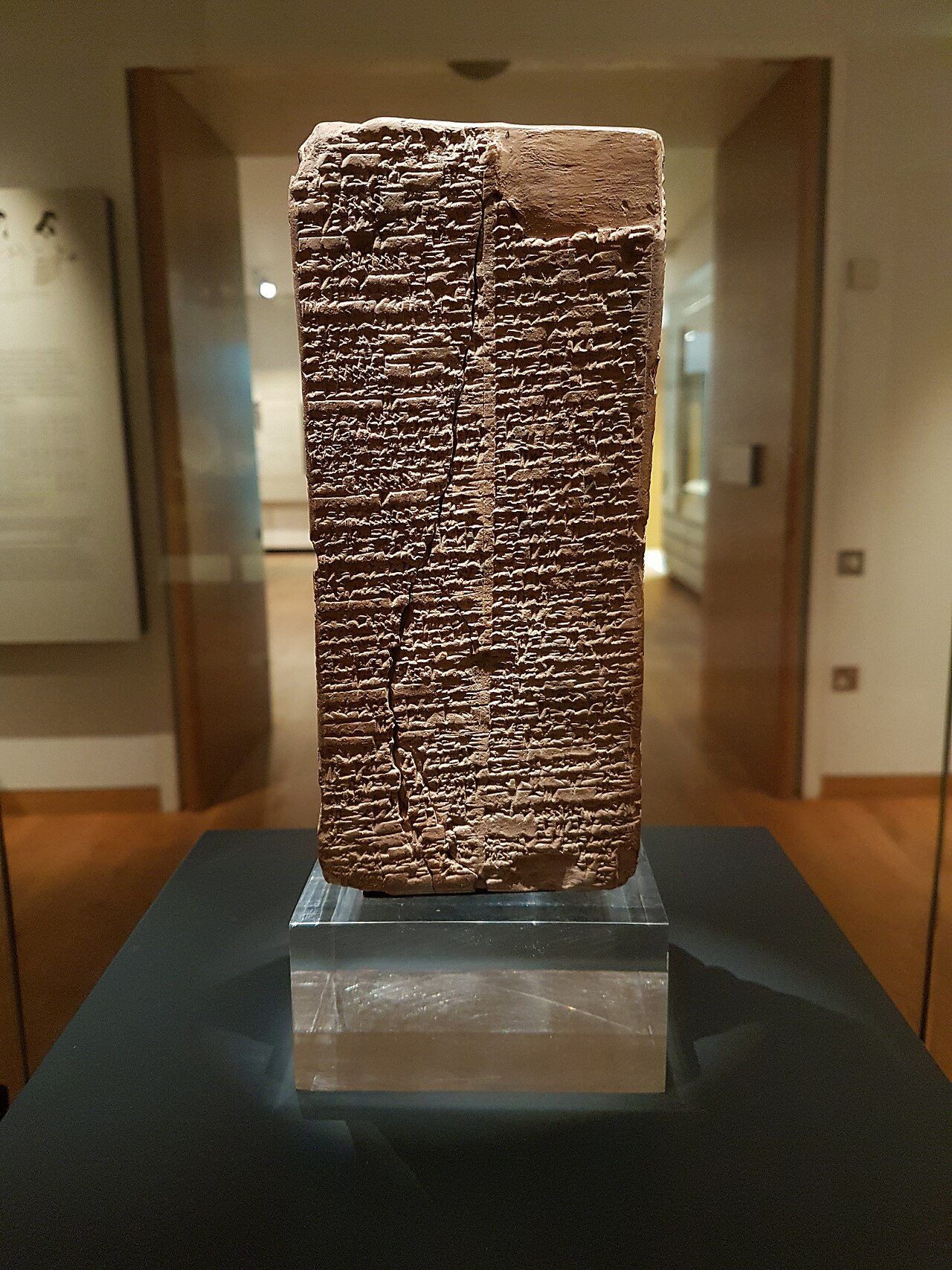
The Ashmolean dates its extensive king-list prism to about 1800 BCE, probably from Larsa. Its account combines myth, legend and historical information. The museum explains that the succession of cities presents power as divinely granted and helps legitimise the rulers of Isin. [3] That makes the object important evidence for remembered kingship, while its date remains distinct from the earlier rulers it records. Inclusion is not a modern legal judgment on sovereignty.
Gutian rule in its historical setting
Marc Van De Mieroop describes the difficulties of reconstructing Gutian power after Akkad. The king-list manuscripts differ, and some Gutian rulers may have held different cities at the same time; other cities remained under local rulers. [4] These limits prevent a short name-and-reign entry from supporting a detailed programme of decentralised administration, a fixed empire-wide border or an exact accession in 2124 BCE. The sources cited here supply no personal narrative for Iarlagash.
Language, regional history and ancestry
Van De Mieroop also emphasises that Gutian linguistic evidence consists largely of personal names, while Gutium and Gutian change meaning between periods. [4] The Zagros connection makes these records relevant to the ancient history of lands associated with Kurds today. It does not establish a demonstrated Guti–Kurti–Kurd linguistic chain or identify this particular ruler as a documented Kurdish ancestor. Such claims require independent linguistic and historical evidence.
Sources and further reading
- University of Oxford, ETCSL 2.1.1, The Sumerian King List, lines 308–334; Shulme/Yarlagash and Yarla/Yarlangab variants.
- Thorkild Jacobsen, The Sumerian King List, Assyriological Studies 11, 1939, pp. 118–119 and textual notes.
- Ashmolean Museum, Sumerian King List, AN1923.444; date, form, probable origin and political interpretation.
- Marc Van De Mieroop, Gutians, Encyclopaedia Iranica XI/4, 2002, updated 2013, pp. 408–410; chronology, terminology and linguistic limits.
- Gts-tg, Sumerian King List, photograph of 15 March 2017, Wikimedia Commons, CC BY-SA 4.0.