Ali Mardan Khan’s story is one of ambition, shifting loyalties, and the pursuit of power during a turbulent period in 17th-century Persian and Mughal history. His life reflects the complex political landscape of the Safavid and Mughal empires, marked by intrigue, military prowess, and strategic decisions that shaped the fate of entire regions. This post explores his rise through the ranks, his controversial betrayal, and his ultimate legacy.
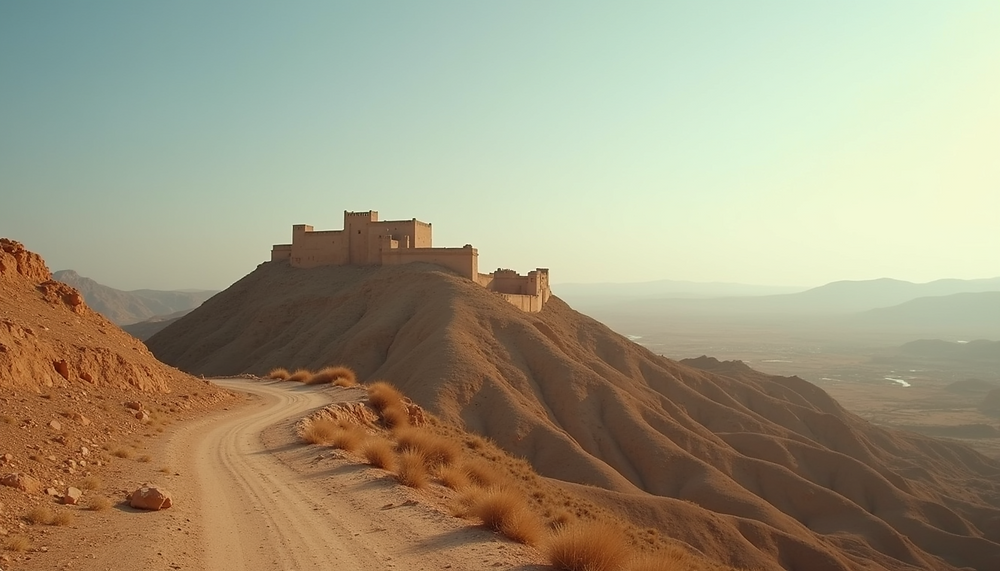
⚔️ The Great Defection: Ali Mardan Khan and the Geopolitics of Qandahar
The life of Ali Mardan Khan (d. 1657) is a thrilling narrative of a man caught between two great empires, whose single act of strategic betrayal irrevocably altered the map of Asia and secured him a place among the most powerful nobles in the Mughal court. A Kurdish noble of the Zig tribe, his story is a profound study in political acumen, ambition, and the harsh realities of power under paranoid monarchs.
His defection in 1638, which gifted the vital fortress of Qandahar to the Mughal Emperor Shah Jahan, was not a random act of treason but a calculated move for survival against the bloody purges of the Safavid Shah Safi. Ali Mardan Khan’s career is a microcosm of the intense rivalry between the Safavids and the Mughals and the unique political space occupied by the powerful, yet vulnerable, governors of the imperial frontiers.
🕌 I. The Kurdish Governor and the Safavid Frontier
Ali Mardan Khan was born into the upper stratum of Safavid administrative and military life, a lineage that ensured his early rise but also placed him directly in the line of imperial fire.
A. The Zig Tribe and the Corridors of Power
The Zig tribe, a Kurdish group, was one of many powerful non-Qizilbash (the Turkoman tribal foundation of the Safavid state) elements that Shah Abbas I (r. 1588–1629) systematically incorporated into the Safavid military and bureaucratic elite. This was a deliberate policy to counteract the overweening power of the traditional Qizilbash leadership.
Ali Mardan Khan’s father, Ganj Ali Khan, was a distinguished figure, having served as governor of Kerman and Sistan before being given the supremely critical governorship of Qandahar in 1595. When Ali Mardan Khan inherited this wazīfā (position) in 1624, he was heir not just to a title, but to a vast, complex, and highly dangerous geopolitical command.
B. Qandahar: The Strategic Prize
To understand Ali Mardan Khan’s subsequent actions, one must grasp the immense strategic value of Qandahar. This fortress city, located in modern-day Afghanistan, was far more than a regional capital; it was the linchpin of Central Asian trade and military control.
Economic Gateway: Qandahar lay directly on the crucial Silk Road route connecting Persia (Isfahan) to the Indian subcontinent (Delhi and Agra). Control over the city meant control over the lucrative trade in spices, textiles, and, most importantly, horses—the lifeblood of imperial armies.
Military Buffer: It served as the Safavids’ easternmost military outpost, a buffer against the expansive Mughal Empire. Its walls dictated whether Mughal armies could advance into Khorasan and Sistan, or whether Safavid forces could threaten Kabul and Kashmir.
Cultural Crossroads: As a melting pot of Persian, Pashtun, and Mughal cultures, its governance required not just military strength, but masterful diplomacy to manage the local Afghan tribes, whose loyalties were essential but notoriously fluid.
For the Mughals, Qandahar was seen as a natural part of their cultural and historical sphere, necessary for the complete security of their northwestern frontier. For the Safavids, it was a symbol of their dominion and a crucial barrier. The governor of Qandahar, therefore, held the power to disrupt the security of both empires.
🩸 II. The Safavid Reign of Terror: Shah Safi’s Purges
The stage for Ali Mardan Khan’s defection was set not on the battlefield, but in the treacherous royal court of Isfahan.
A. The Volatile Succession of Shah Safi I
When the great Shah Abbas I died in 1629, he was succeeded by his grandson, Shah Safi (r. 1629–1642). Safi’s reign was marked by a paranoia that bordered on madness and translated into a wave of systemic violence against the Safavid elite.
Execution and Imprisonment: Safi distrusted anyone associated with his powerful grandfather. Key officials, military commanders, and even members of the royal family were routinely imprisoned, blinded, or executed based on the slightest suspicion or court intrigue.
Centralization of Fear: This strategy, while securing Safi’s absolute control, destabilized the periphery. Powerful frontier governors who had enjoyed considerable autonomy under Shah Abbas I suddenly found themselves under severe scrutiny. Their proximity to military resources and external enemies made them primary targets.
B. Ali Mardan Khan’s Calculated Risk
Ali Mardan Khan was particularly vulnerable. His father’s long tenure and his own status as a powerful, non-Qizilbash governor with immense personal wealth and military command made him a prime candidate for Safi’s purges. His position was made more precarious by his success: success often bred royal suspicion.
His decision to initiate secret correspondence with the Mughal Emperor Shah Jahan was a classic tactical defection driven by a survival instinct. It was not treason motivated by ideology, but by the immediate, existential threat from his own sovereign. He sought a powerful patron who could not only protect his life but also validate his existing wealth and status. The Mughals, who had always coveted Qandahar, were the obvious, and only, choice.
🤯 III. The Surrender of 1638 and the Imperial Fallout
The defection and handover of Qandahar was not a sudden military defeat for the Safavids, but a negotiated, calculated political transaction.
A. The Mechanics of Treason
In March 1638, Ali Mardan Khan officially switched allegiance. The process was swift and efficient:
The Offer: Ali Mardan Khan sent detailed assurances of loyalty and, crucially, guaranteed the easy transfer of the Qandahar fortress to the Mughal Governor of Kabul.
The Mughal Response: Shah Jahan was ecstatic. Qandahar was the one major strategic prize that had eluded his predecessors. He immediately dispatched an army and a stream of gifts and honours to secure the defection.
The Terms: The surrender was not unconditional. Ali Mardan Khan ensured his personal wealth, his family, and his retinue were protected and integrated into the Mughal system on highly advantageous terms.
The loss was catastrophic for the Safavids. It was a humiliating testament to the internal weakness and self-destructive paranoia of Shah Safi’s rule. While the Safavids would briefly recapture the city in 1649, the 1638 defection marked the end of the long-term Safavid hold on the region, fundamentally shifting the balance of power toward Delhi.
B. Safavid Retribution
In Isfahan, Ali Mardan Khan was immediately branded a traitor (khiyanat-kār) and his family properties were confiscated. Safavid chroniclers of the era, such as Mulla Jalal Monajjem, were quick to condemn him, but their writings inadvertently highlighted the underlying political cause: the Shah’s own tyranny. The historical memory of Ali Mardan Khan in Iran remains tainted by this single act of betrayal, but modern historiography recognizes it as a rational response to an irrational political environment.
📈 IV. The Apex of Mughal Nobility
Ali Mardan Khan’s rise in the Mughal Empire was meteoric, proving that Shah Jahan considered the captured fortress well worth the price of showering the defector with honors.
A. The Mansab System: A Measure of Power
Upon his arrival, Ali Mardan Khan was immediately incorporated into the Mansabdar system, the core military and administrative framework of the Mughal elite. His promotions were unprecedented for a new arrival:
Initial Rank: He was quickly given a high mansab, granting him a significant number of zat (nominal infantry rank, determining status and salary) and sowar (cavalry rank, determining the number of troops he had to maintain).
The Ultimate Honour: By 1643, he reached the rare rank of 7,000 zat and 7,000 sowar. This rank was typically reserved for royal princes or the most senior, long-serving Mughal nobles. It established him immediately as one of the half-dozen most influential men in the empire, just below the emperor and the crown prince, Dara Shikoh.
The Title Amir al-Umara: The title "Lord of the Lords" (Amir al-Umara) was the highest honour a non-royal Mughal could achieve. It confirmed his position as the premier nobleman and a trusted advisor to Shah Jahan.
B. Administrative and Military Roles
Shah Jahan immediately put Ali Mardan Khan’s talents to use, appointing him to key governorships (Subahdaris):
Governor of Kashmir (1638): He was first sent to Kashmir, a strategic but challenging province. Here, he demonstrated his exceptional administrative skill, focusing on economic and infrastructure development.
Governor of Lahore (1639): He was later given the governorship of Lahore, a major provincial capital, which he held concurrently with Kashmir, granting him control over the entire northwestern Mughal frontier.
His role was essential in the Mughal campaigns to recapture Central Asian territories (Balkh and Badakhshan), where his knowledge of Persian military tactics, the Central Asian terrain, and local politics was invaluable.
🏗️ V. The Legacy: Architecture and Irrigation
Beyond his political maneuvering, Ali Mardan Khan left behind an enduring legacy of public works, particularly in the fields of hydraulic engineering and architecture—a hallmark of great Mughal nobles.
A. The Lahore Canal (Shalamar Gardens)
His most famous and impactful project was the construction of the Lahore Canal (or Shah Nahar).
The Project: This was a massive public works scheme to bring water from the Ravi River over eighty miles to the city of Lahore. The main purpose was to supply the magnificent Shalamar Gardens, built by Shah Jahan, transforming the arid land into a lush, functional landscape.
Engineering Prowess: The project required sophisticated planning and engineering to navigate difficult terrain, demonstrating Ali Mardan Khan's deep understanding of hydraulics. This canal not only fed the royal gardens but also provided irrigation for agriculture surrounding Lahore, cementing his reputation as a great builder and administrator.
B. Infrastructure in Kashmir
In Kashmir, he is credited with improving the irrigation system for paddy fields and improving accessibility to the region, laying the foundation for better governance and economic stability in the valley. The wealth he amassed, through his high rank and various jagir (land revenue assignments), allowed him to fund these vast projects, fulfilling the Mughal ideal of the noble as a patron of public good.
🧭 VI. Conclusion: The Master of Imperial Transition
Ali Mardan Khan’s life, spanning from a Kurdish frontier noble to the Amir al-Umara of the Mughal Empire, is a powerful historical lesson in realpolitik.
His decision to defect, though viewed by the Safavids as a heinous betrayal, was an act of profound strategic self-preservation under a regime that offered its elites only the choice between subservience and execution. By delivering Qandahar, he offered the Mughals the greatest single strategic advantage of the century, ensuring his family's safety and his own elevation.
Ali Mardan Khan’s story shows how the geographical fluidity of the Kurdish frontier allowed talented individuals to leverage their local power into imperial influence across different political systems. He masterfully exploited the imperial rivalry for his own survival, rising to become a central figure in Shah Jahan's court, where he distinguished himself not only as a successful military commander and administrator but also as a significant patron of the architectural achievements that define the Mughal golden age. His legacy is etched into the stone and waterways of Lahore and remains a potent symbol of how individual ambition can alter the course of empires.
References: