Ahmed Kuftaro (1915–2004) served as Syria’s Grand Mufti from 1964. His educational network and interfaith work developed within a close, debated relationship with state power.

From Damascus teaching to national office
Kuftaro’s institutional biography gives Damascus and 1915 as his birthplace and year. It describes private religious study and teaching at Abu al-Nur after his father Muhammad Amin’s death in 1938. The same account records appointment as Mufti of Damascus in 1951, First Mufti in 1958 and election as Grand Mufti of Syria in 1964. These are distinct stages, rather than one office held under different names. Its description of honorary doctorates should not be recast as evidence of completed university research degrees. [1]
Kurdish background and a Syrian public role
The contemporary notice of his death in L’Orient-Le Jour identifies him as a member of Syria’s Kurdish minority. His main public institution was nevertheless a Syrian religious office, not an elected Kurdish representative body. Neither family origin nor international prominence establishes that he spoke for every Kurdish community or every Syrian Sunni Muslim. [2]
What Abu al-Nur became
Leif Stenberg’s research describes a Naqshbandi network combining religious instruction, education and social relationships. The Abu al-Nur foundation was established in 1971, building on earlier trusts. It offered Arabic instruction to foreign students and developed links with institutions abroad. This educational activity needs to be distinguished from the state mufti’s office, even though Kuftaro connected the two. Stenberg identifies his 1990s study as preliminary and based mainly on conversations with male participants, a limit on its coverage. [3]
A meeting that can be documented
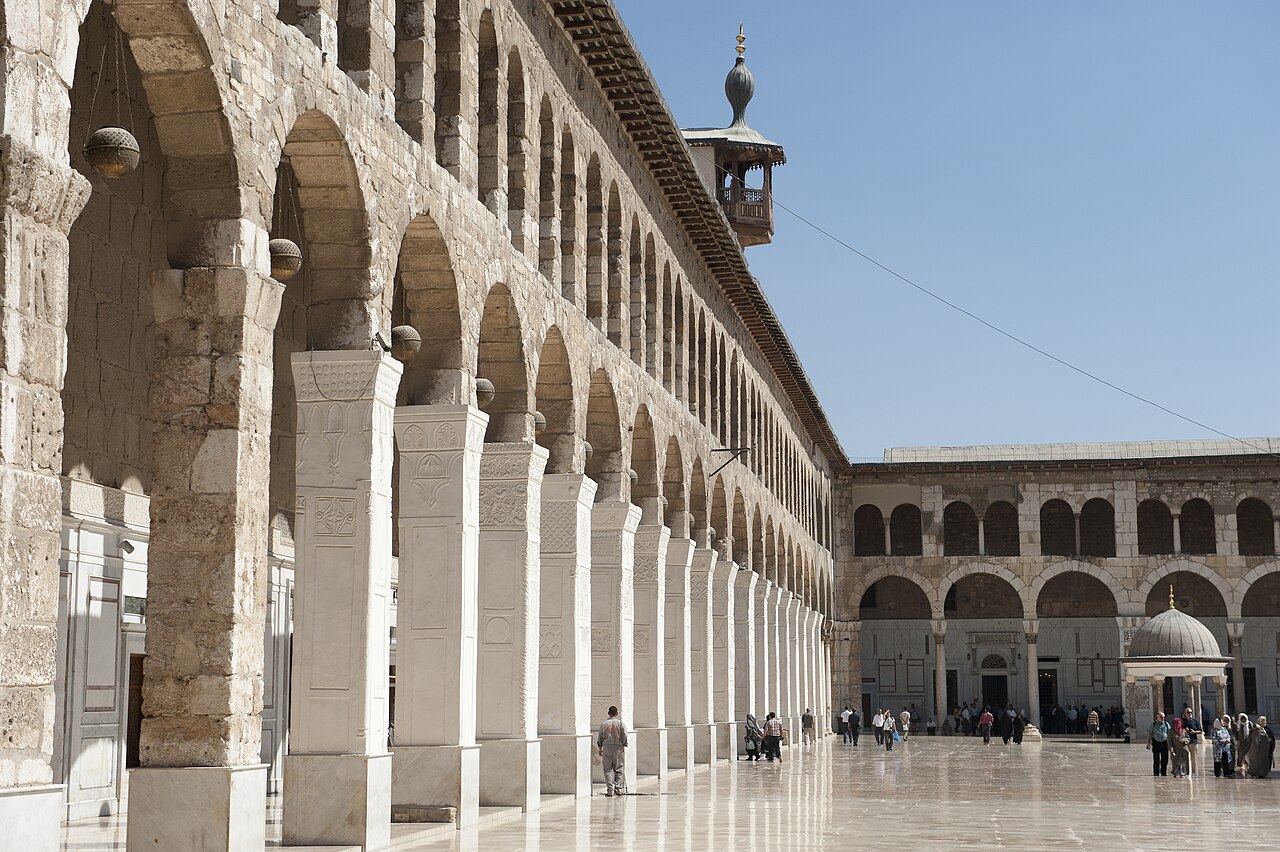
On 6 May 2001, John Paul II visited the Umayyad Mosque in Damascus. The Vatican’s contemporary bulletin records Kuftaro and the religious-endowments minister welcoming him, followed by Kuftaro’s greeting before the papal address to the Muslim community in the courtyard. This gives a date, place and documentary record for interfaith engagement. The bulletin’s papal speech should not be quoted as if Kuftaro wrote it. Nor does the meeting alone establish an unlimited record of agreement between the religious communities. [4]
Relations with the Assad government
Stenberg argues that Kuftaro’s political position cannot be explained simply as total independence or passive obedience: state support helped his network, while his following also gave him influence. Itzchak Weismann’s study sets out differing scholarly assessments, including accommodation with authoritarian power and the state’s use of favoured religious institutions against rivals. A long tenure by itself does not prove universal public respect or institutional independence. The previous page made that unsupported inference; it has been removed. [3] [5]
Death and the question of succession
His institution’s announcement dates his death to 1 September 2004 and records funeral prayer at the Umayyad Mosque and burial at Abu al-Nur. Stenberg’s later article examines how the mosque complex sought to preserve a leader’s charisma within a continuing educational and welfare organisation. Its published abstract frames this as an institutional question, rather than treating the founder’s death as the end of the network. This is a historical profile, not a directory of Syria’s present religious officeholders. [6] [7]
Sources and further reading
- Sheikh Ahmad Kuftaro’s institutional website, Biography: Overview; primary account of education and appointments.
- L’Orient-Le Jour, “Syrie: Décès de cheikh Ahmed Kaftaro, grand mufti de Syrie”, 2 September 2004; contemporary obituary reporting information from his office.
- Leif Stenberg, “Naqshbandiyya in Damascus: Strategies to Establish and Strengthen the Order in a Changing Society”, in Elisabeth Özdalga (ed.), Naqshbandis in Western and Central Asia (1999), especially pp. 101–108.
- Holy See Press Office, bulletin of 6 May 2001: visit to the Umayyad Mosque and meeting with the Muslim community, including the original English papal address.
- Itzchak Weismann, “Sufi Brotherhoods in Syria and Israel”, al-Majma 2 (2010), pp. 51–74, especially the discussion of Kuftaro and state power.
- Sheikh Ahmad Kuftaro’s institutional website, “The Passing Away of the Grand Mufti”: death and funeral announcement.
- Leif Stenberg, “Préserver le charisme”, Maghreb-Machrek 198 (2008), pp. 65–73; author’s abstract and publication record at Aga Khan University.