April 4 brought birthday events for Abdullah Öcalan and commemorations of the YPJ’s founding. Dated reporting and a commander’s testimony show how participants connected the occasions with political demands and women’s organisation.

What can be documented on April 4
April 4 is observed by Abdullah Öcalan’s supporters as his birthday. In 2026, organisers described the occasion as his seventy-seventh birthday. The day also marked the thirteenth anniversary of the Women’s Protection Units, or YPJ. These are two connected commemorations within a particular political movement, rather than evidence that all Kurdish communities recognise one national holiday. Contemporary reports show what participants did and said; their claims about national rebirth remain attributed political interpretations. [1] [2] [3]
Halfeti, Amara and the birthday gathering
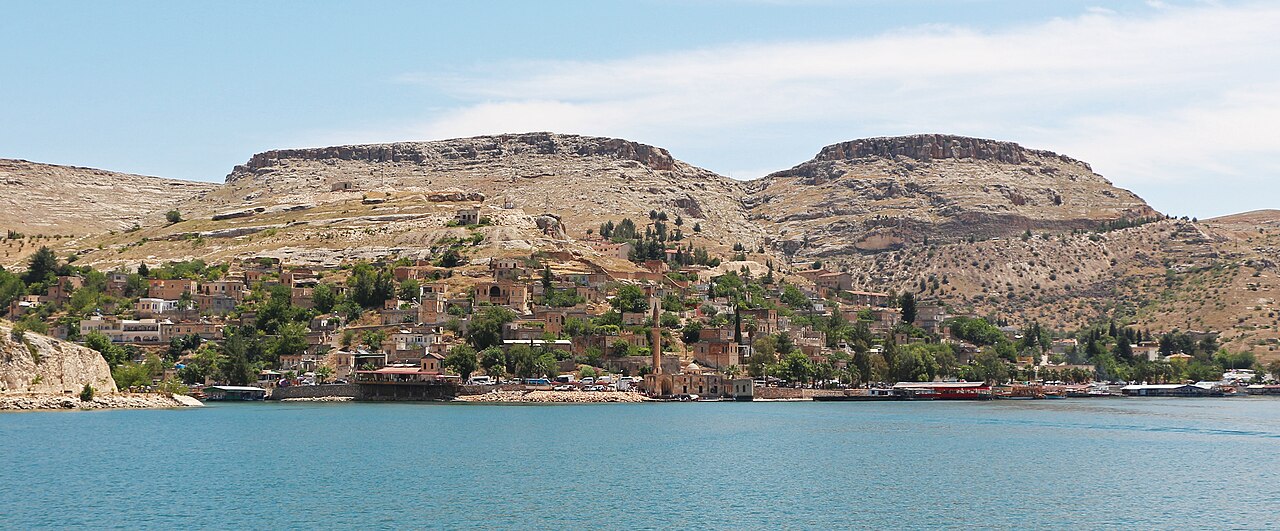
Reuters’ footage record is dated Halfeti, Turkey, April 4, 2026. Its shot list describes people marching for Öcalan’s birthday and carrying a banner that links his birth with the Kurdish people’s revival. Mezopotamya Agency’s report of the same date describes the conclusion of the Amara Festival Days outside the house where he was born, following a march from Halfeti to Amara. It identifies participants including DBP co-chairs Çiğdem Kılıçgün Uçar and Keskin Bayındır, DEM Party parliamentarians, and people previously held with Öcalan on İmralı. The report records speeches and a dance performance, giving the gathering a specific place, programme and political setting. [1] [2]
Birthday symbolism and a documented tradition
Mezopotamya Agency attributes a broad account of Kurdish renewal to speaker Çetin Arkaş and links a speech by Adalet Fidan of the Free Women’s Movement to demands for Öcalan’s release. Such statements explain the meaning organisers give the day; they should not be converted into an uncontested description of Kurdish history. A campaign leaflet published in 2018 by the International Initiative “Freedom for Abdullah Öcalan—Peace in Kurdistan” also describes birthday visits to Amara and tree planting. It is a primary source for the campaign’s own tradition, not independent proof that tree planting occurred at every 2026 event. [2] [4]
Why the YPJ marks the same date
In an interview published by Young Internationalist Women in November 2025, YPJ co-founder and commander Nesrîn Abdullah dates the organisation’s first conference to April 4, 2013. She describes decisions concerning women’s self-organisation, education and military self-defence. This gives the anniversary a concrete organisational reference. It does not imply that women first participated in armed or political activity on that day. Her retrospective testimony explains how a participant understood the conference, and should be read as such. Thirteen years separate that conference from the 2026 commemoration. [3]
A specific demand voiced in Kobani
An ANHA interview published on April 5, 2026 records comments from Majda Hassoun, head of Kobani’s Women’s Committee, and Sara Khalil, co-chair of the Martyrs’ Families Council. Both connect Öcalan’s birthday and the YPJ anniversary with women’s political agency. They also call for recognition of the YPJ in the Syrian constitution. The demand shows that the anniversary was used to discuss an institutional question, not solely to celebrate a date. Reporting their call does not establish that constitutional recognition had been granted. Read alongside the Halfeti record and the commander’s earlier interview, it documents distinct activities and arguments attached to April 4. [5]
Sources and further reading
- Reuters, “Turkey’s Kurds celebrate birthday of jailed PKK leader Ocalan in his hometown” (Halfeti, 4 April 2026), video record and shot list; reference only, footage not reproduced.
- Mezopotamya Agency, “April 4 celebration: Amara is the starting point of the Kurds” (4 April 2026, 15:58); on-location report and attributed speeches.
- Young Internationalist Women, Young Women and Self-Defense: Interview with YPJ-Commander Nesrîn Abdullah (November 2025), especially p. 15; participant testimony on the first conference of 4 April 2013.
- International Initiative “Freedom for Abdullah Öcalan—Peace in Kurdistan”, Who Is Abdullah Öcalan? (2018), birthday celebrations section; primary campaign account of visits and tree planting.
- ANHA, “Women in Kobani call for YPJ recognition in Syrian constitution” (5 April 2026); interviews with Majda Hassoun and Sara Khalil.
- Bernard Gagnon, Halfeti on the Euphrates, 25 May 2014, Wikimedia Commons; CC BY-SA 3.0.