Baba Tahir: The Naked Dervish of Hamadan
- Dala Sarkis

- Jun 2
- 13 min read

Introduction
Among the most beloved mystic voices of the wider Iranian world is a wandering, barefoot dervish remembered simply as Baba Tahir the Naked. An eleventh-century poet of Hamadan, he poured out his longing for the divine in short, plain quatrains of such sincerity and beauty that they have been sung and recited for nearly a thousand years. And though he is claimed by Persians and Lurs as well, he holds a special place in the Kurdish world, for he is revered as a saint in the Yarsani faith, the Ahl-e Haqq, and his very language belongs to the borderlands where Kurdish and its neighbours meet.
Little is known for certain of his life, which is wrapped in legend and mystery, but the spirit of the man shines through his verse: a soul that renounced the world, wandered the stony paths of the mountains, and sought God in the simplest and most human of words. He stands at the headwaters of a long tradition of mystic poetry in the region, a forerunner of the great Kurdish poet-mystics such as Melaye Ciziri who would follow in the centuries to come.
His is a figure who belongs to several peoples at once, and whose exact identity is debated, as is so often the case with the shared treasures of the Iranian cultural world. But for the Kurds, and above all for the Yarsanis among them, Baba Tahir is a cherished saint and a wellspring of their mystic heritage, the naked dervish whose songs still rise from the mountains he once wandered.
Contents
Who Was Baba Tahir?
Baba Tahir, known fully as Baba Tahir Oryan Hamadani, was an eleventh-century dervish, mystic and poet of Hamadan, in the western part of the Iranian world, on the borderlands where the Kurdish and Luri peoples meet. He is famous for his do-bayti, short and simple quatrains of profound spiritual feeling, composed in an archaic vernacular dialect. He is revered as a saint in the Kurdish Yarsani faith and is claimed across the Persian, Kurdish and Luri traditions, standing as one of the earliest and most beloved poets of mystic love in the region.
The Naked Dervish
The name by which Baba Tahir is best known tells much about him. He is called Oryan, or Uryan, which means the Naked, a title that marks him as a wandering dervish who had stripped himself of worldly attachments. He lived the life of a qalandar, a footloose mystic vagabond, renouncing possessions and status to seek God in poverty and freedom, and the title the Naked came to express this radical detachment from the things of the world.
In strict honesty, the title Oryan is not found in the earliest sources and appears only some centuries after his life, so it represents how later generations understood him rather than a name he certainly bore. But the image it conveys is true to the spirit of his poetry and his legend: that of a holy wanderer, indifferent to comfort and reputation, who found in his nakedness before God a freedom that the powerful and the learned could not know. The honorific Baba, meanwhile, meaning roughly father or elder, marked him as a spiritual guide, a revered figure in his native Hamadan and far beyond.
Key Takeaways
Baba Tahir was an 11th-century mystic dervish-poet of Hamadan.
He is known as Oryan, the Naked, for his wandering, ascetic life.
He is famous for his do-bayti, simple and spiritual quatrains.
He is revered as a saint in the Kurdish Yarsani (Ahl-e Haqq) faith.
His poetic dialect belongs to the Kurdish-Luri borderlands and is debated.
He is claimed across the Kurdish, Persian and Luri traditions.
Quick Facts
Name: Baba Tahir (Baba Tahir Oryan Hamadani); Oryan means the Naked
Lived: The 11th century, the Seljuk era; exact dates uncertain
Origin: Hamadan, in western Iran, on the Kurdish-Luri borderlands
Type: A dervish, mystic and poet
Famous for: His do-bayti, simple and spiritual quatrains
Language: An archaic dialect of the Kurdish-Luri continuum (debated)
Religion: Revered as a saint in the Kurdish Yarsani (Ahl-e Haqq) faith
Themes: Divine love, longing, humility, asceticism, God in nature
Legend: An illiterate woodcutter granted wisdom by a vision
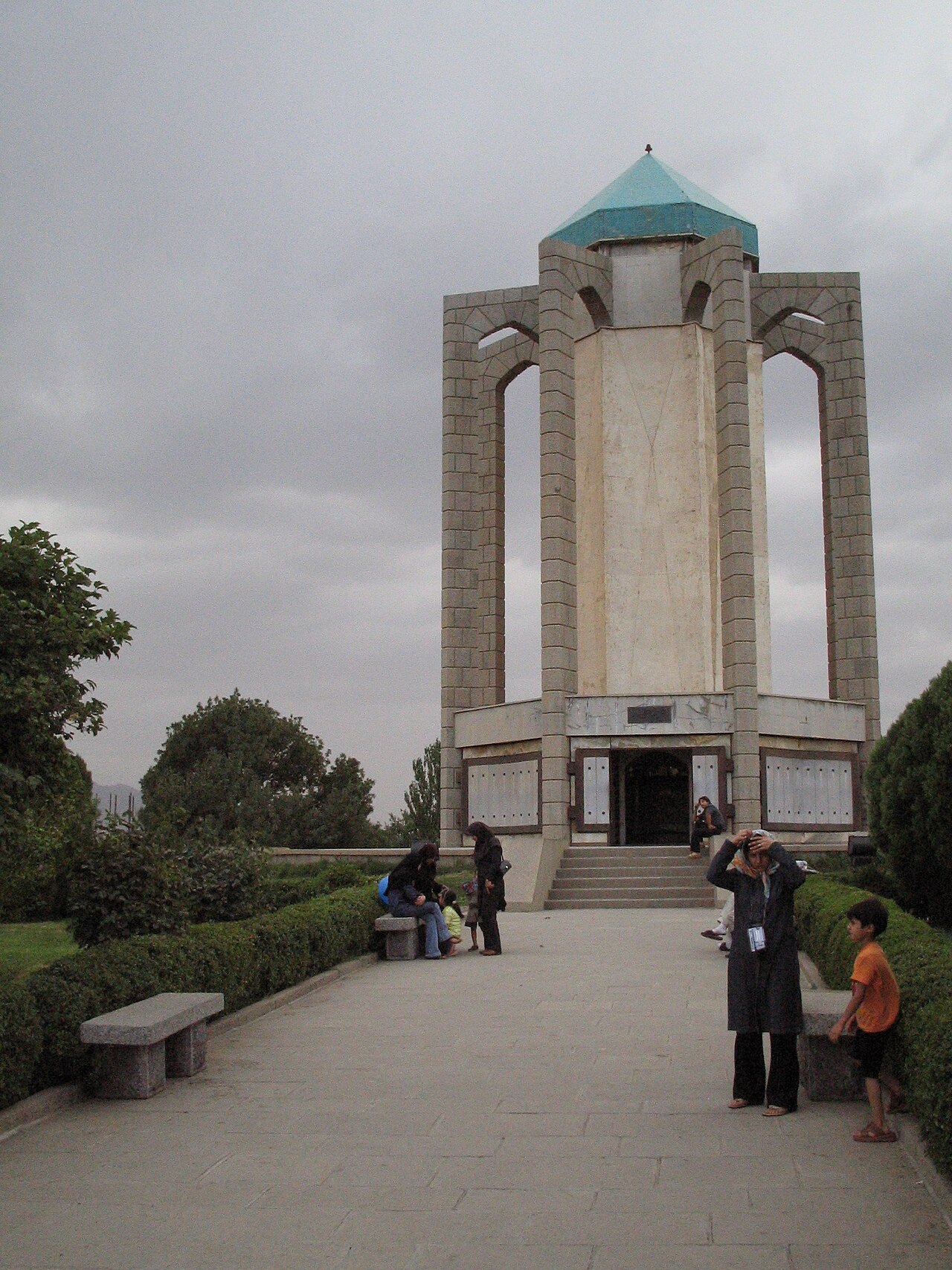
Shrine: His mausoleum stands in Hamadan, a noted monument
A Life Wrapped in Mystery
As with so many of the early mystics, the life of Baba Tahir is wrapped in mystery and legend, and very little can be said of it with certainty. He lived in the eleventh century, during the era of the Seljuk Turks who then ruled over Iran, and he made his home in and around Hamadan. The most often repeated historical anchor is a tradition, recorded in a later chronicle, that he met the Seljuk conqueror Tughril Beg when that ruler came to Hamadan, an encounter that would place him in the middle of the eleventh century. Beyond such fragments, the details of his life are few, and even the dates of his birth and death are uncertain, with some traditions holding that he lived some seventy-five years.
A famous legend captures the kind of figure he became in the popular imagination. It tells that Baba Tahir was an illiterate woodcutter who attended the lectures of a religious college, where the scholars and students mocked him for his ignorance and simplicity. But after a vision in which divine truths were revealed to him, he returned to the school and spoke with such wisdom that he astounded all who heard him. Whether or not the tale is historical, it expresses a truth the tradition saw in him: that his wisdom came not from books and learning but from direct spiritual experience, and that the humble and unlettered may be granted insights denied to the proud and the educated.
The Poet of the Do-Bayti
Baba Tahir's enduring fame rests on his poetry, and above all on his mastery of the do-bayti, a form of quatrain, literally a poem of two distichs or couplets. His do-bayti are celebrated for their simplicity and directness, free of the elaborate ornament and difficulty of much classical verse, flowing smoothly and speaking plainly to the heart. In a few short lines, he could express the deepest spiritual longing in language that the common people and the learned alike could understand and cherish, and it is this earthy, sincere simplicity that has made his verse beloved for centuries.
The themes of his quatrains are those of the mystic's heart: the longing for the divine, the pain and ecstasy of love both sacred and human, the humility of the soul before God, the renunciation of the world, and the presence of the divine throughout the natural world, in the deserts and the wind-blown mountains of his homeland. Running through them, too, is a tender awareness of human frailty and insignificance in the vastness of the cosmos. He is often regarded as one of the very first great poets of mystic love in the literature of the region, a pioneer whose simple, sincere voice opened a path that countless poets would follow.
A Language Between Kurdish and Luri
One of the most debated questions about Baba Tahir concerns the language in which he composed, and it bears directly on the question of his identity. His quatrains are written not in the standard literary Persian of the courts but in an archaic vernacular dialect, and scholars have long disagreed about exactly what that dialect was. Many sources call it loosely Luri, or describe it as a form of the old Fahlavi or Pahlavi verse of the region; others connect it to the local dialect of Hamadan.
For the Kurdish question, the most significant scholarly view is that of the great orientalist Vladimir Minorsky, who held that Baba Tahir's language was an early form of a dialect that predated the very separation of Kurdish and Luri, when the two were not yet distinct. Kurdish scholars, for their part, have argued that his poetic tongue was an old Laki-Luri dialect of Kurdish, shaped by the influence of the Hawrami or Gorani Kurdish of the region, and that Baba Tahir himself was a Kurd. The truth is that his language sits precisely on the borderland between Kurdish and Luri, in an age before the modern boundaries between them had hardened, and this is part of why he is claimed by more than one people. It is honest to say that his dialect belongs to that shared continuum rather than to any one modern language alone.
Revered as a Yarsani Saint
Whatever the debates about his language, there is one connection to the Kurdish world that is clear and important: Baba Tahir is revered as a saint in the Yarsani faith, the Ahl-e Haqq, one of the distinctive religions of the Kurds. This faith, whose heartland lies in the Gorani and Hawrami Kurdish country of the Zagros, holds its sacred literature, the Kalam-e Saranjam, in Gorani Kurdish, and counts Baba Tahir among its venerated holy figures. For the Yarsanis, the naked dervish of Hamadan is not merely a poet but a saint.
It should be said honestly that Yarsanism as an organised religion was founded later, in the fourteenth century, by Sultan Sahak, so that Baba Tahir, living three centuries before, is best understood as a revered forerunner and saint within the tradition rather than as a founder of it. But his veneration among the Yarsanis is a genuine and significant link between him and the Kurdish world, rooting him in the spiritual life of a Kurdish people. Through the Yarsani devotion to him, Baba Tahir lives on as a holy figure of the Kurdish mystic tradition, his memory cherished in the very Gorani-speaking mountains whose dialect colours his verse.
A Shared and Contested Heritage
Baba Tahir is, in truth, a figure claimed by several peoples, and honesty requires acknowledging this rather than seizing him for one alone. He is cherished by Persians as one of the earliest and greatest poets of Sufi love in their literature; he is claimed by the Lurs as a son of their people and their dialect; and he is revered by the Kurds, and above all the Yarsanis, as a saint and a forebear of their mystic tradition. His mausoleum stands today in Hamadan, an Iranian city, honoured as a national treasure of Iran.
This shared and contested character is typical of the great figures of the Iranian cultural world, whose heritage the Kurds hold in common with their neighbours rather than possessing in isolation. The honest course is neither to deny Baba Tahir to the Kurds nor to claim him as exclusively Kurdish, but to recognise him as a treasure of a shared world, in which he holds a real and cherished Kurdish and Yarsani place. He belongs, in the end, to the borderlands themselves, to the meeting-ground of peoples and tongues from which his timeless verse arose.
The Music of His Verse
Baba Tahir's quatrains were not made to be read in silence but to be sung, and they have lived for centuries as music as much as poetry. Across the Iranian and Kurdish worlds, his do-bayti have been set to melody and sung to the accompaniment of stringed instruments such as the setar and the lute, and in the Kurdish world the sacred tanbur carries much of the region's mystic song. His verses are recited and sung to this day, from the concert halls of Iran's great classical vocalists to the gatherings of the mountains.
This musical life is essential to understanding Baba Tahir's enduring popularity. His simple, heartfelt quatrains lend themselves perfectly to song, and through music they have reached far beyond the literate few into the hearts of ordinary people across many generations. A verse of Baba Tahir, sung in a plaintive melody on a mountain evening, can carry the whole weight of mystic longing in a form that anyone can feel. In this living oral and musical tradition, his poetry has never become a museum piece but remains a part of the breathing culture of the region.
The Wise Fool
Among the titles and descriptions attached to Baba Tahir are some that may seem surprising for a revered saint: he was called, in various sources, a madman, a wise fool, and one infatuated or restless. Far from being insults, these reflect a deep theme in the mystic traditions of the region, that of the holy fool whose apparent madness is in fact a divine intoxication, a soul so overwhelmed by the love of God that it appears mad to the conventional world. The naked, wandering dervish who confounded the learned was understood as just such a figure.
This image of the wise fool carries a gentle critique of worldly wisdom and pride. In the legend of the mocked woodcutter who returned with God-given wisdom, and in the figure of the naked dervish indifferent to status and learning, the tradition celebrates a knowledge that comes from the heart and from direct experience of the divine, rather than from books and credentials. Baba Tahir became the very type of this holy simplicity, the unlettered mystic whose wisdom surpassed that of the scholars, and it is part of why his humble, sincere voice has been loved by ordinary people for a thousand years.
Baba Tahir and the Kurdish Poets
Baba Tahir stands near the beginning of a long and rich tradition of mystic poetry in the Kurdish world, and he may be seen as a forerunner of the great Kurdish poet-mystics who came after him. In later centuries the Kurds would produce towering classical poets such as Melaye Ciziri, the master of mystic verse, and Feqiye Teyran, whose poetry blended the mystical and the lyrical, building a Kurdish literary tradition that would culminate in works such as the epic Mem u Zin.
While these later poets wrote in Kurdish proper and belonged to a developed literary culture, Baba Tahir, with his simple vernacular quatrains from the borderlands, stands as an early and humble ancestor of the same impulse: the expression of mystic longing in the language of the people of the region. In honouring him, the Kurdish tradition recognises one of the deepest and oldest roots of its own poetry of the soul, and places him in the company of the great voices who gave the Kurds a literature of spiritual love.
Symbolism and Legacy
Baba Tahir's enduring legacy is bound up with the image of the naked dervish, the soul stripped of all worldly attachment and standing bare before God. He symbolises the mystic ideal of renunciation and freedom, the conviction that true wealth and wisdom lie not in possessions and learning but in poverty of spirit and love of the divine. His simple, sincere quatrains embody another ideal: that the deepest truths are best expressed not in elaborate sophistication but in plain words that speak directly to the heart.
His legacy endures in living form. His mausoleum in Hamadan, rebuilt in the twentieth century, stands as a monument to his memory; his quatrains are still sung by the great voices of the region and recited in homes and gatherings; and among the Yarsanis he remains a venerated saint. For a figure whose life is so wrapped in mystery, Baba Tahir has achieved a remarkable immortality, his naked, longing voice still rising, after nearly a thousand years, from the mountains and the borderlands that gave him birth. He remains a shared treasure, and a cherished Kurdish and Yarsani saint.
Debates and Misconceptions
Was Baba Tahir Kurdish, Persian, or Luri? This is genuinely contested, and honesty requires acknowledging it. He is claimed by all three, and his poetic dialect sits on the borderland between Kurdish and Luri, in an age before the two had fully separated; the scholar Minorsky held that his language predated their very division. Kurdish scholarship claims him as a Kurd, and he is revered as a saint in the Kurdish Yarsani faith, while Persian tradition honours him as an early master of its mystic poetry. It is most truthful to regard him as a shared figure of the Iranian world with a real and cherished Kurdish connection, rather than as belonging to any one people alone.
Was Baba Tahir a Yarsani, and did he found the faith? He is revered as a saint within Yarsanism, but he did not found it. The Yarsani religion, the Ahl-e Haqq, was founded some three centuries after his time by Sultan Sahak, so Baba Tahir is best understood as a venerated forerunner and holy figure within the tradition rather than its founder. His veneration among the Yarsanis is nonetheless a genuine and important link between him and the Kurdish world.
A word should be added about the Yarsanis themselves, who have suffered from false and disparaging labels, sometimes being wrongly called worshippers of Ali or even devil-worshippers by outsiders. The Yarsanis reject these labels, which misrepresent their faith. Their religion is a distinct and ancient tradition of the Kurdish world, with its own sacred literature in Gorani Kurdish and its own holy places, and it deserves to be understood on its own terms. That Baba Tahir is honoured within it is a mark of the depth and dignity of a much misunderstood faith.
Related Topics
Sultan Sahak: the founder of the Yarsani faith in which Baba Tahir is revered
The Tanbur: the sacred Kurdish instrument of mystic song
Baba Yadgar: a great saint and shrine of the Yarsani faith
Kalam-e Saranjam: the sacred Yarsani scripture in Gorani Kurdish
Melaye Ciziri: the great Kurdish mystic poet of later centuries
Feqiye Teyran: the beloved Kurdish poet of mystical and lyrical verse
Frequently Asked Questions
Who was Baba Tahir?
Baba Tahir, known as Baba Tahir Oryan Hamadani, was an eleventh-century dervish, mystic and poet of Hamadan, in the western Iranian world. Famous for his do-bayti, short and simple quatrains of deep spiritual feeling, he is revered as a saint in the Kurdish Yarsani faith and is claimed across the Persian, Kurdish and Luri traditions as one of the earliest and most beloved poets of mystic love.
Why is he called the Naked?
His byname Oryan, or Uryan, means the Naked, and it marks him as a wandering dervish who had stripped himself of all worldly attachments, living as a footloose ascetic in poverty and freedom. The title expresses his radical renunciation of possessions and status, his nakedness before God. The title is not found in the earliest sources and reflects how later generations understood his ascetic life and spirit.
What are do-bayti?
Do-bayti are quatrains, literally poems of two distichs or couplets, and they are the form for which Baba Tahir is most famous. His do-bayti are celebrated for their simplicity and directness, expressing deep mystic longing in plain, flowing language that speaks straight to the heart. Their themes include divine and human love, humility, renunciation, and the presence of God in the natural world.
Was Baba Tahir Kurdish?
This is debated. He is claimed by Kurds, Persians and Lurs alike, and his poetic dialect belongs to the borderland between Kurdish and Luri, in an age before the two had fully separated; the scholar Minorsky held it predated their division. Kurdish scholars claim him as a Kurd, and he is revered as a saint in the Kurdish Yarsani faith. It is most honest to see him as a shared figure of the Iranian world with a real and cherished Kurdish connection.
What is Baba Tahir's connection to the Yarsani faith?
Baba Tahir is revered as a saint in the Yarsani faith, the Ahl-e Haqq, one of the distinctive religions of the Kurds, whose heartland lies in the Gorani Kurdish country. He did not found the faith, which was established three centuries later by Sultan Sahak, so he is best understood as a venerated forerunner and holy figure within the tradition. His veneration among the Yarsanis is a genuine link between him and the Kurdish world.
Is Baba Tahir's poetry still known today?
Very much so. His do-bayti are recited and, above all, sung across the Iranian and Kurdish worlds to this day, set to music and performed by great classical vocalists and in popular gatherings alike. His mausoleum in Hamadan is a noted monument, and among the Yarsanis he remains a venerated saint. After nearly a thousand years, his simple, longing voice remains a living part of the culture of the region.
References and Further Reading
Comments