Historical review of humanitarian reporting available by 23 January 2026. Dated displacement estimates and reports on water, schooling and winter shelter offer a firmer account of the crisis than unsupported claims about secret military bargains.

Correction and historical scope
Revised on 31 October 2026. The original article made unsupported allegations about a secret regional military bargain and expressed hope for deaths in future fighting. Those passages have been removed. This replacement examines humanitarian reporting available by 23 January 2026. It preserves the original publication date and URL, while identifying the revision openly. It is a historical account, not a description of present conditions or a prediction of the region’s political future.
Displacement figures need their reference date
UNICEF’s Humanitarian Flash Update #3, published on 23 January, attributed an estimate of 165,247 displaced people in Aleppo and Al-Hassakeh governorates to the IDP Task Force, as of 21 January. It reported 41,186 people in collective centres in Al-Hassakeh. [1] These are differently scoped figures, not two totals to add. Families were moving between shelters, host communities and camps, so an emergency estimate should not be presented as a final census.
Water and schooling were part of the emergency
The same update reported interrupted water access in Kobani and about fifty surrounding villages following power failure and lack of access to the main pumping station. It also described more than ninety schools in Al-Hassakeh being used as collective shelters. [1] Those are reported conditions in the January emergency, not evidence that every neighbourhood had identical services. Housing displaced families in a school can protect them from exposure while also interrupting education: both needs belong in the account.
An earlier warning about children and winter
Save the Children’s 19 January statement described families fleeing in heavy rain, some children without adequate shoes, coats or blankets, and overcrowded reception sites. The organisation said it had suspended most operations in Raqqa and Tabqa because of insecurity and was planning distributions of food and essential items in Al-Hasakah shelters. [2] This provides a dated warning about protection and access. It does not make an earlier local estimate interchangeable with UNICEF’s later, broader displacement reporting.
Protection applies to people who remain as well as those who flee
The ICRC’s 21 January statement called for protection of civilians, wounded and sick people, and people in prisons and camps. It urged parties to spare essential infrastructure, protect medical services, enable safe voluntary movement and return, protect those choosing to stay, and allow humanitarian access. [3] These are the organisation’s stated priorities. They do not settle who committed a particular violation; that requires evidence about the incident. Nor should concern for one community turn into encouragement of harm against another.
What a dated humanitarian account can establish
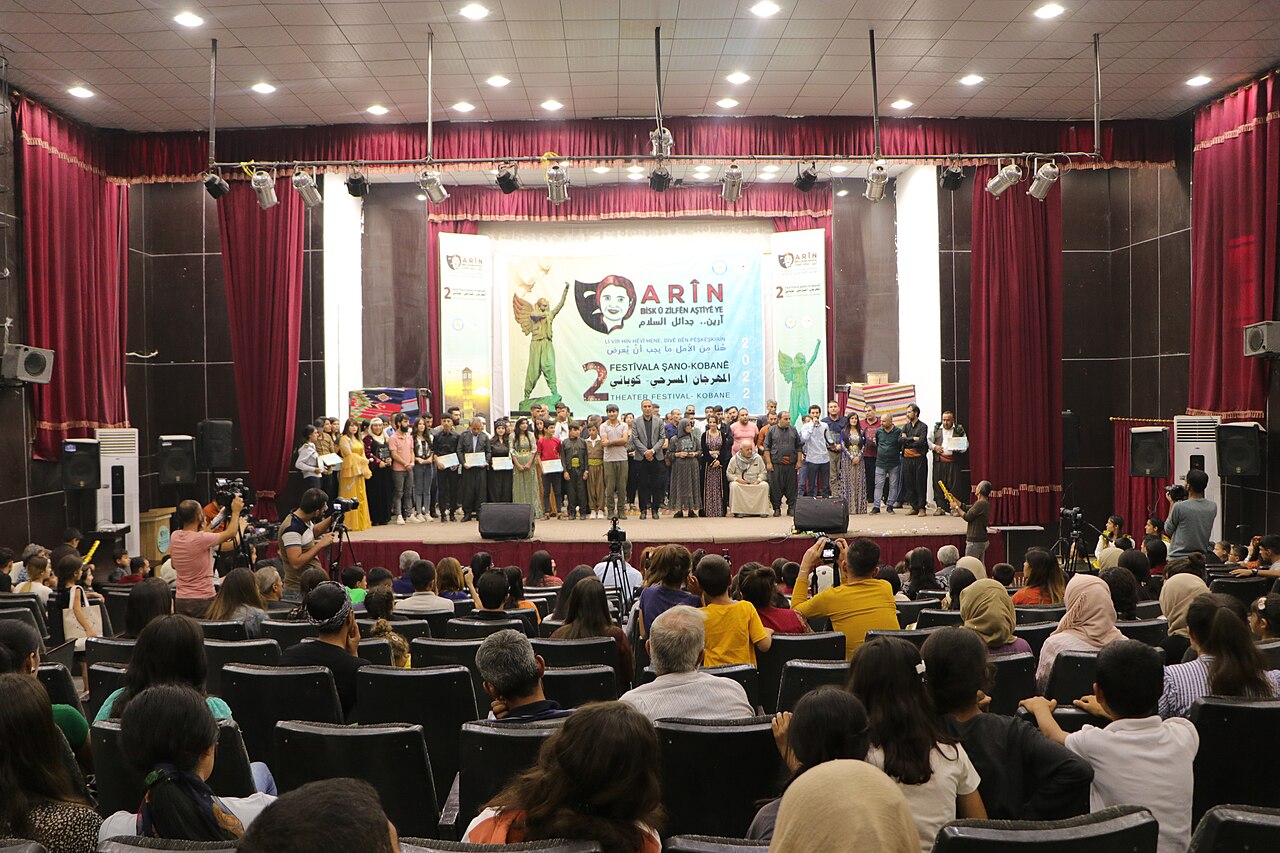
The sources support a record of reported needs, estimates, operational constraints and protection demands. They do not substantiate the original article’s claims that detention transfers proved a secret invasion plan. Nor do they prove that civilians were safe merely because armed groups had not entered a particular town. The earlier theatre photograph is included as dated civic context, not emergency documentation. Later changes in control, services or displacement require later reporting with its own dates and sources.
Sources and further reading
- UNICEF, Syrian Arab Republic Humanitarian Flash Update #3, 23 January 2026, pp. 1–3: displacement reference dates, water disruption, schools and operational constraints.
- Save the Children, North East Syria: Thousands of Children Flee Violence in Freezing Temperatures, 19 January 2026: winter needs, shelters and suspended operations.
- International Committee of the Red Cross, Syria: ICRC concerned over worsening humanitarian situation, 21 January 2026: protection, infrastructure, voluntary movement and humanitarian access.